
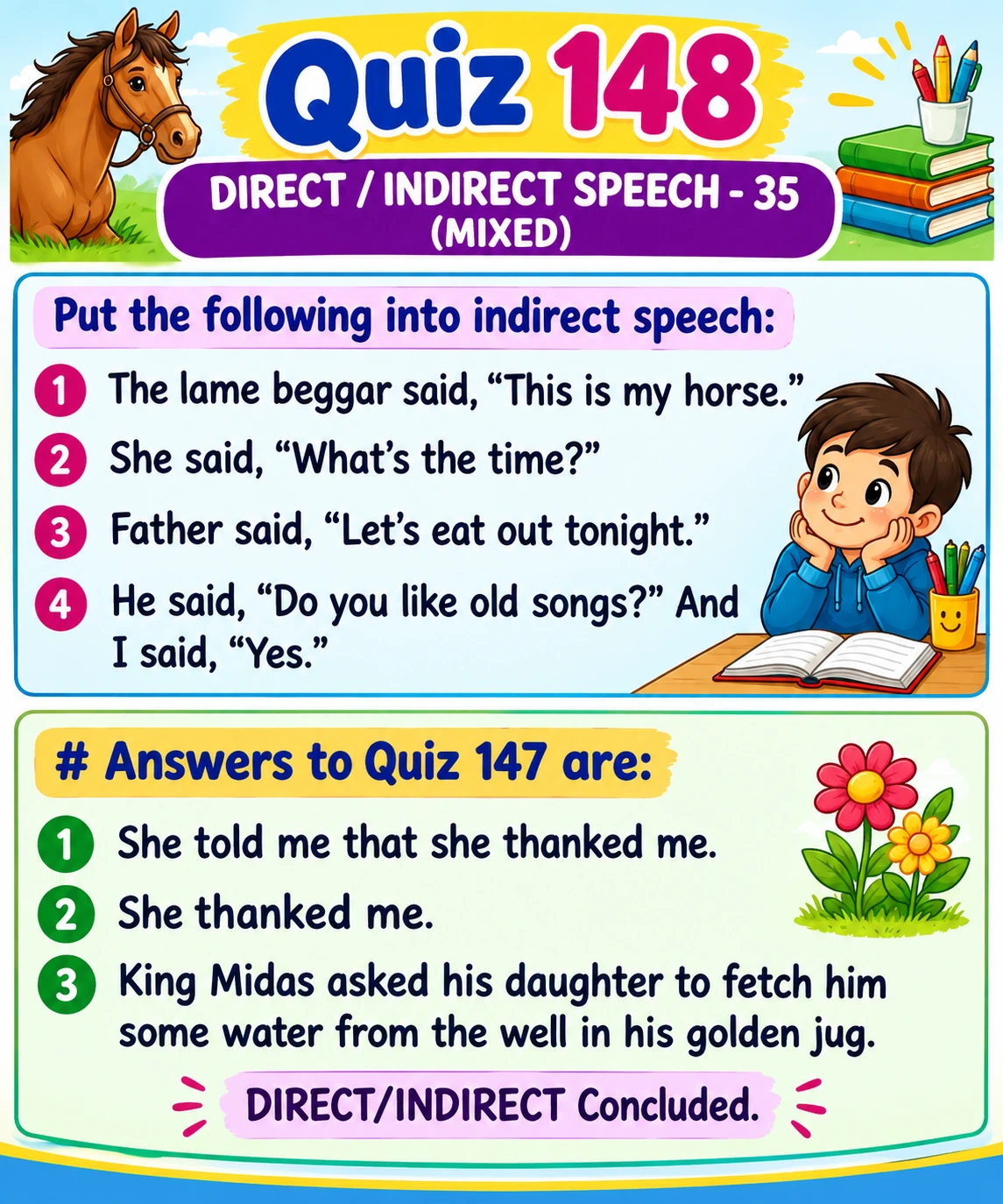
Direct and Indirect Speech: Mixed Quiz 148
A mixed direct and indirect speech quiz with four sentences to convert into indirect speech, followed by the answers displayed for Quiz 147.
Read lessonTHE ENGLISH NOTEBOOK
Words to remember, rules to understand and ideas to try. Open a lesson and make a little progress today.
148 lessons to explore
A mixed direct and indirect speech quiz with four sentences to convert into indirect speech, followed by the answers displayed for Quiz 147.
Read lesson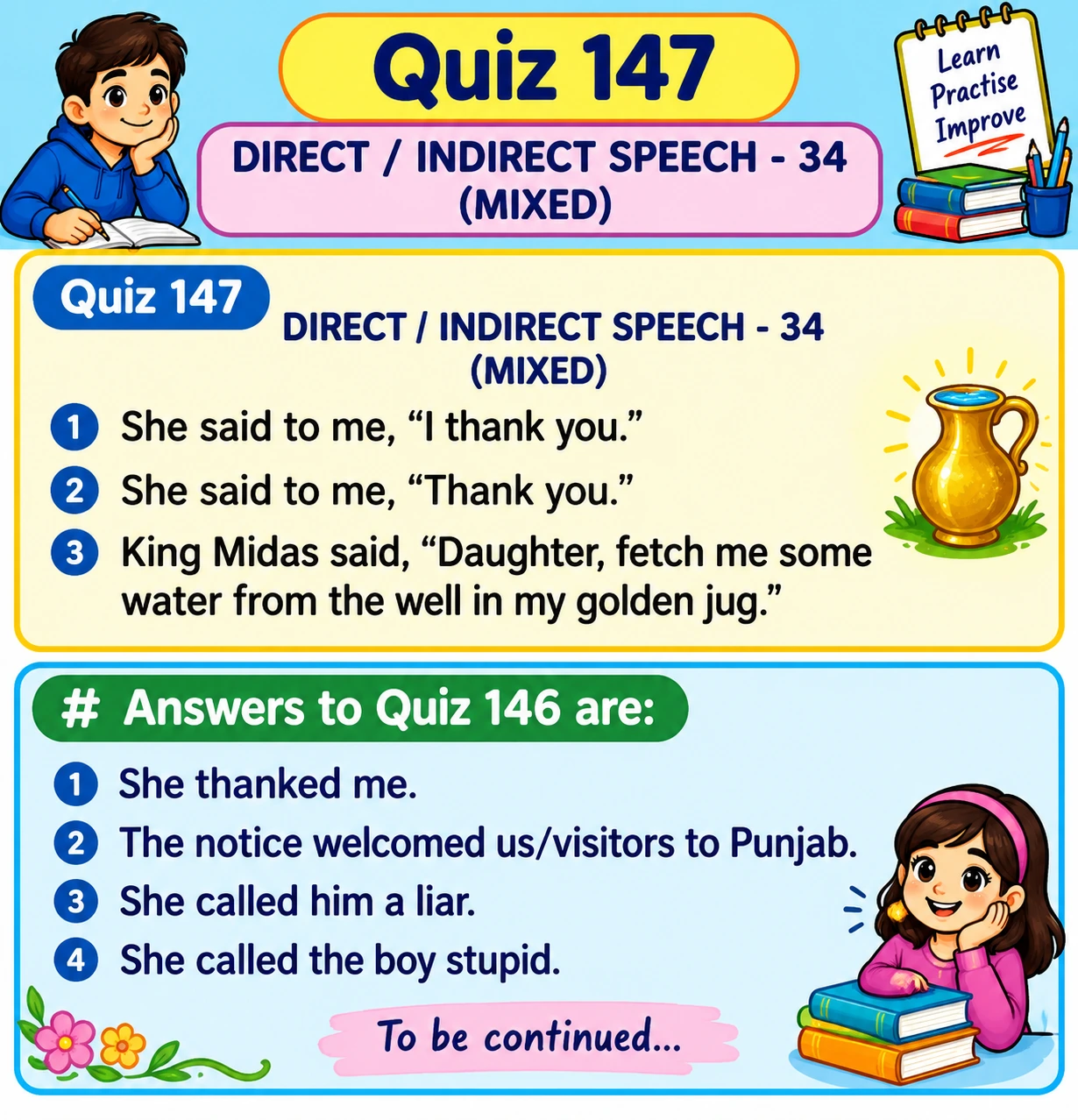
A mixed direct and indirect speech quiz featuring three sentences, followed by the answers to Quiz 146.
Read lesson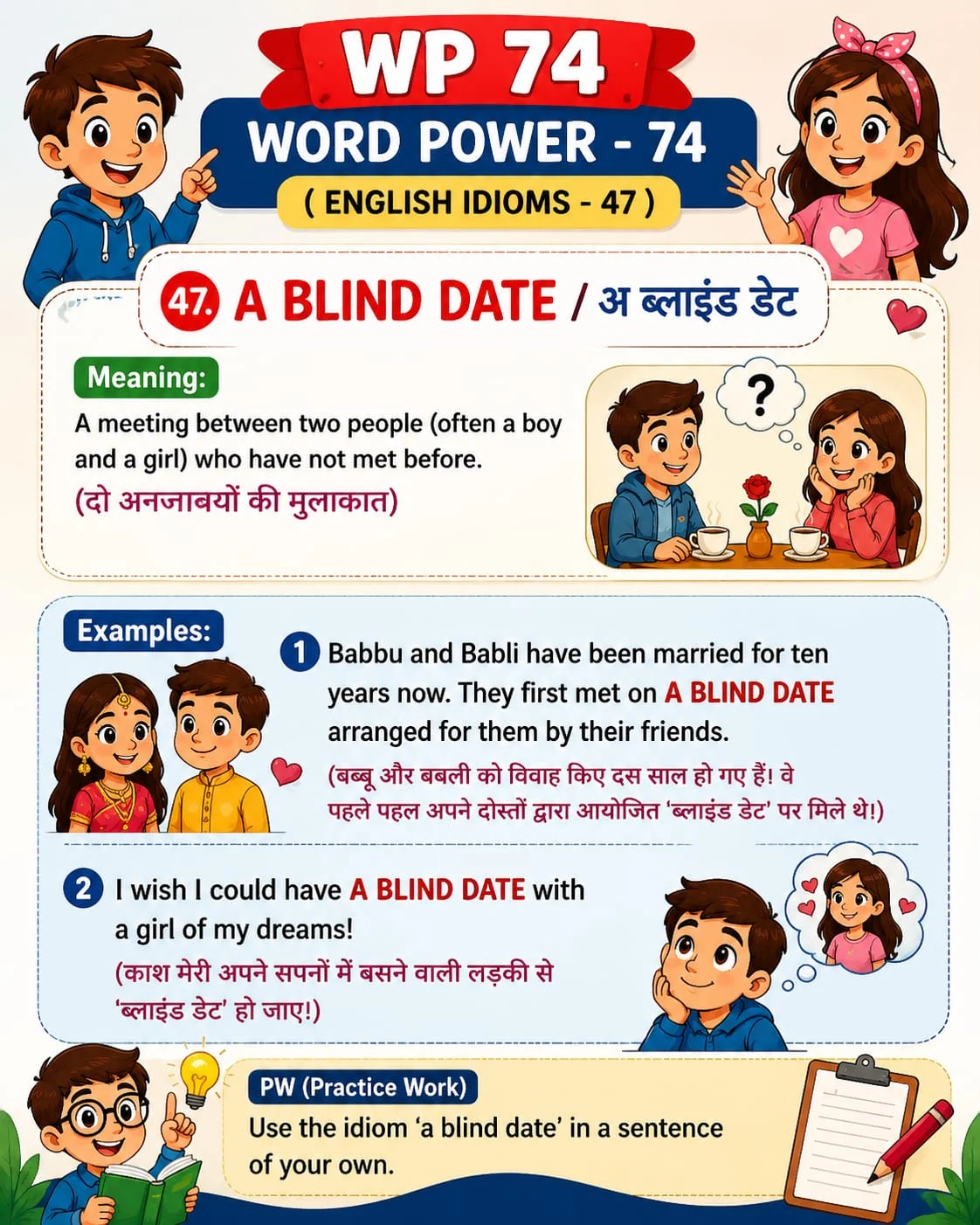
Learn “a blind date”: a meeting between two people, often a boy and a girl, who have not met before. Read examples from Word Power 74 and try a sentence of your own.
Read lesson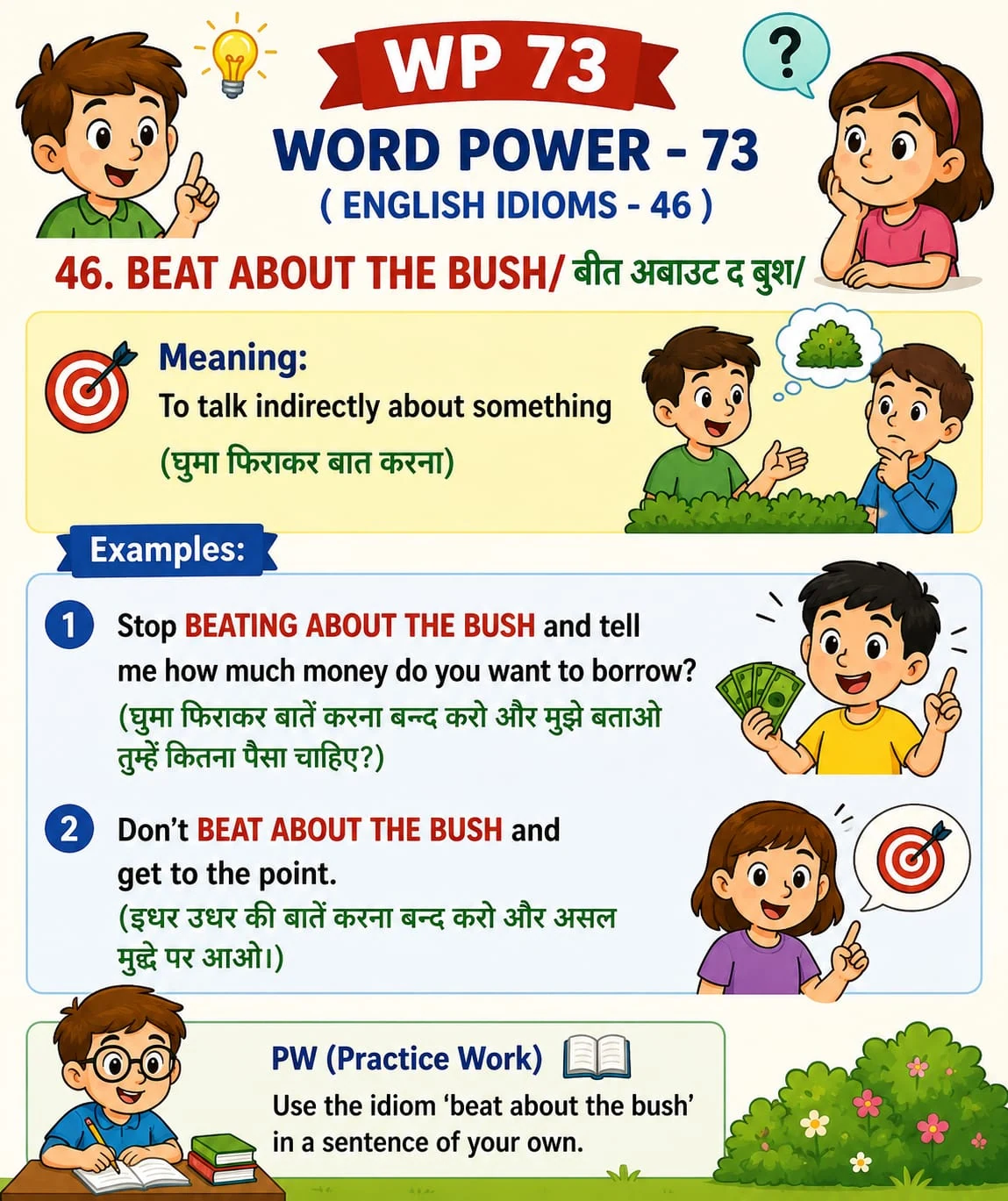
Learn “beat about the bush”: to talk indirectly about something. Read examples from Word Power 73 and try a sentence of your own.
Read lesson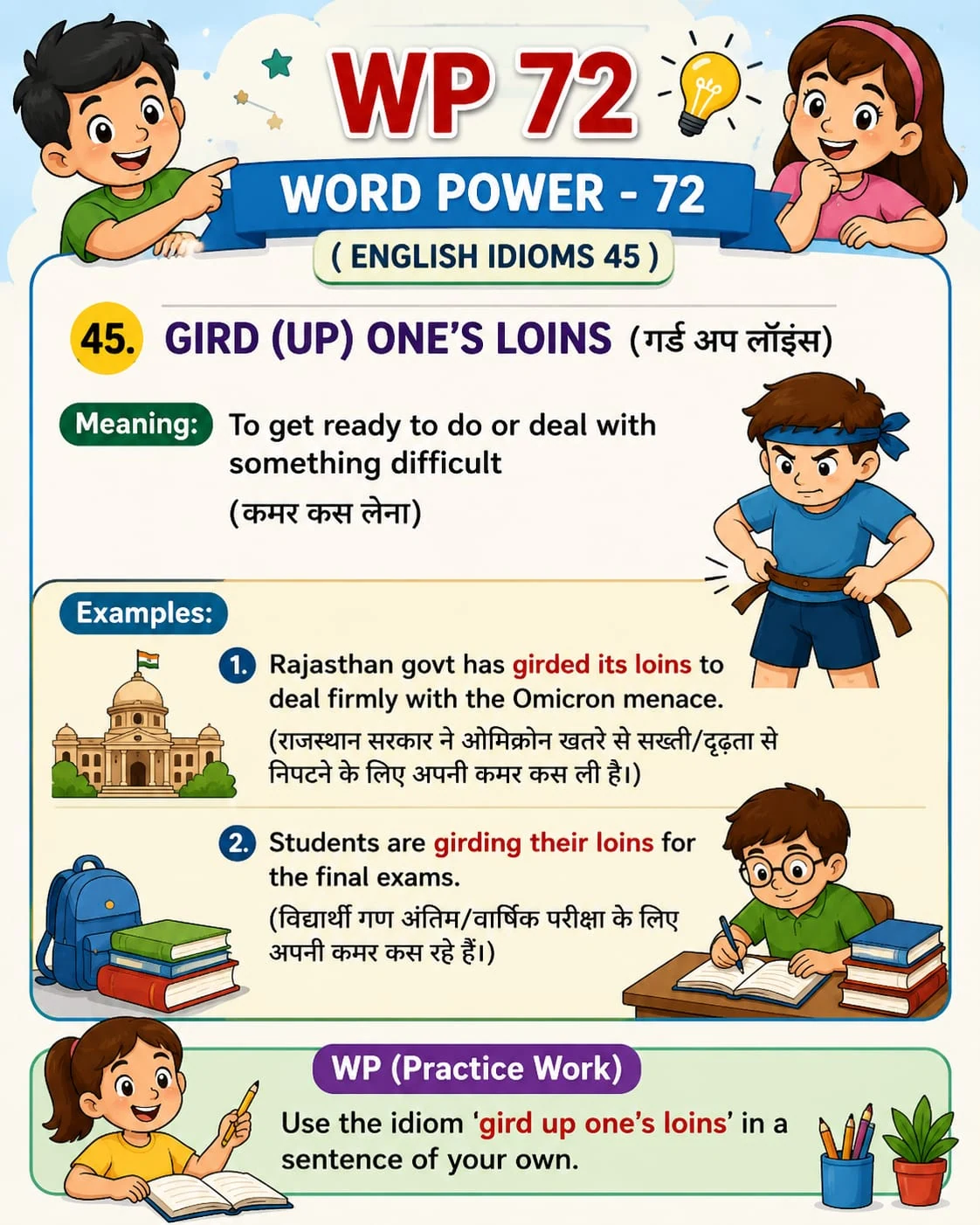
Learn “gird up one's loins”: to get ready to do or deal with something difficult. Read examples from Word Power 72 and try a sentence of your own.
Read lesson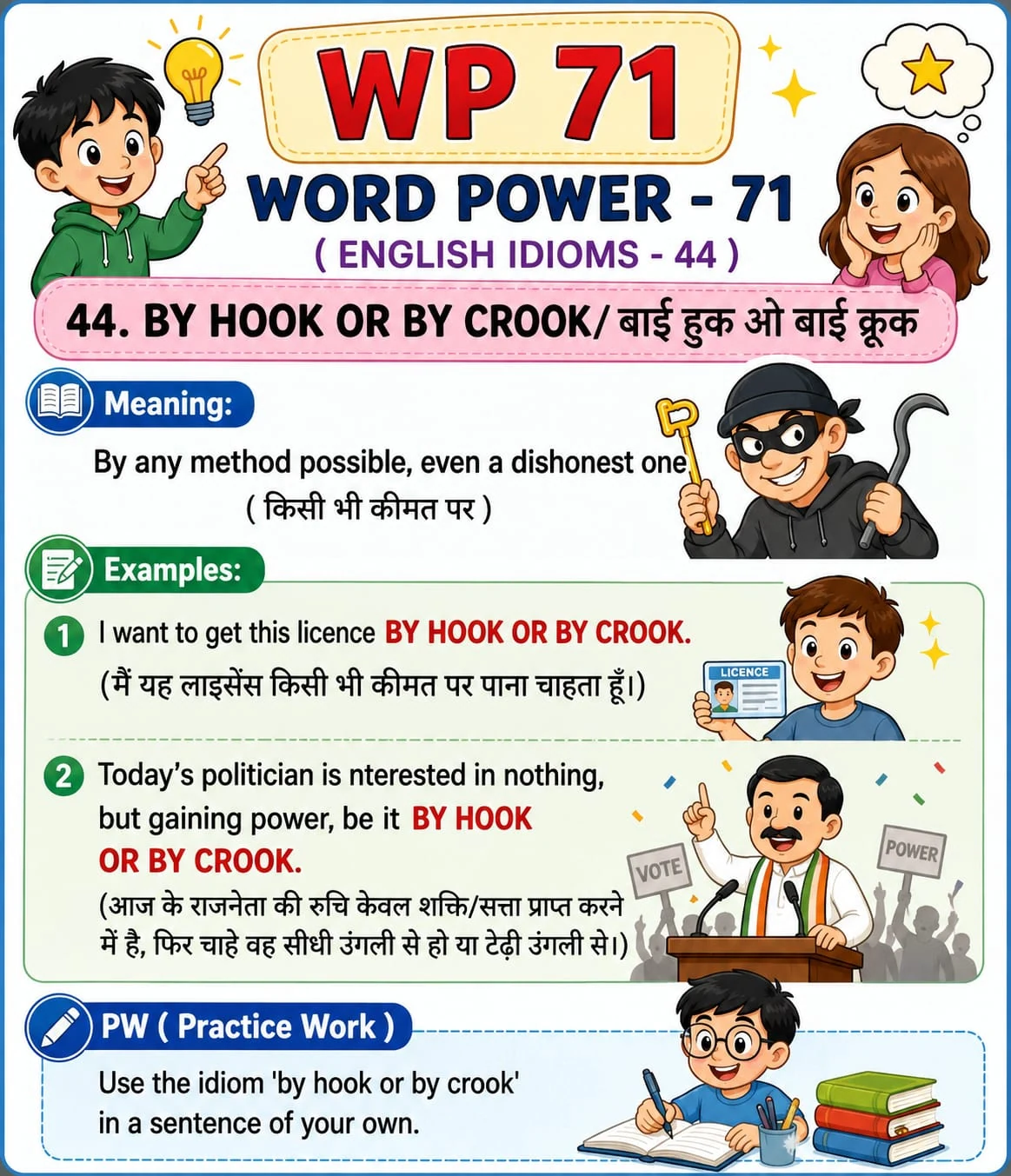
Learn “by hook or by crook”: by any method possible, even a dishonest one. Read examples from Word Power 71 and try a sentence of your own.
Read lesson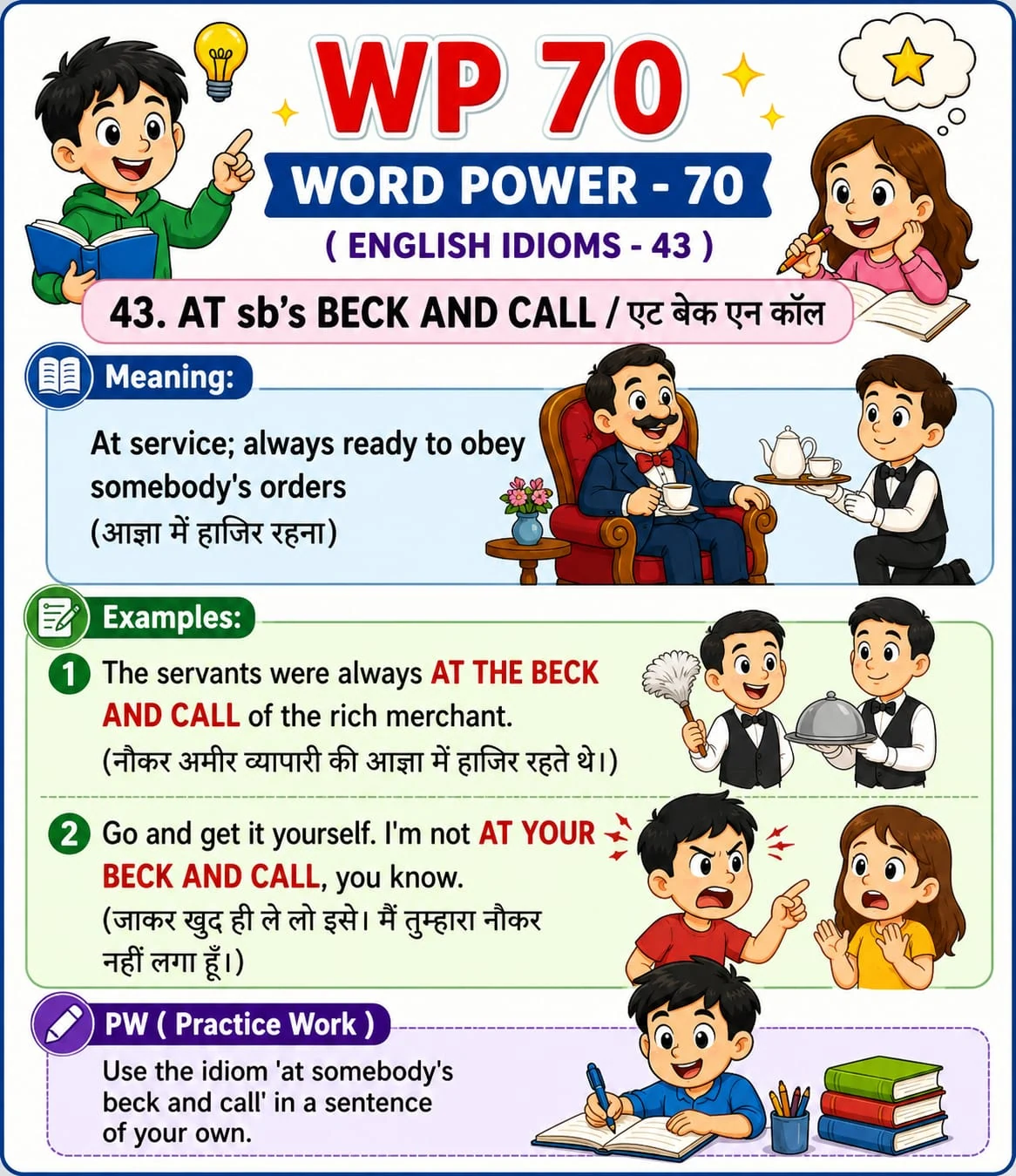
Learn “at somebody's beck and call”: always ready to obey somebody's orders. Read examples from Word Power 70 and try a sentence of your own.
Read lesson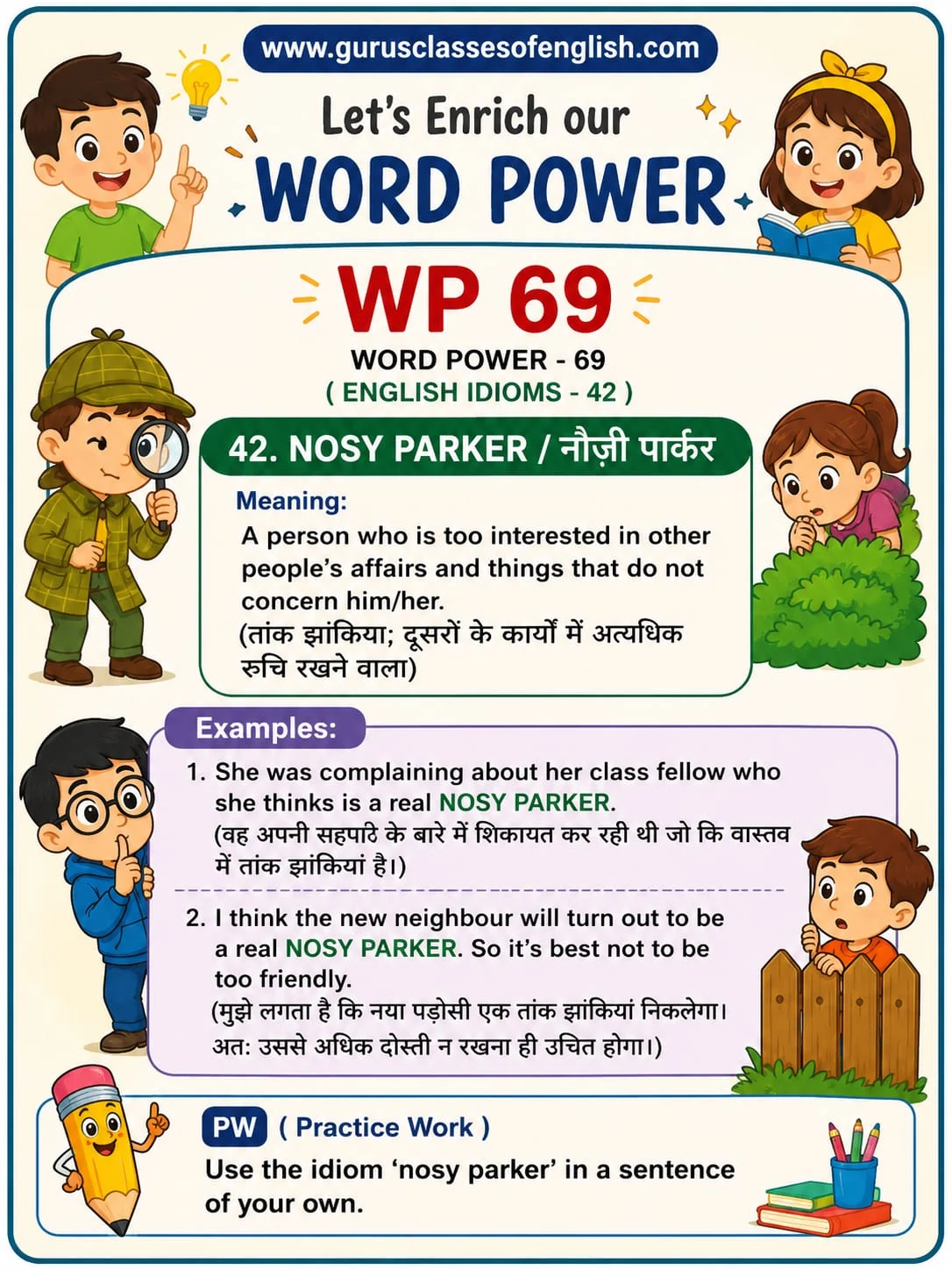
Learn “nosy parker”: a person who is too interested in other people's affairs and things that do not concern them. Read examples from Word Power 69 and try a sentence of your own.
Read lesson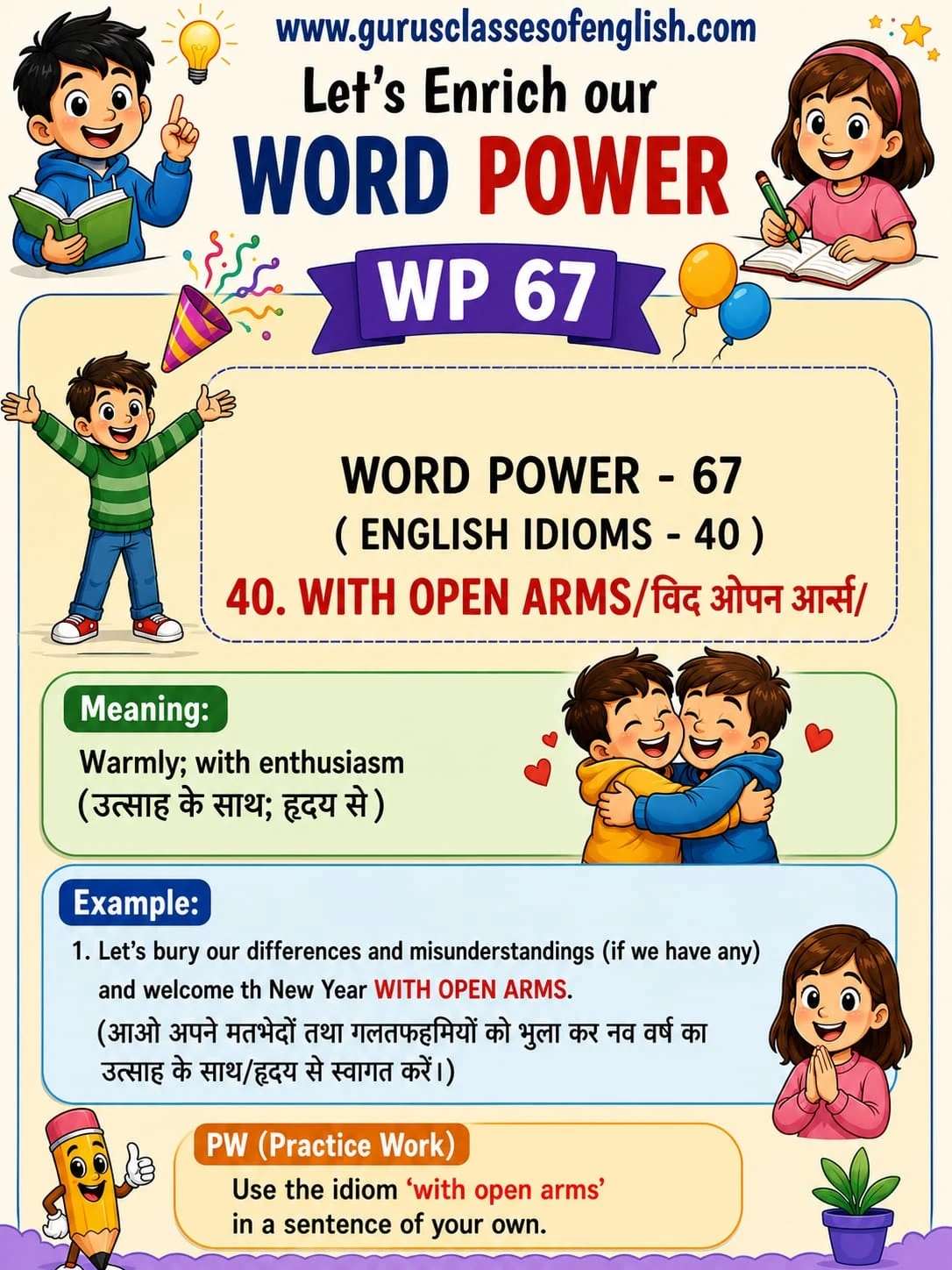
Learn “with open arms”: warmly; with enthusiasm. Read examples from Word Power 67 and try a sentence of your own.
Read lesson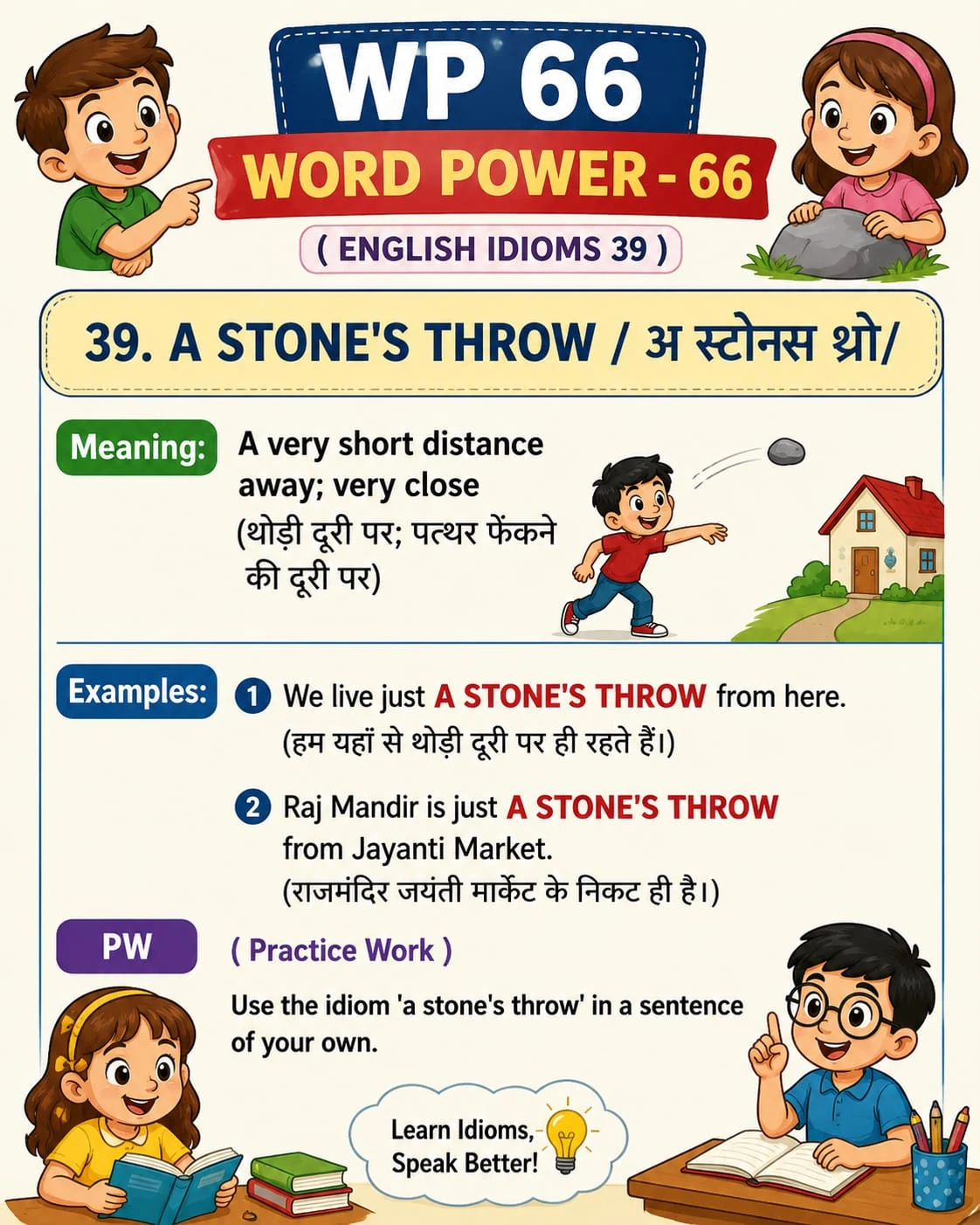
Learn “a stone's throw”: a very short distance away; very close. Read examples from Word Power 66 and try a sentence of your own.
Read lesson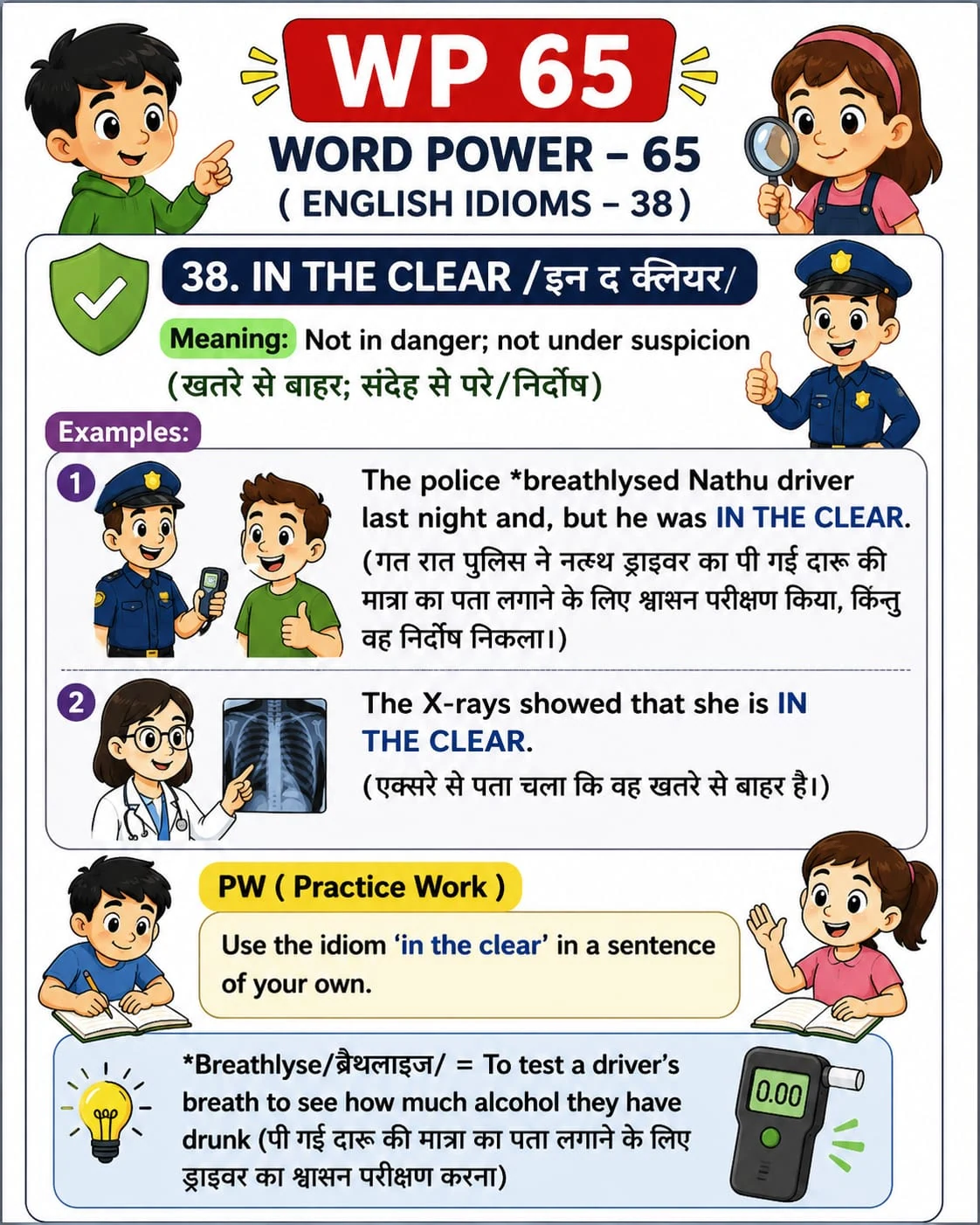
Learn “in the clear”: not in danger; not under suspicion. Read examples from Word Power 65 and try a sentence of your own.
Read lesson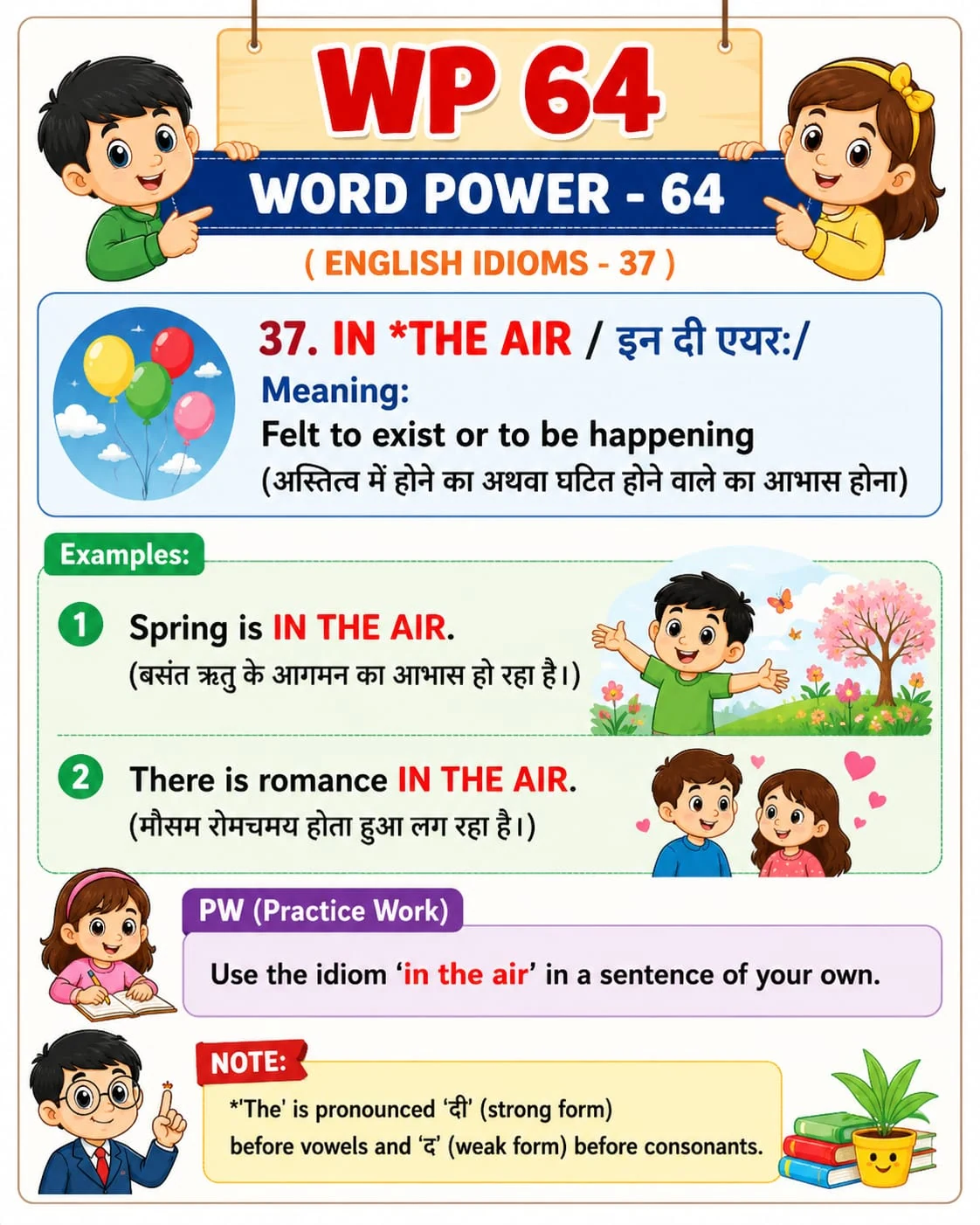
Learn “in the air”: felt to exist or to be happening. Read examples from Word Power 64 and try a sentence of your own.
Read lesson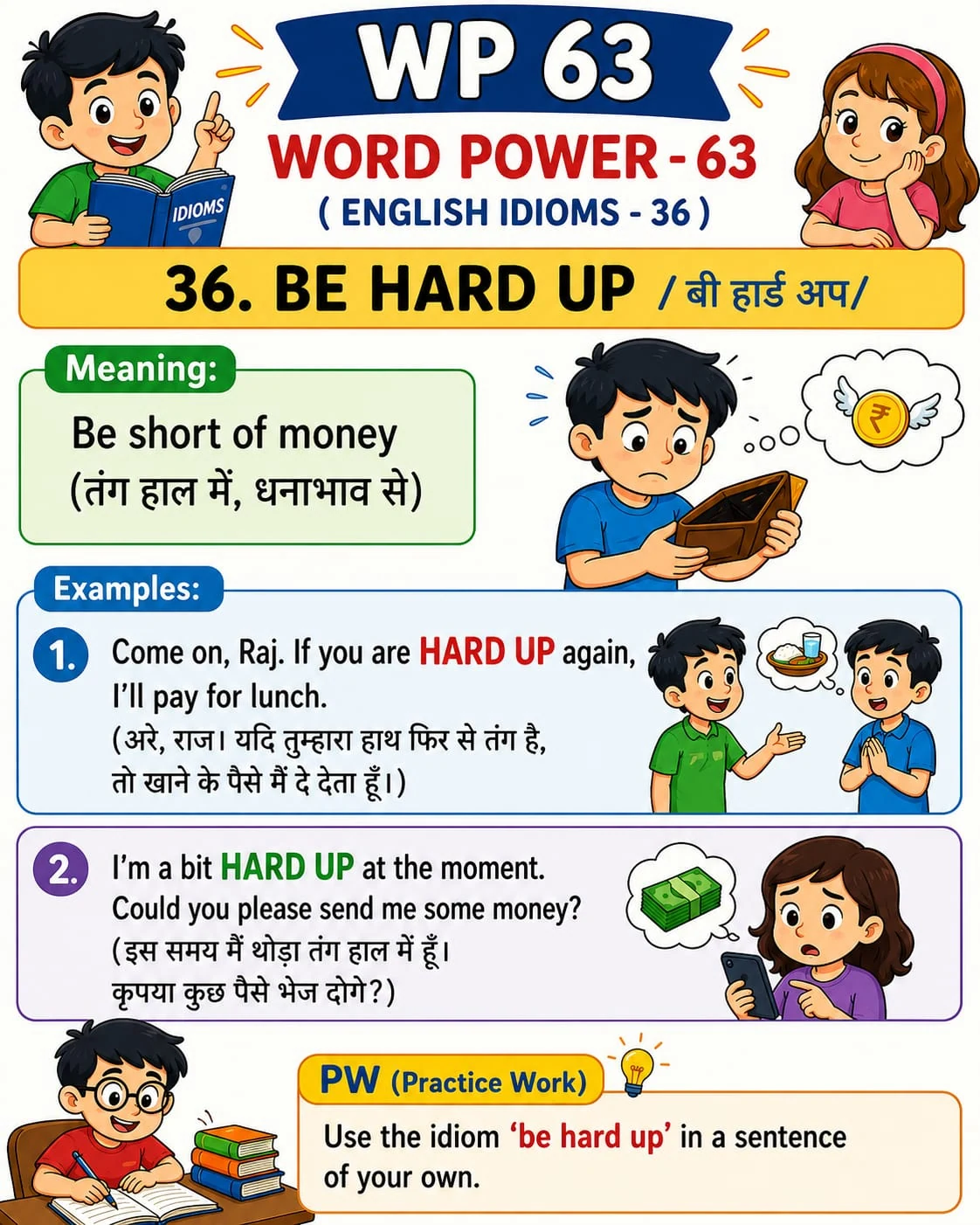
Learn “be hard up”: to be short of money. Read examples from Word Power 63 and try a sentence of your own.
Read lesson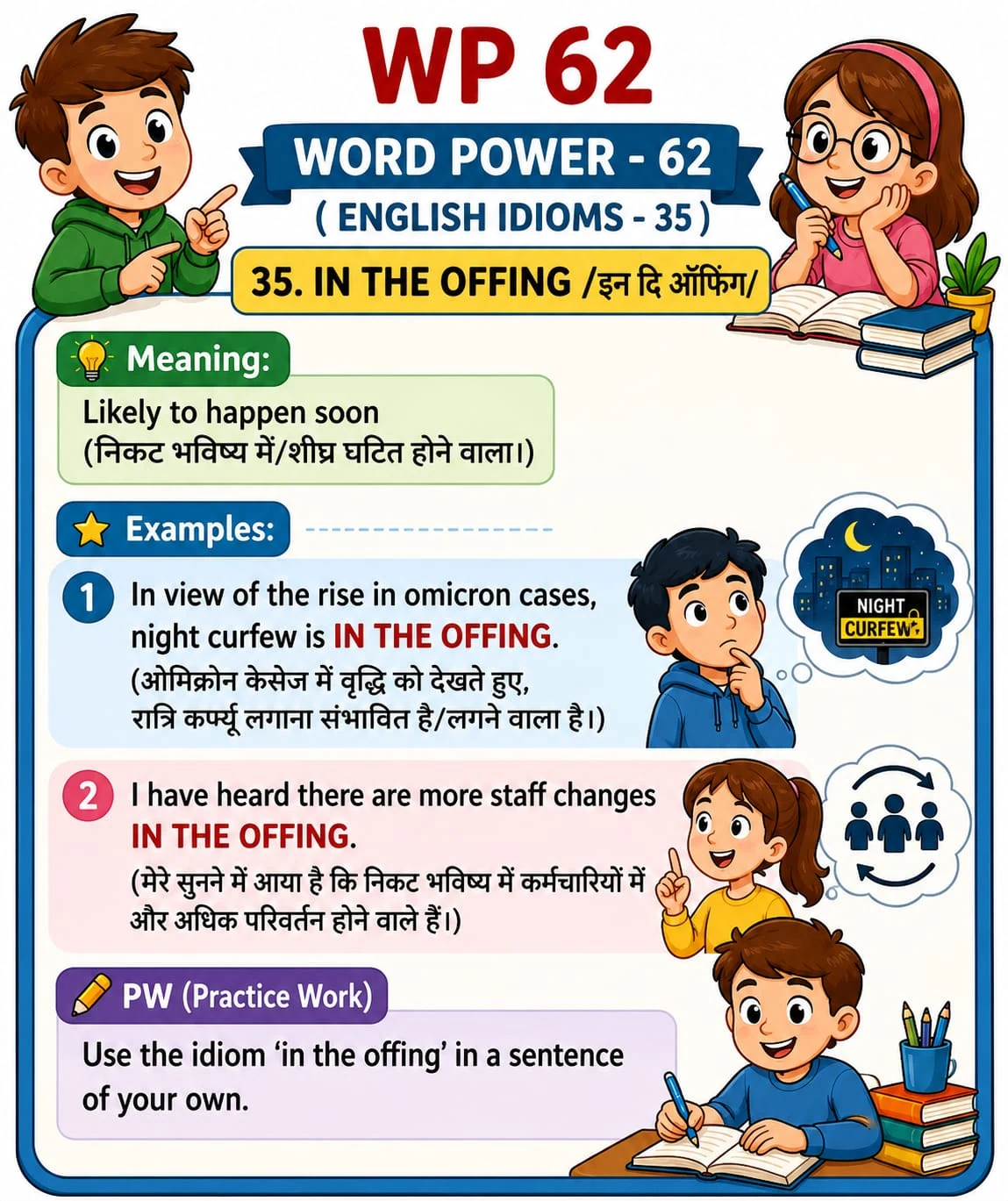
Learn “in the offing”: likely to happen soon. Read examples from Word Power 62 and try a sentence of your own.
Read lesson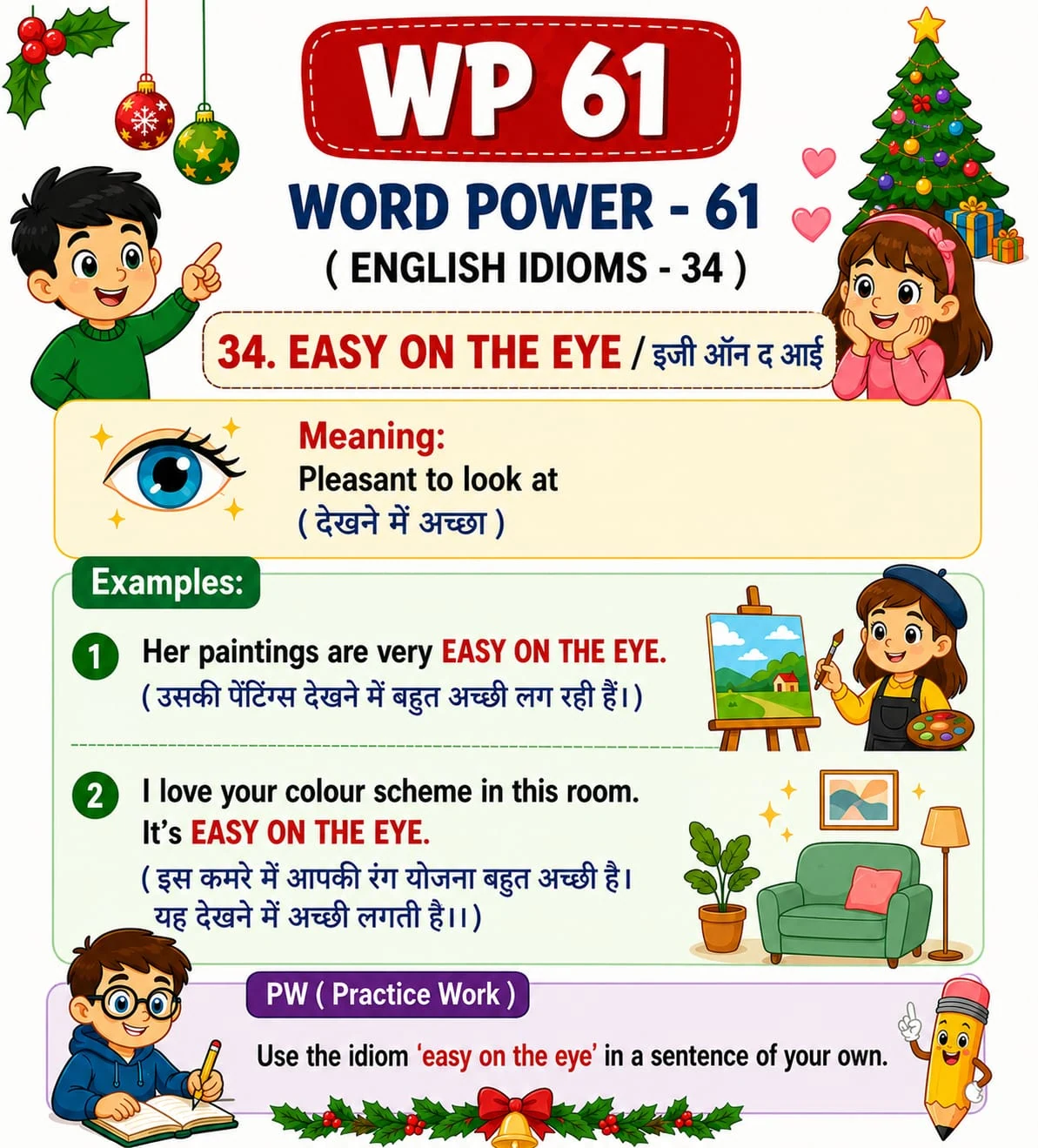
Learn “easy on the eye”: pleasant to look at. Read examples from Word Power 61 and try a sentence of your own.
Read lesson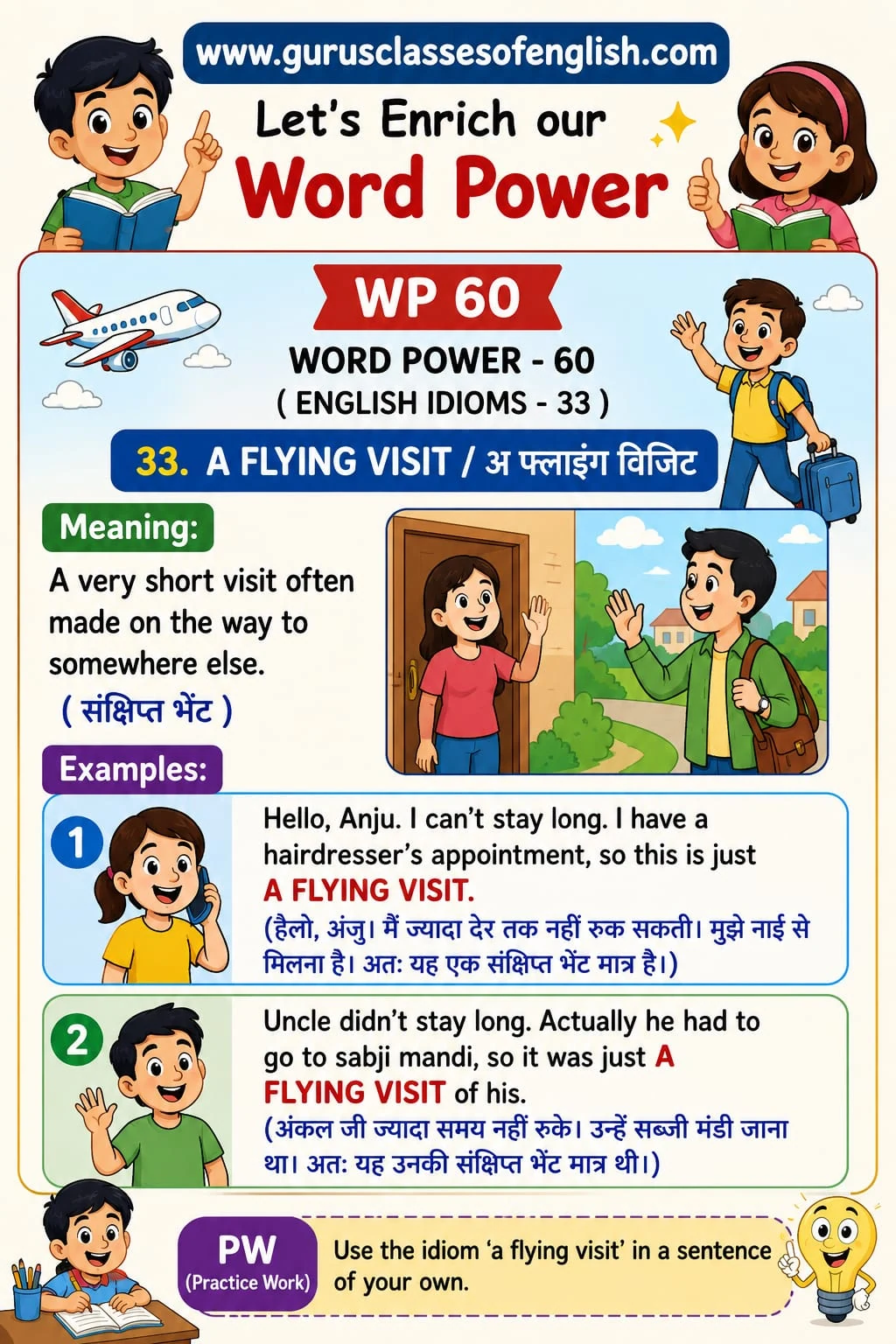
Learn “a flying visit”: a very short visit, often made on the way to somewhere else. Read examples from Word Power 60 and try a sentence of your own.
Read lesson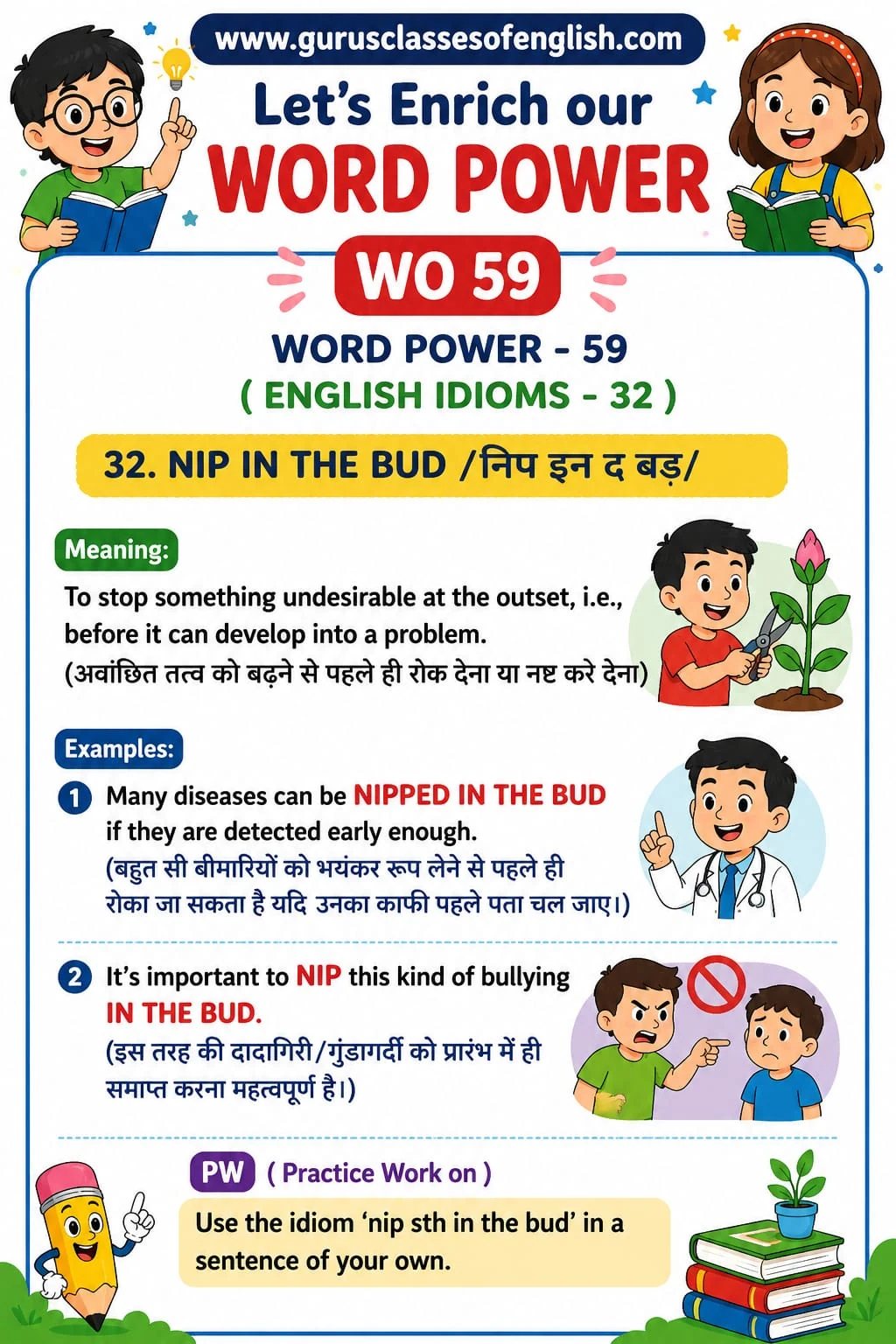
Learn “nip in the bud”: to stop something undesirable, such as trouble or an illness, at an early stage. Read examples from Word Power 59 and try a sentence of your own.
Read lesson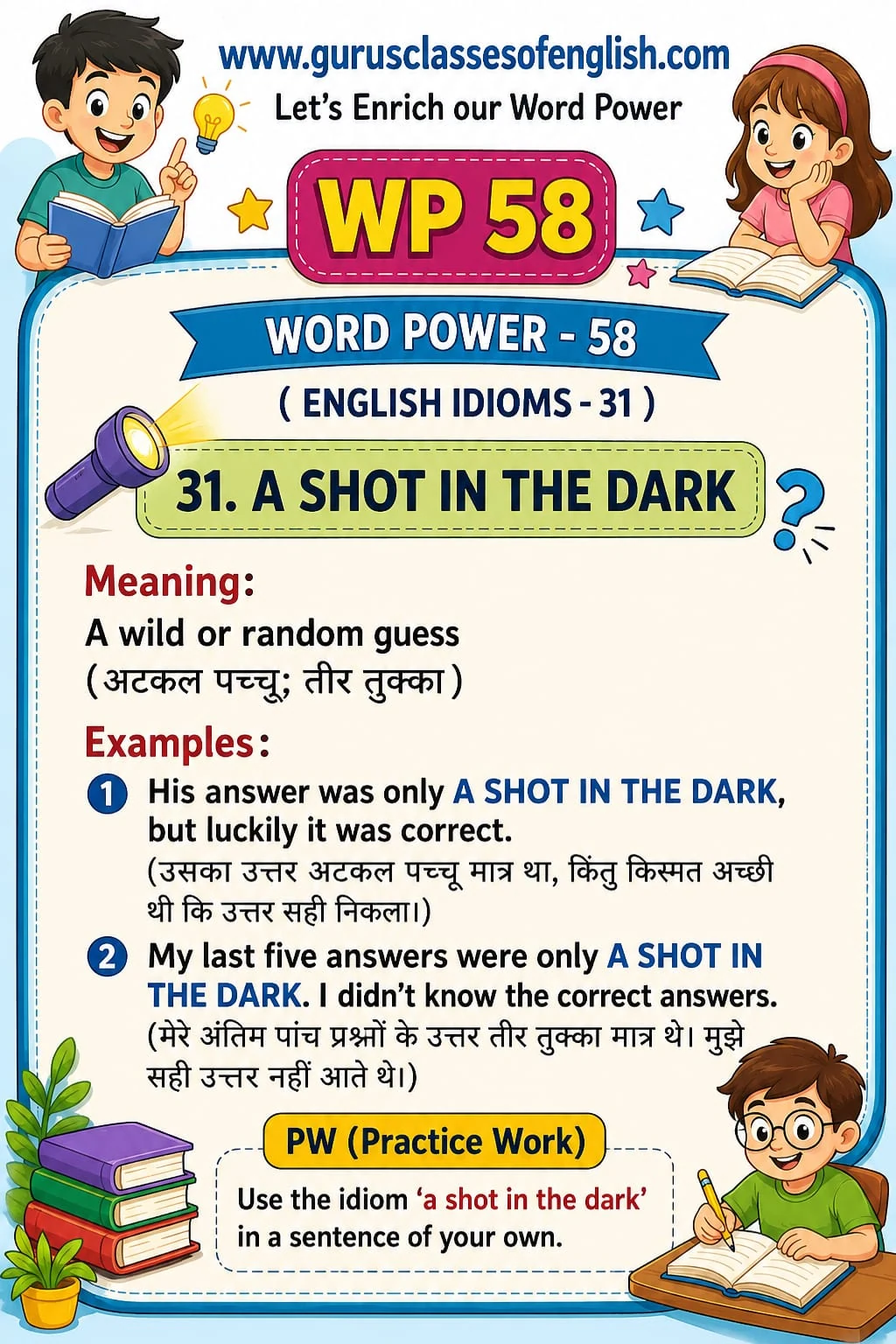
Learn “a shot in the dark”: a wild or random guess. Read examples from Word Power 58 and try a sentence of your own.
Read lesson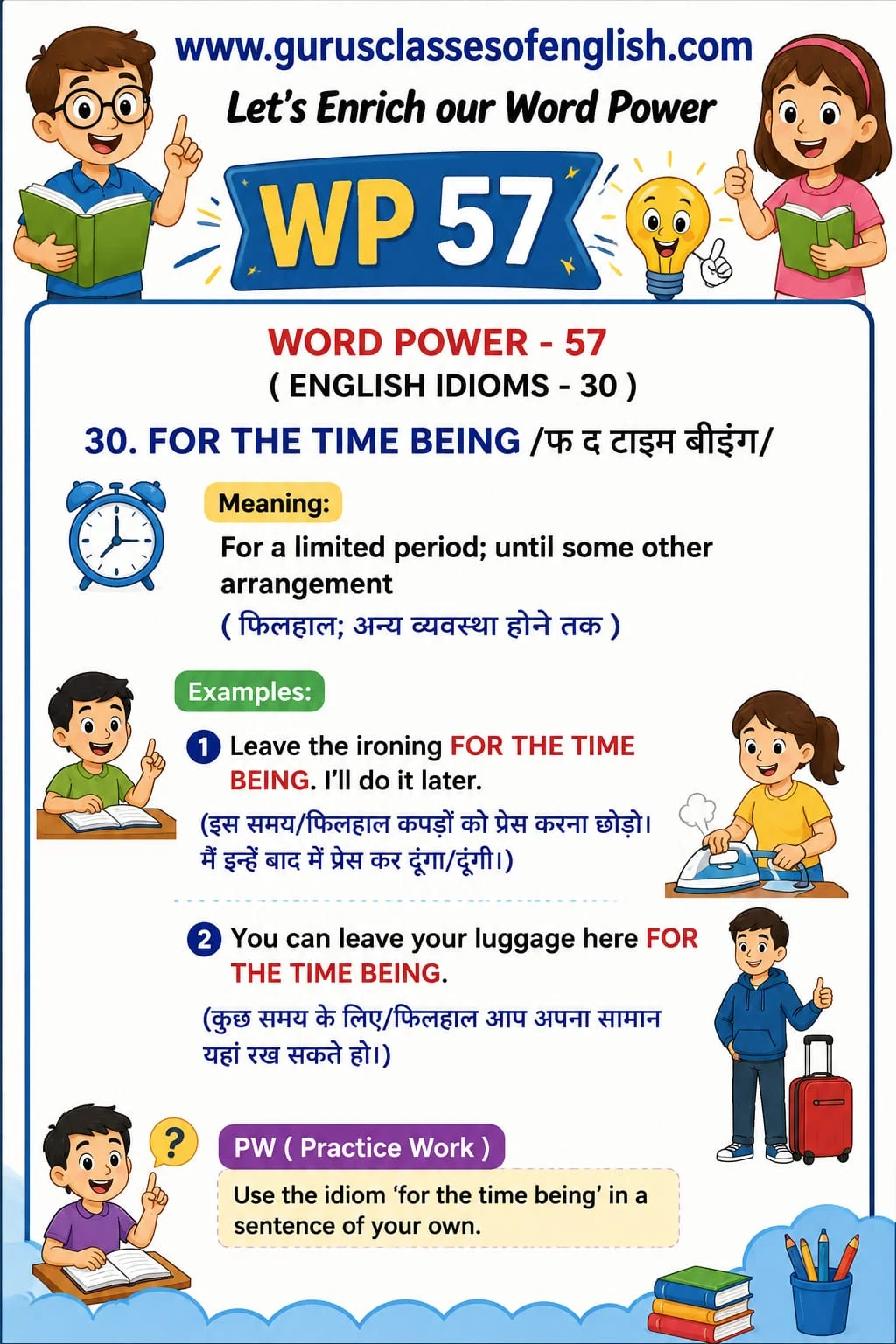
Learn “for the time being”: for a limited period, until some other arrangement is made. Read examples from Word Power 57 and try a sentence of your own.
Read lesson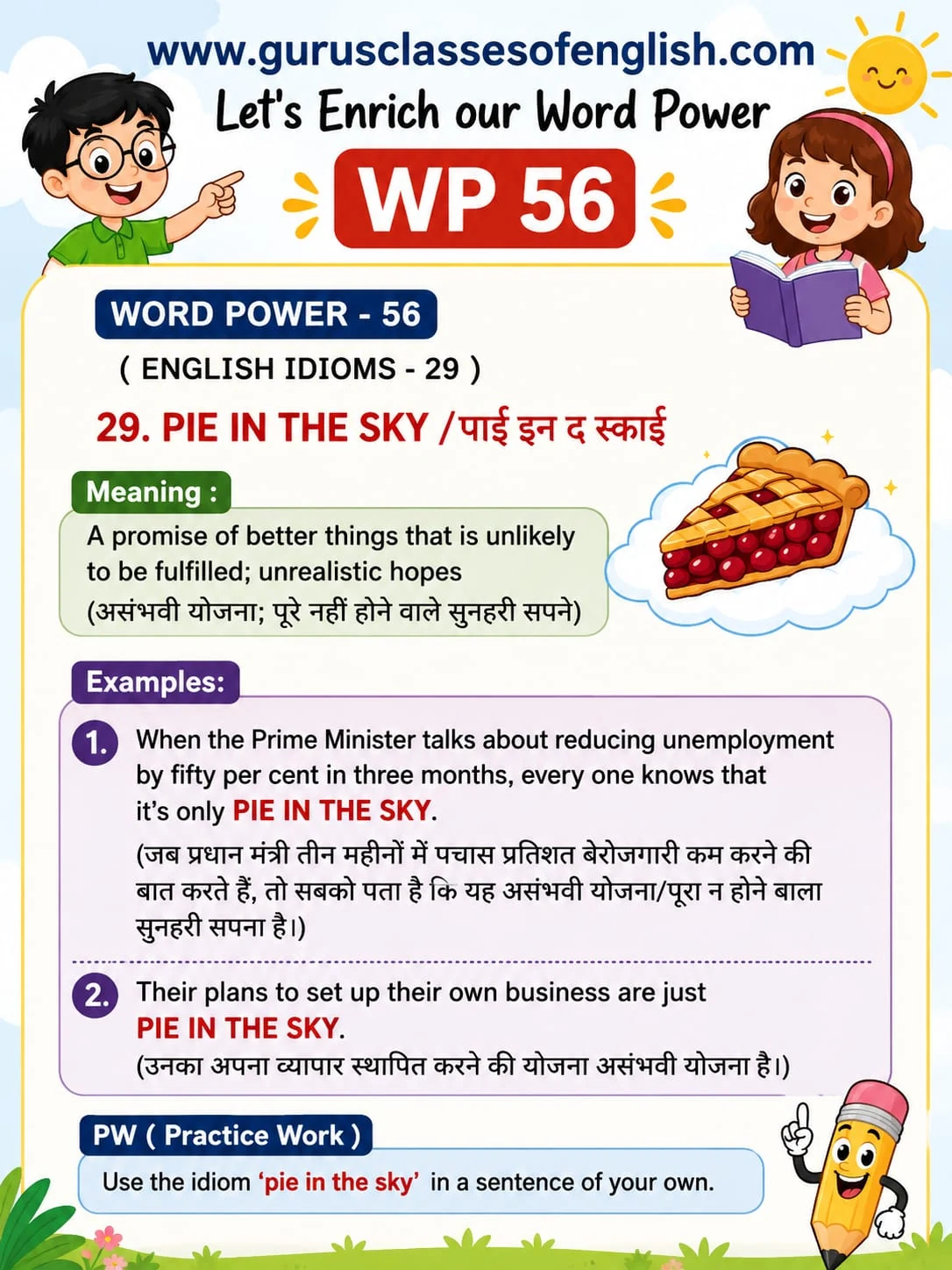
Learn “pie in the sky”: a promise of better things that is unlikely to be fulfilled, especially in politics. Read examples from Word Power 56 and try a sentence of your own.
Read lesson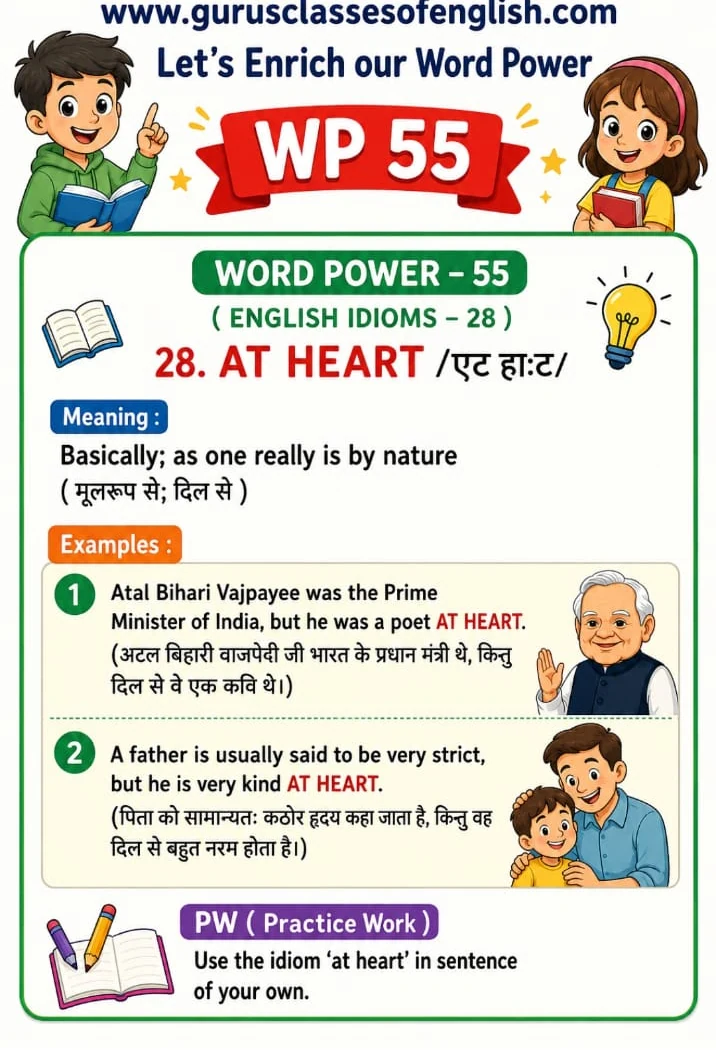
Learn “at heart”: basically; as one really is by nature. Read examples from Word Power 55 and try a sentence of your own.
Read lesson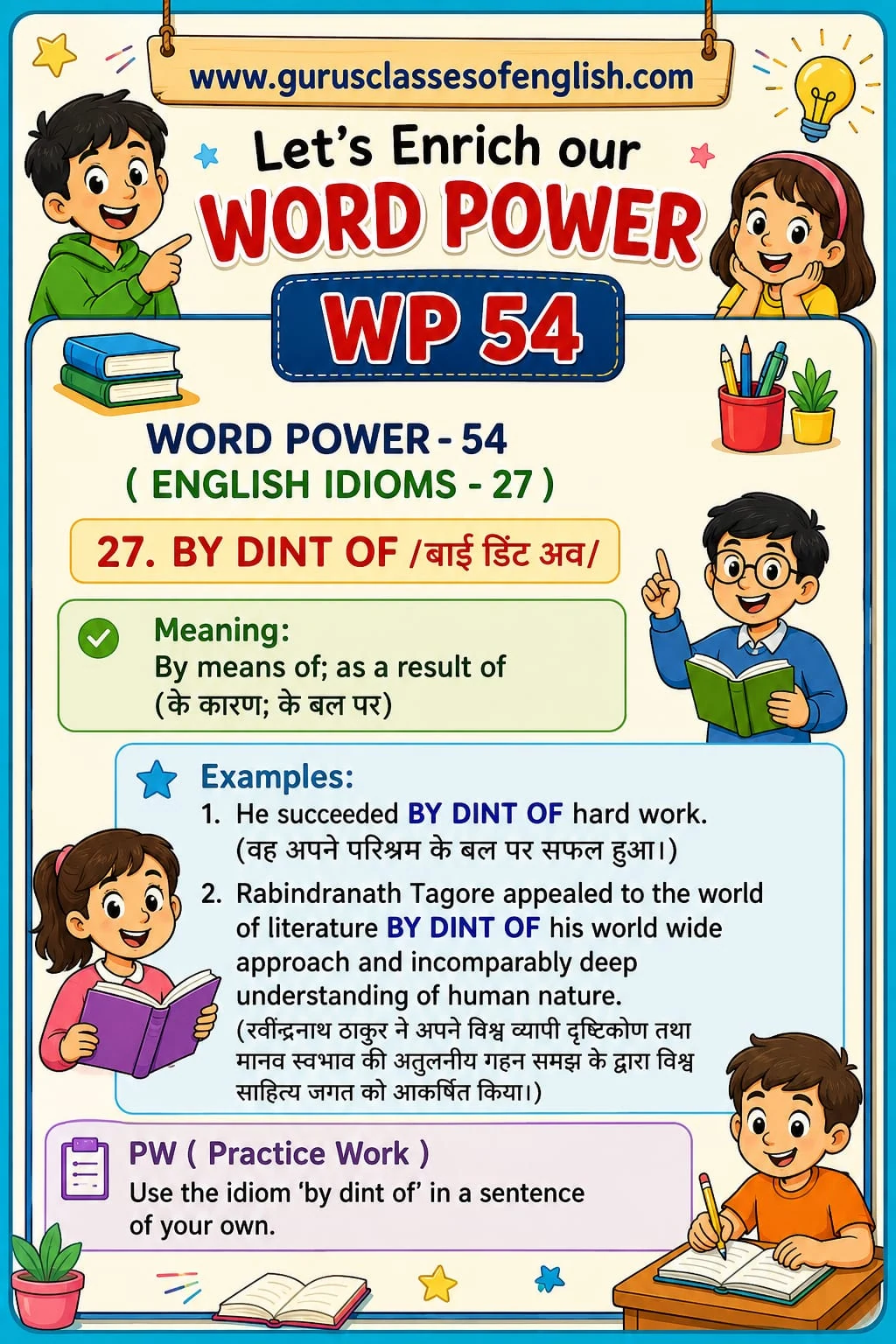
Learn “by dint of”: by means of; as a result of. Read examples from Word Power 54 and try a sentence of your own.
Read lesson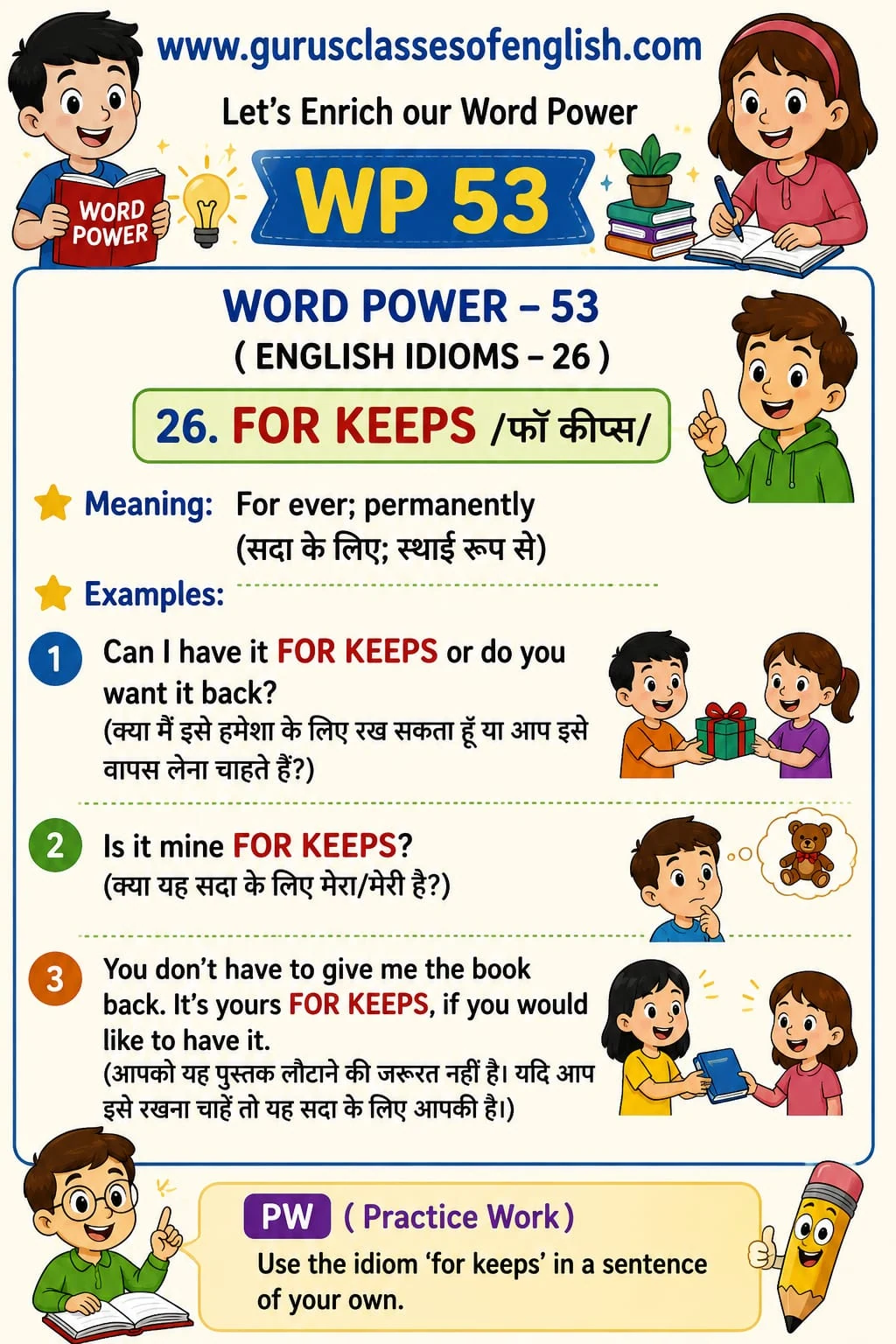
Learn “for keeps”: for ever; permanently. Read examples from Word Power 53 and try a sentence of your own.
Read lesson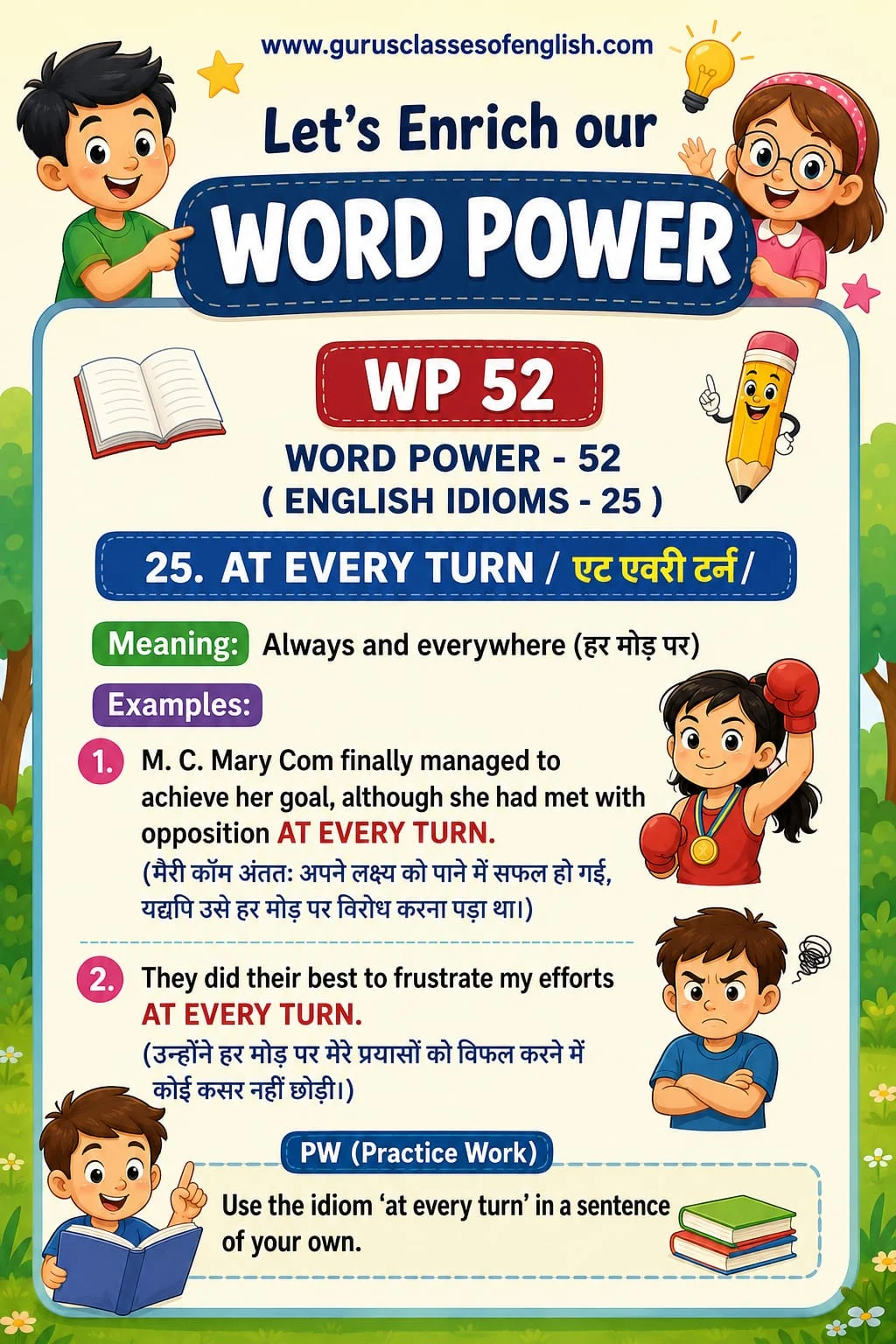
Learn “at every turn”: always and everywhere. Read examples from Word Power 52 and try a sentence of your own.
Read lesson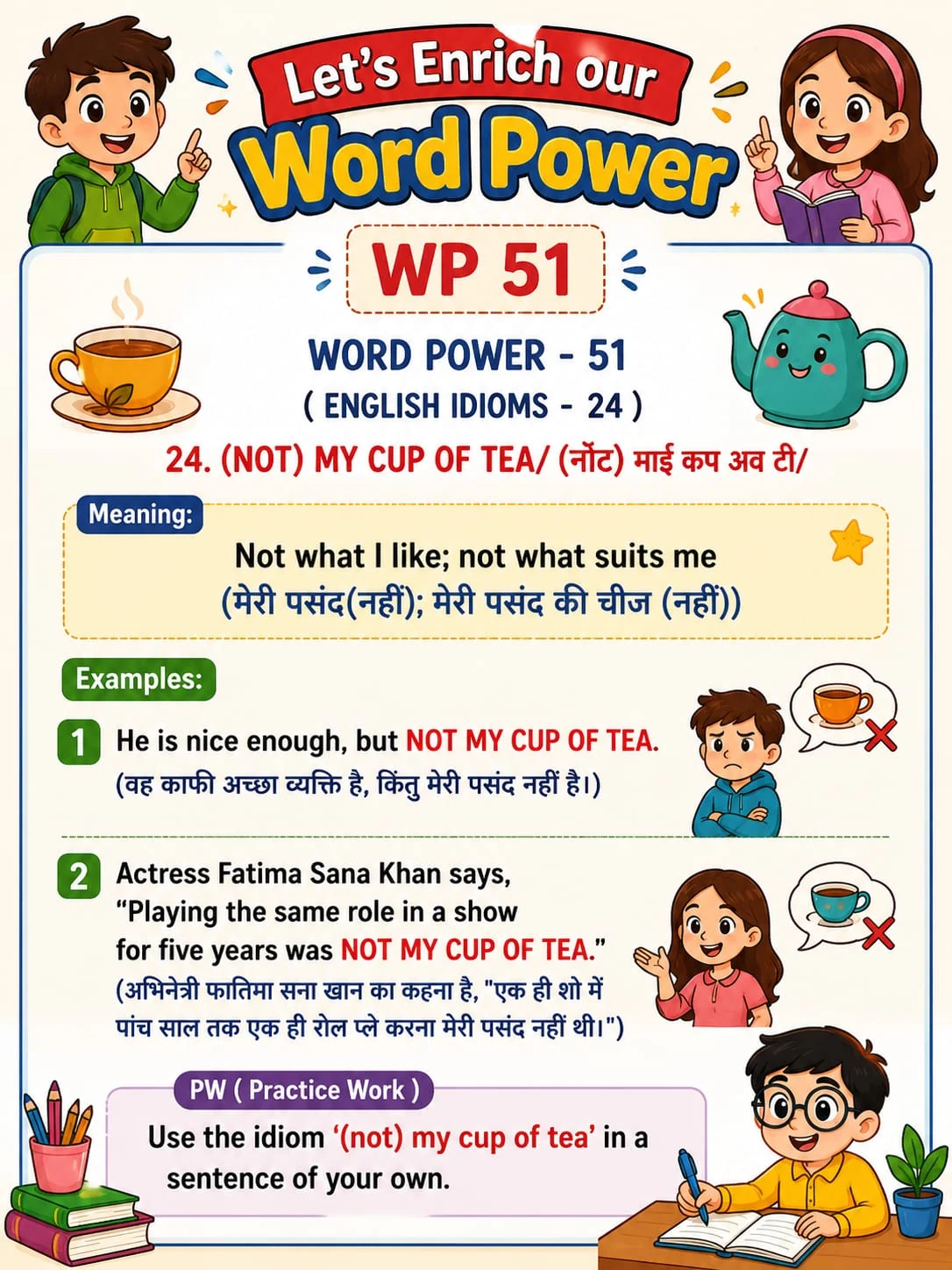
Learn “not my cup of tea”: not what I like; not what suits me. Read examples from Word Power 51 and try a sentence of your own.
Read lesson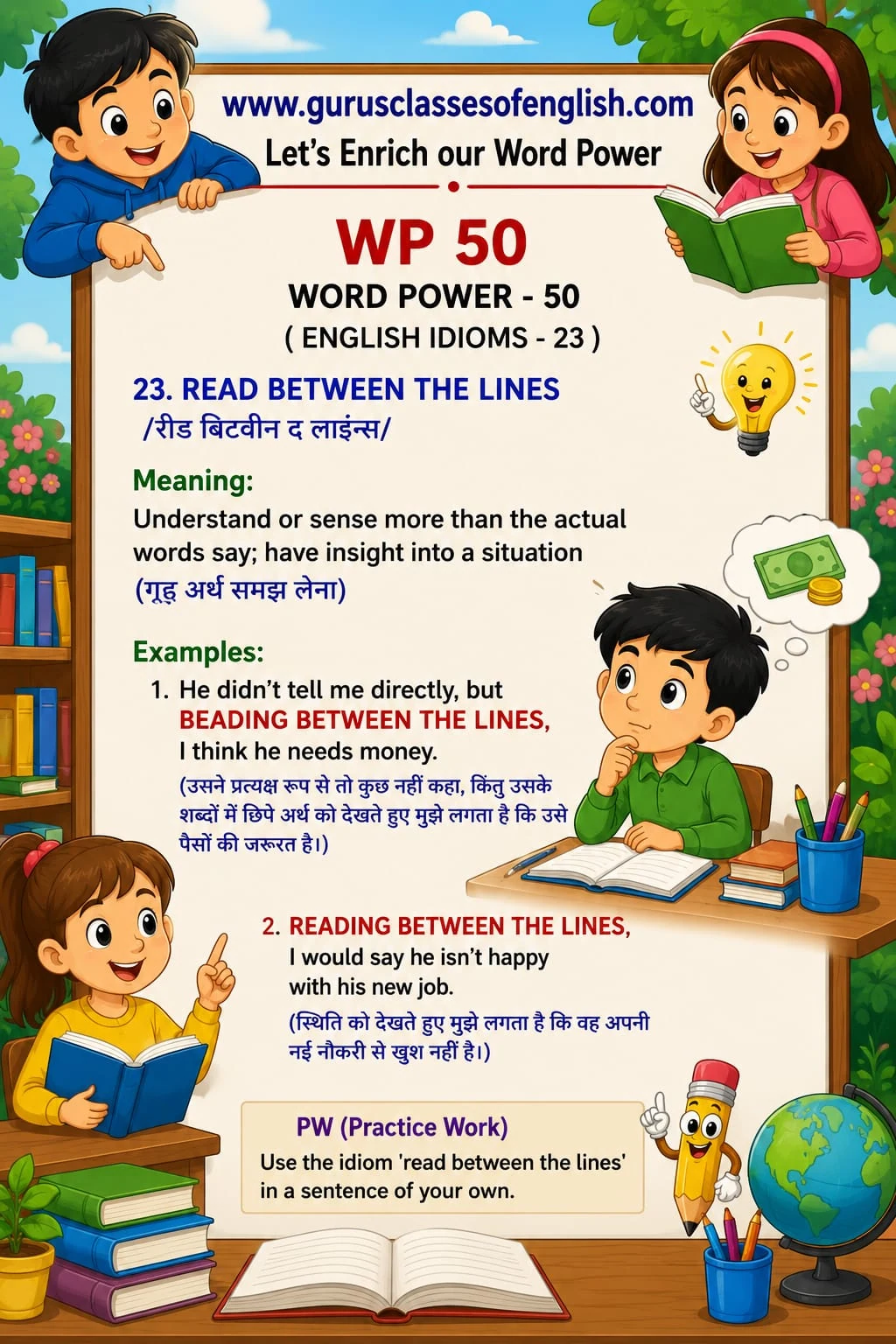
Learn “read between the lines”: to understand or sense more than the actual words say, usually what is implied in a situation. Read examples from Word Power 50 and try a sentence of your own.
Read lesson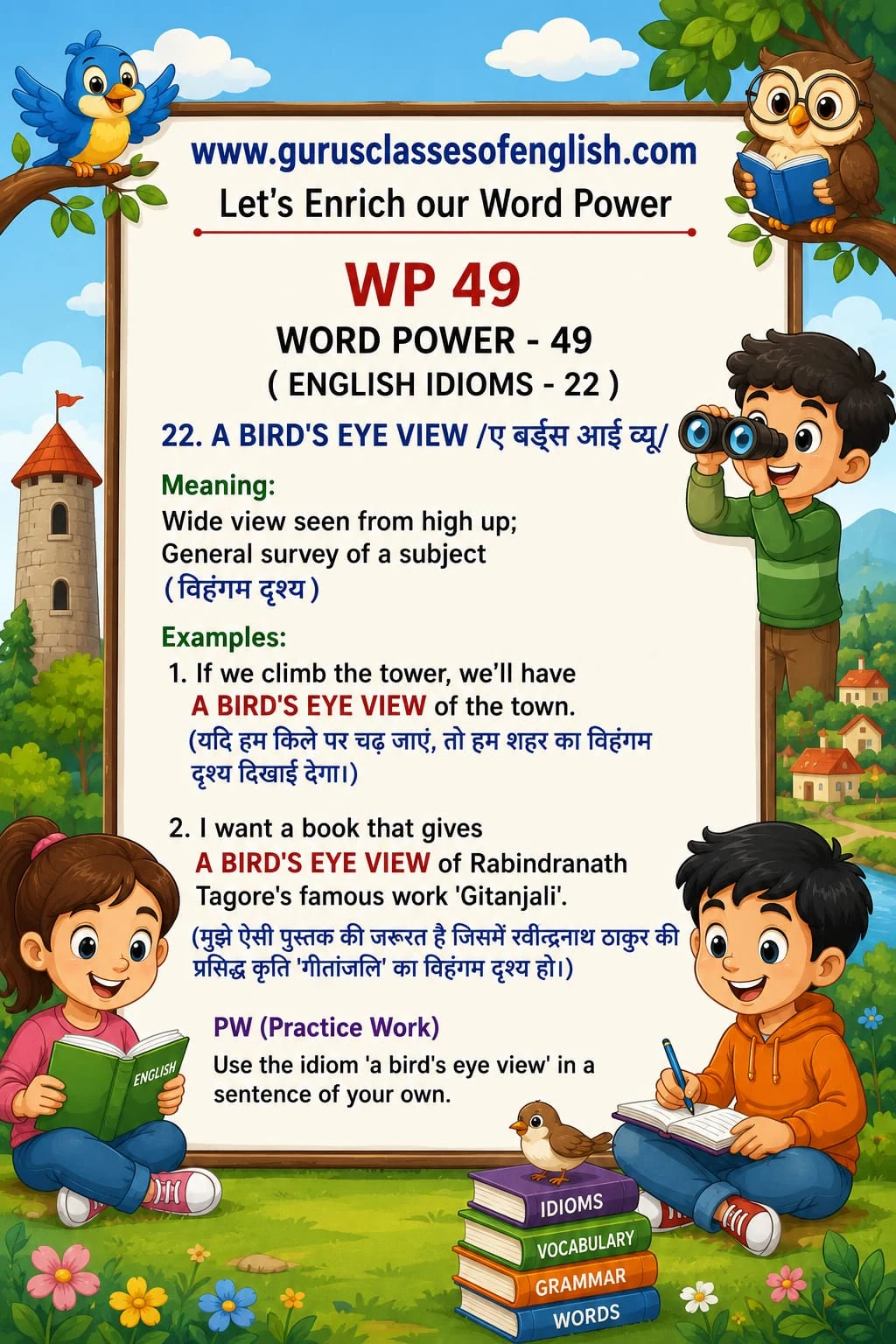
Learn “a bird's-eye view”: a wide view seen from high up; a general survey of a subject. Read examples from Word Power 49 and try a sentence of your own.
Read lesson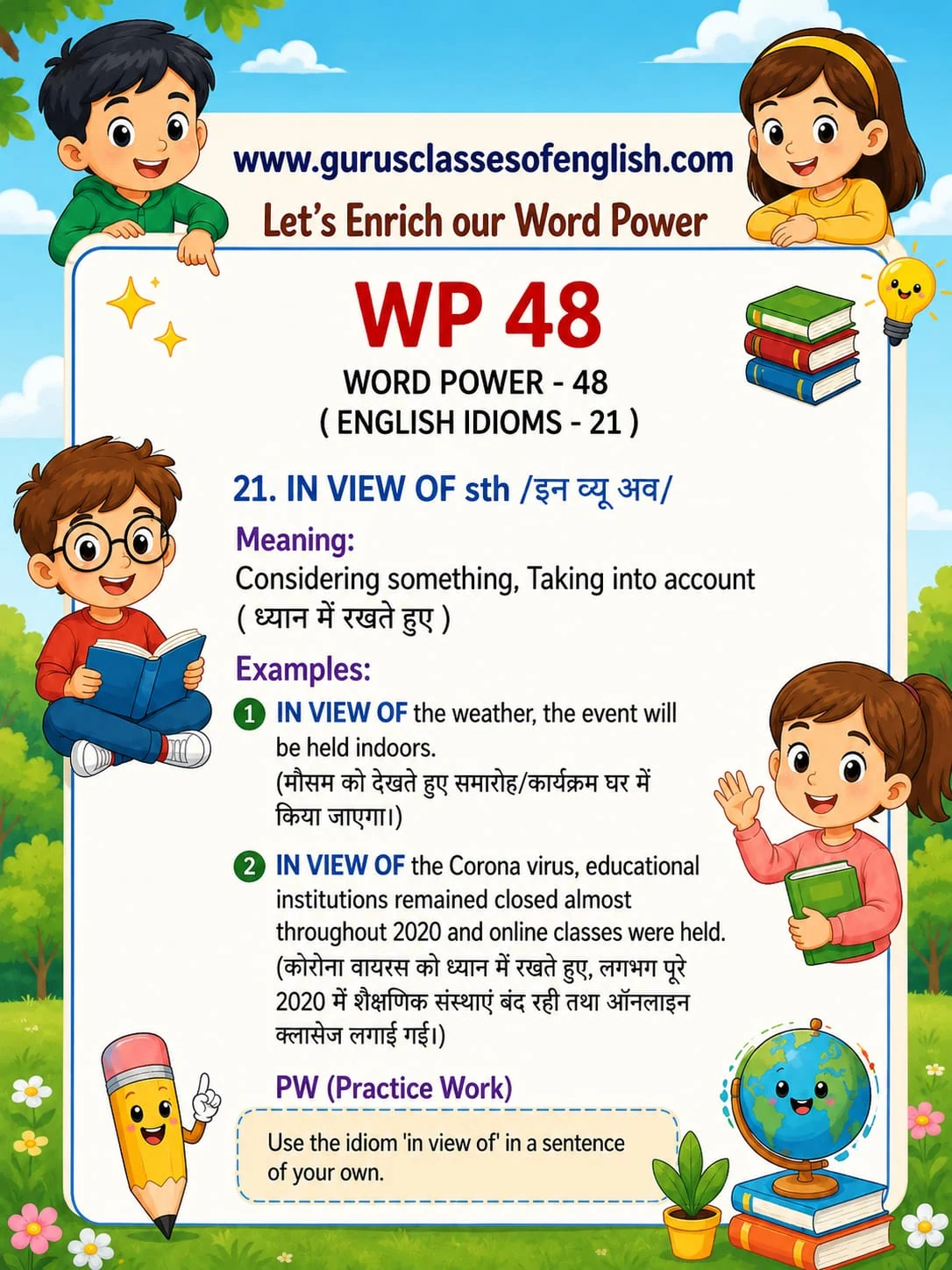
Learn “in view of”: considering something; taking something into account. Read examples from Word Power 48 and try a sentence of your own.
Read lesson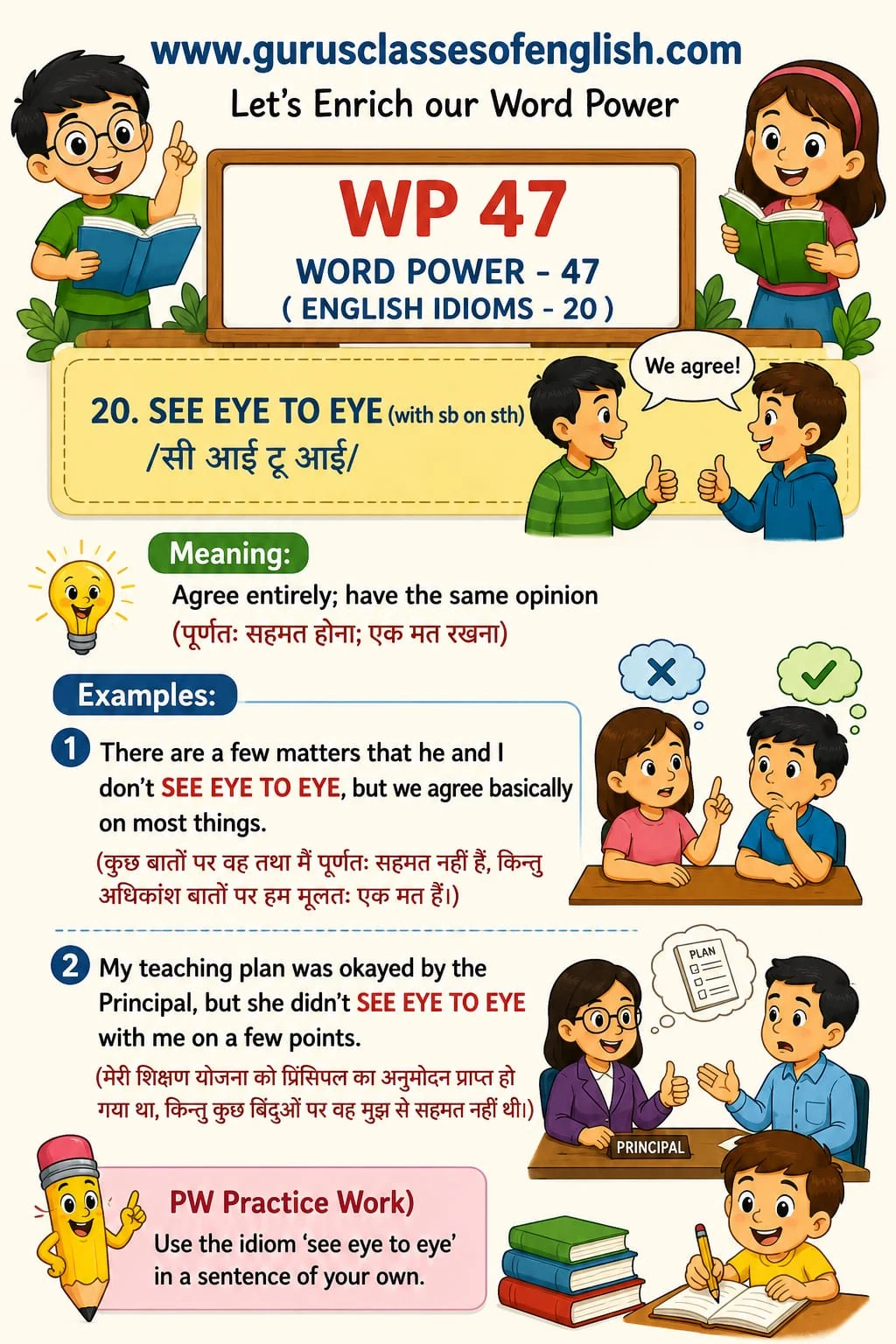
Learn “see eye to eye”: to agree entirely or have the same opinion. Read examples from Word Power 47 and try a sentence of your own.
Read lesson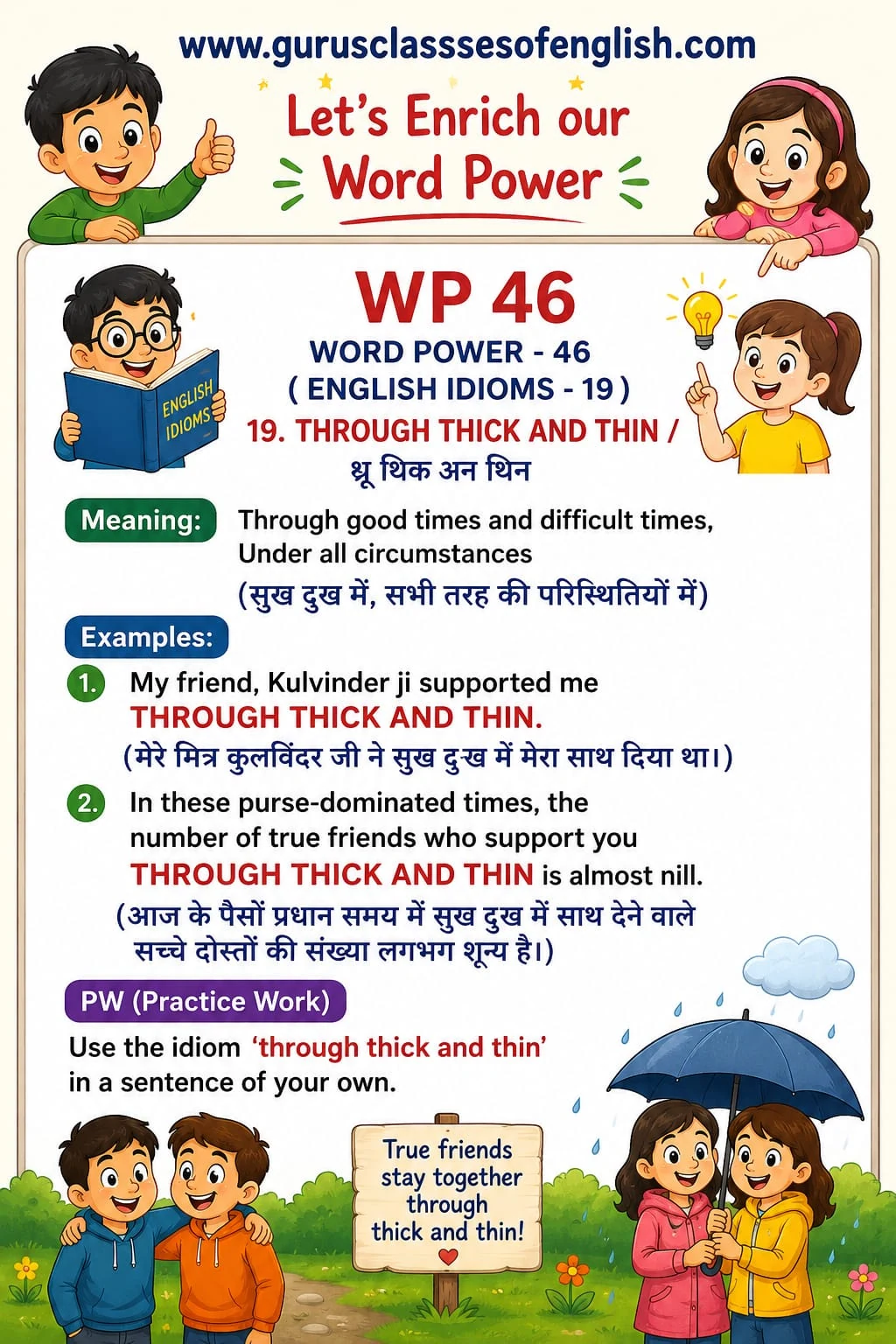
Learn “through thick and thin”: through good times and difficult times; under all circumstances. Read examples from Word Power 46 and try a sentence of your own.
Read lesson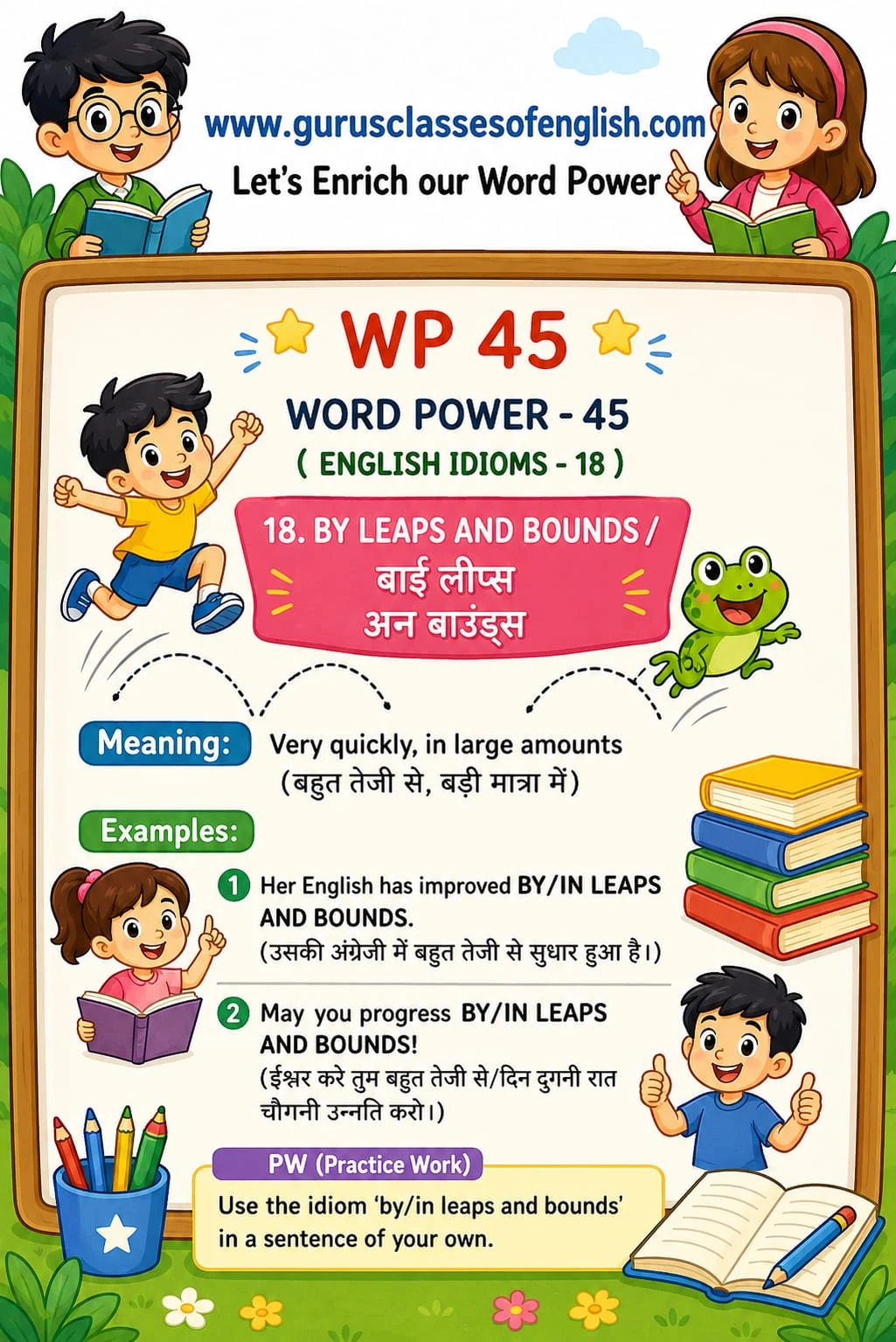
Learn “by leaps and bounds”: very quickly; in large amounts. Read examples from Word Power 45 and try a sentence of your own.
Read lesson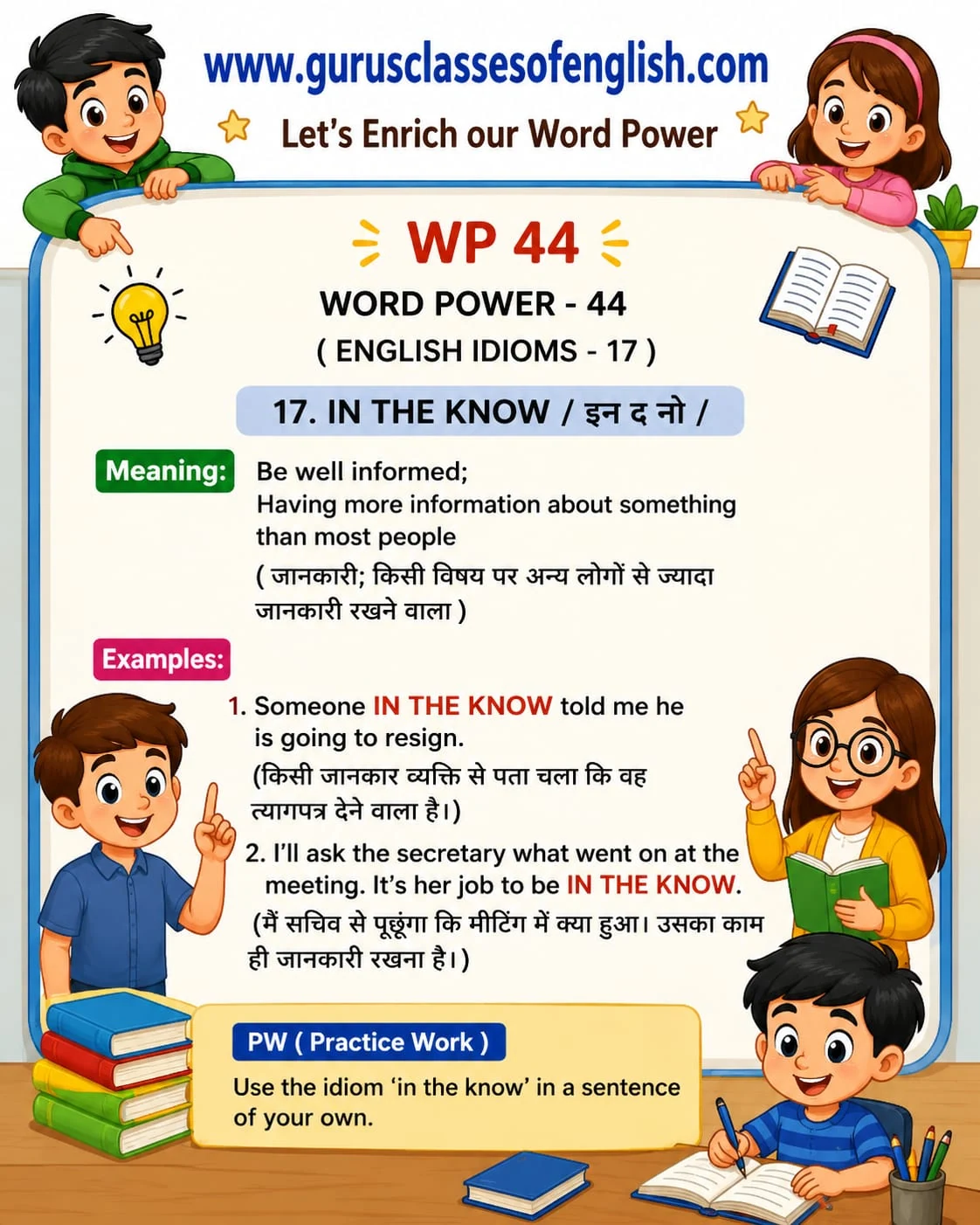
Learn “in the know”: well informed; having more information about something than most people. Read examples from Word Power 44 and try a sentence of your own.
Read lesson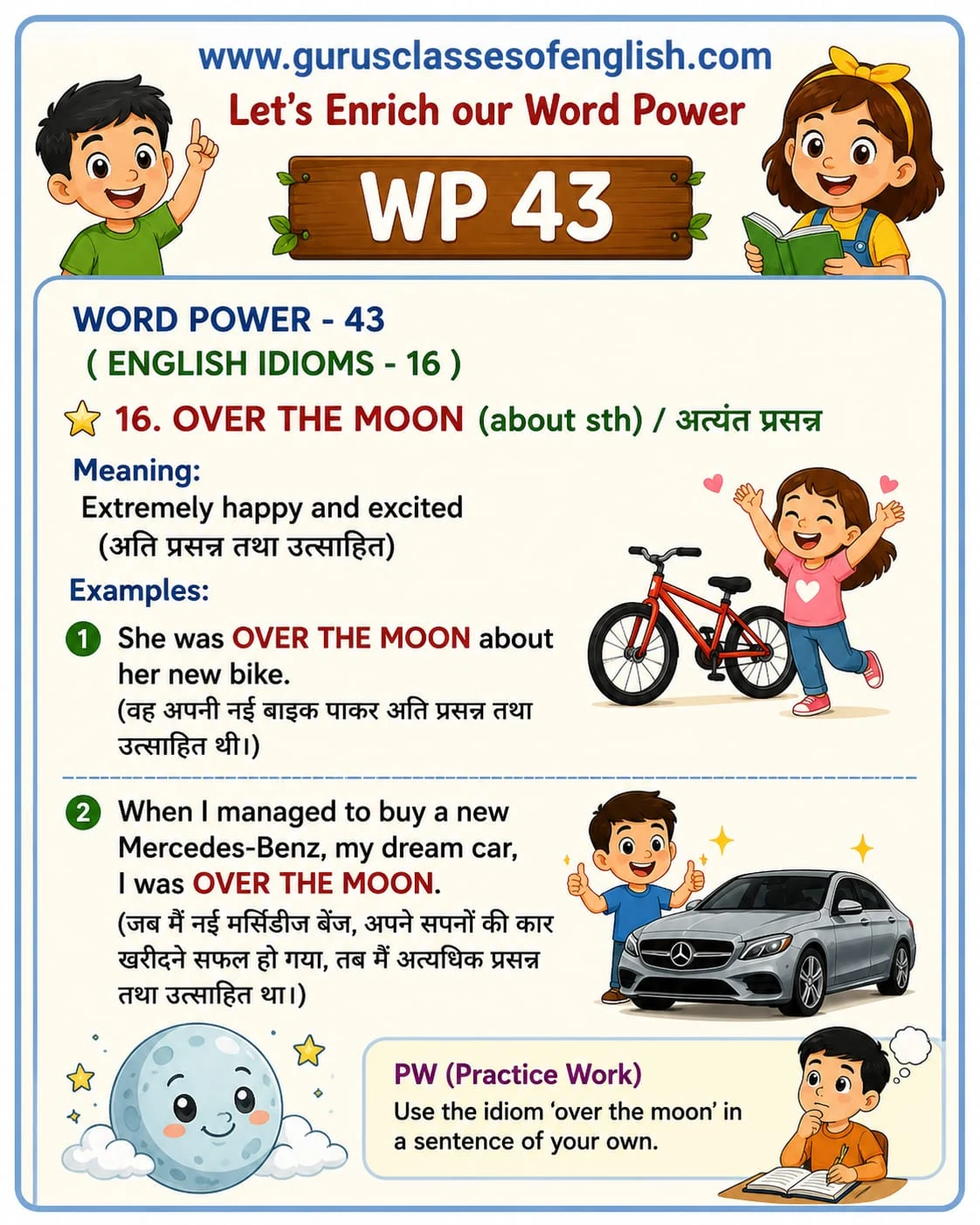
Learn “over the moon”: extremely happy and excited. Read examples from Word Power 43 and try a sentence of your own.
Read lesson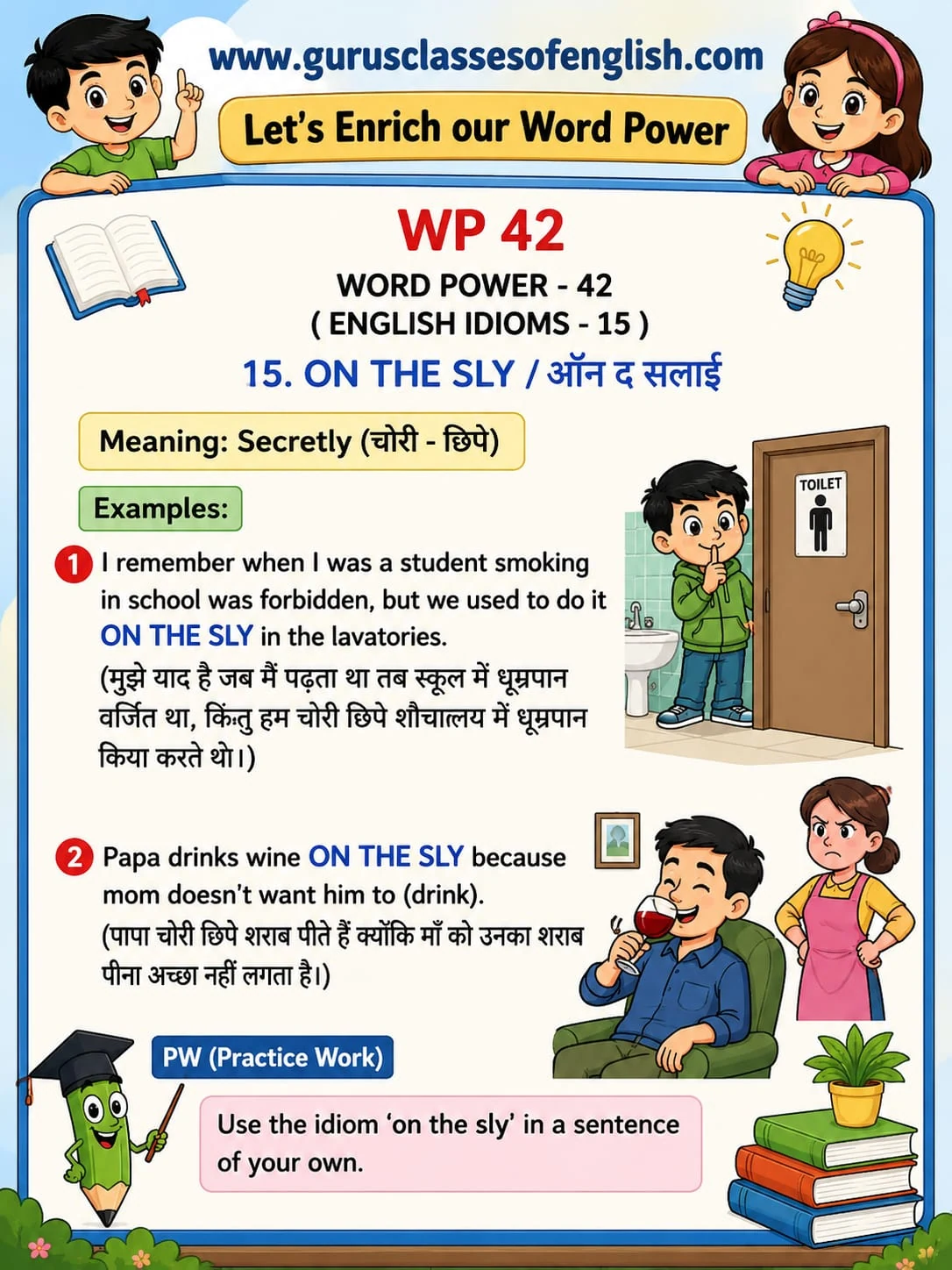
Learn “on the sly”: secretly. Read examples from Word Power 42 and try a sentence of your own.
Read lesson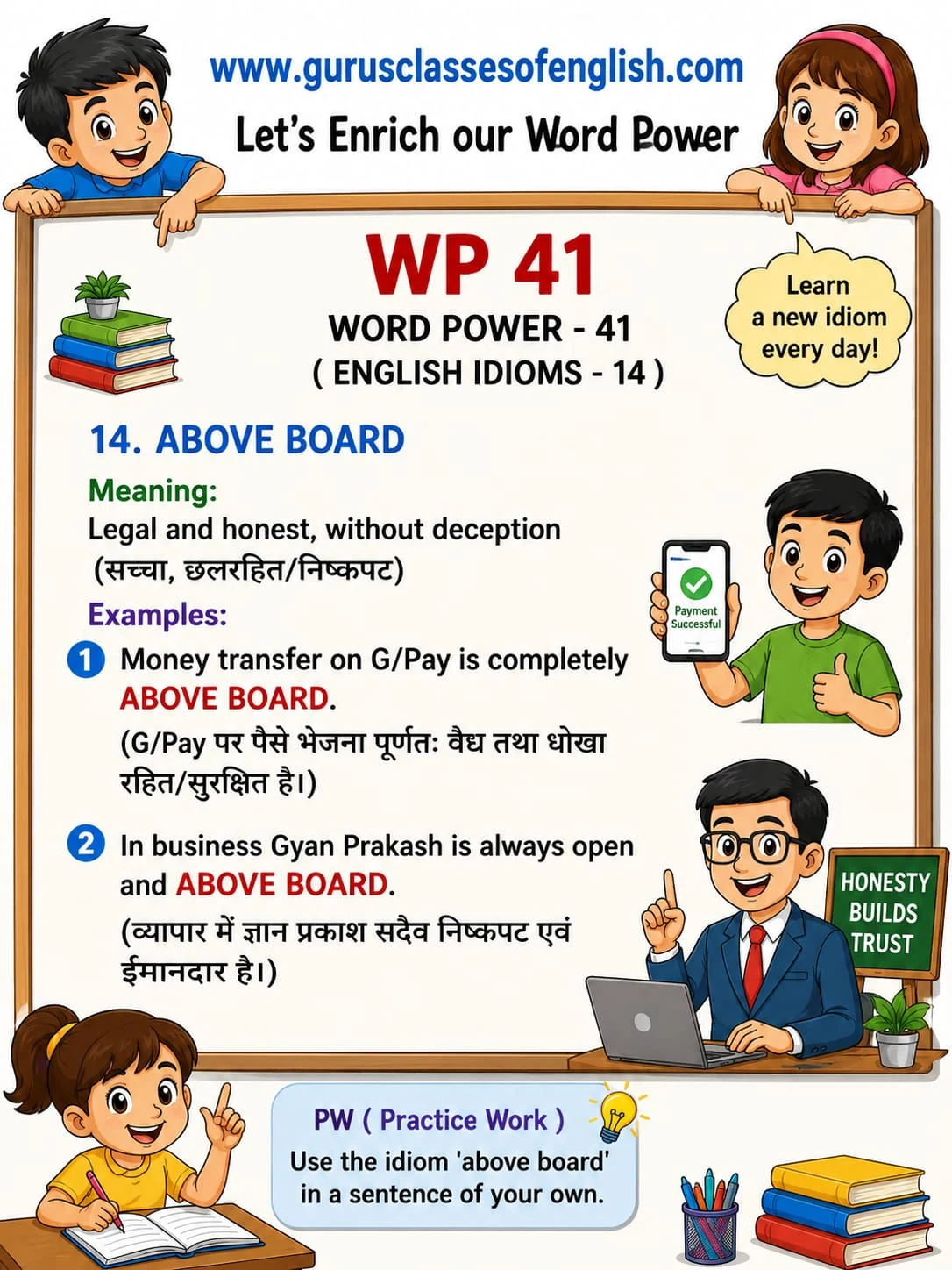
Learn “above board”: legal and honest; without deception. Read examples from Word Power 41 and try a sentence of your own.
Read lesson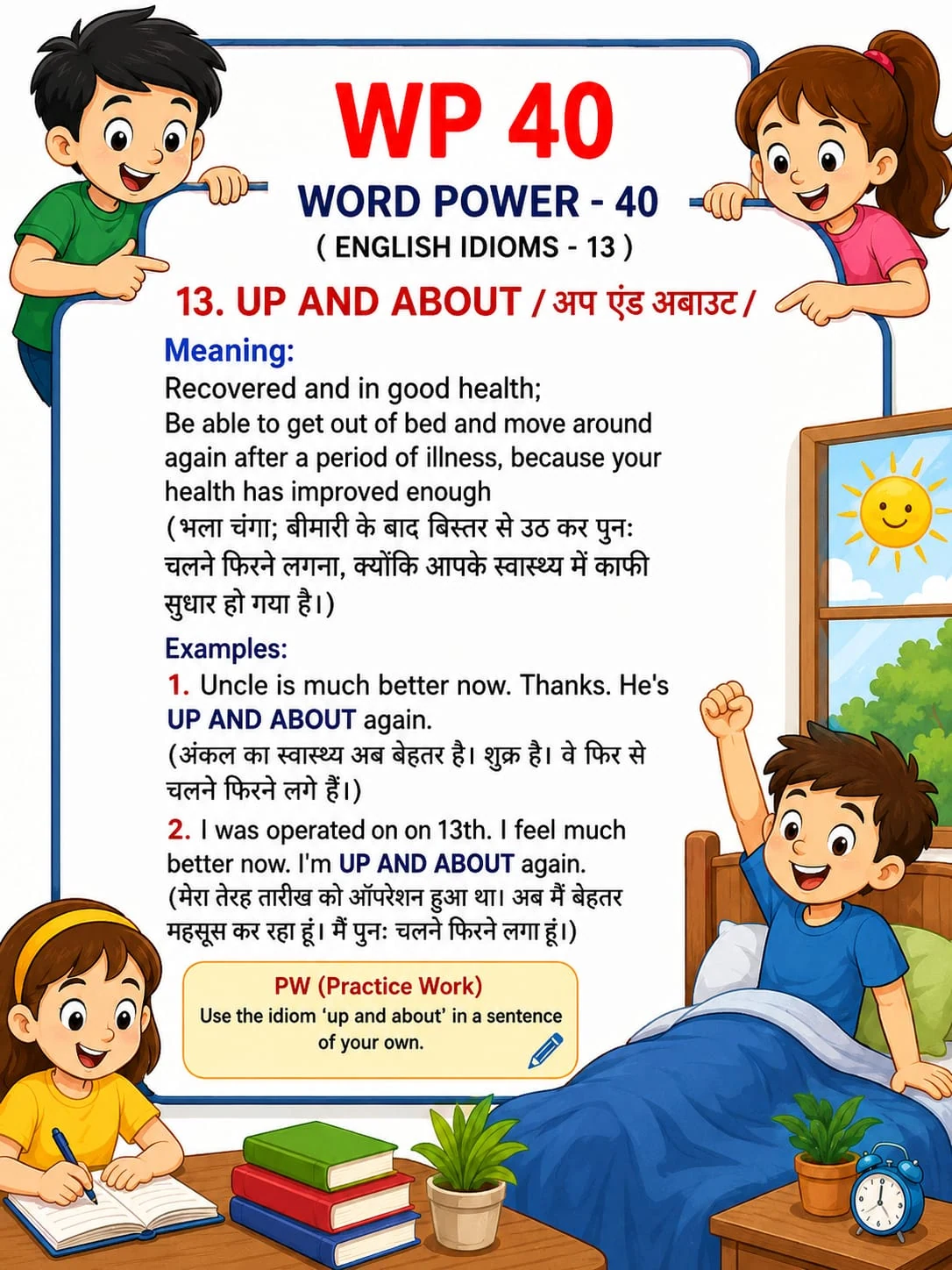
Learn “up and about”: recovered and in good health; able to get out of bed and move around again after a period of illness. Read examples from Word Power 40 and try a sentence of your own.
Read lesson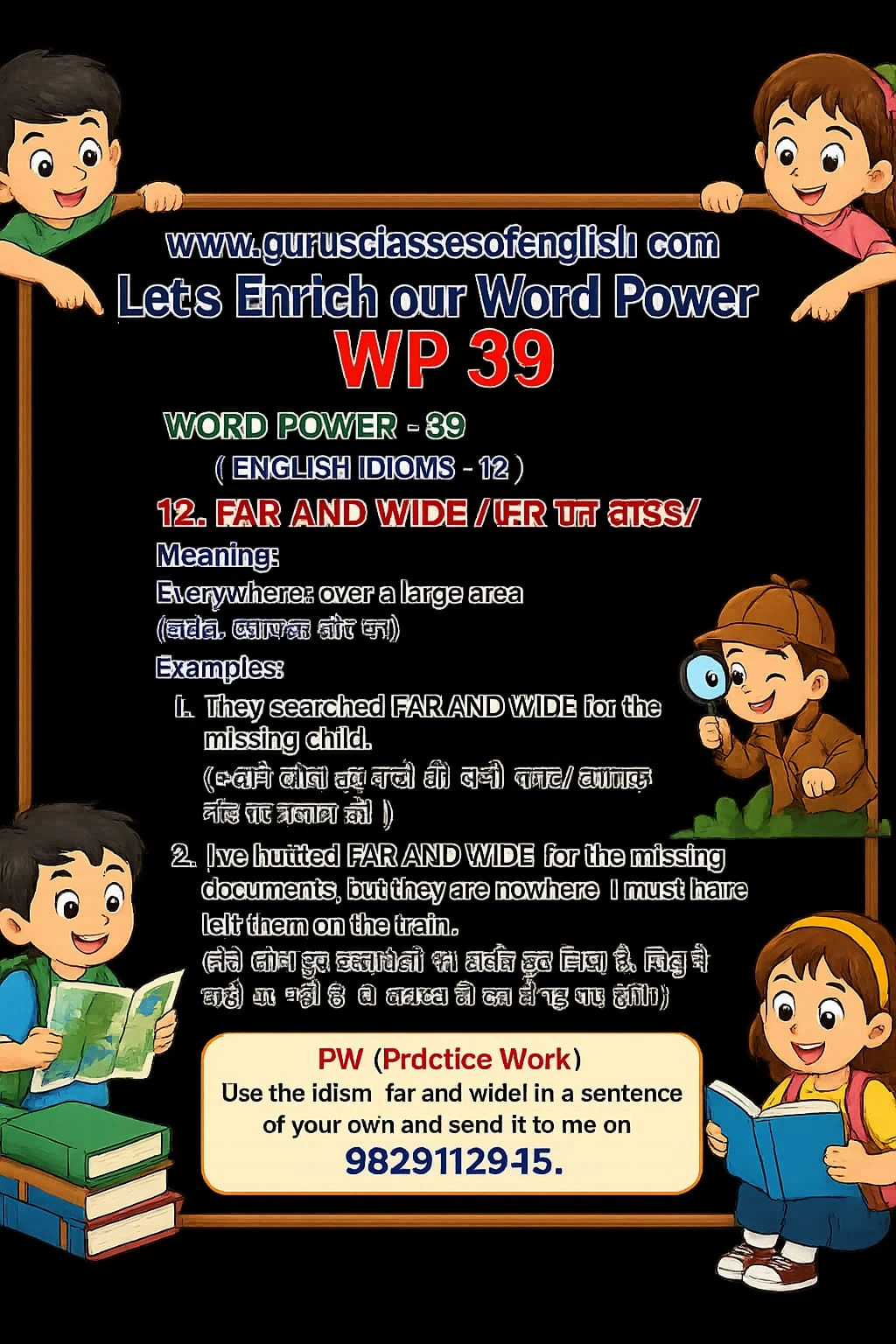
Learn “far and wide”: in or over a large area. Read examples from Word Power 39 and try a sentence of your own.
Read lesson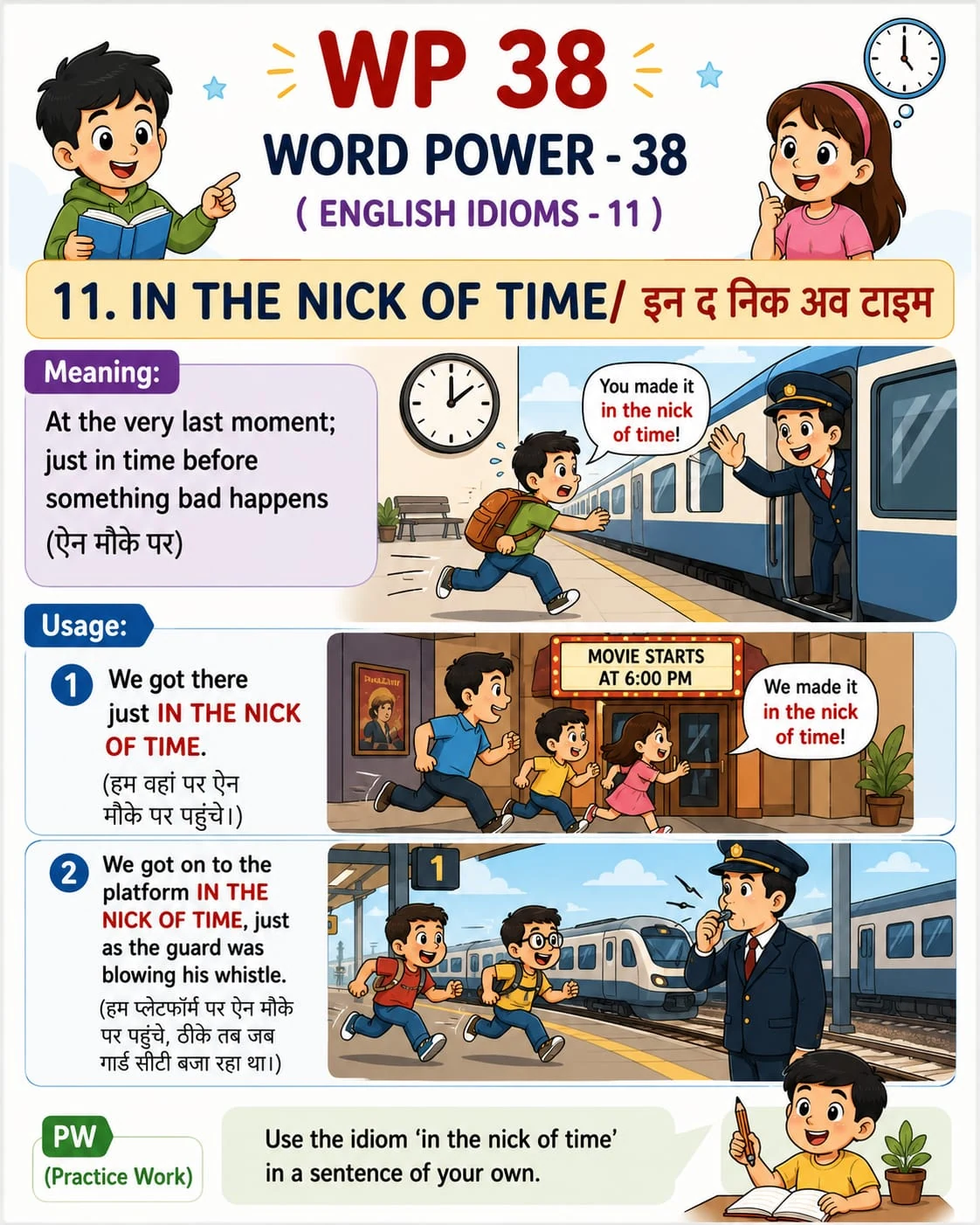
Learn “in the nick of time”: at the very last moment; just in time before something bad happens. Read examples from Word Power 38 and try a sentence of your own.
Read lesson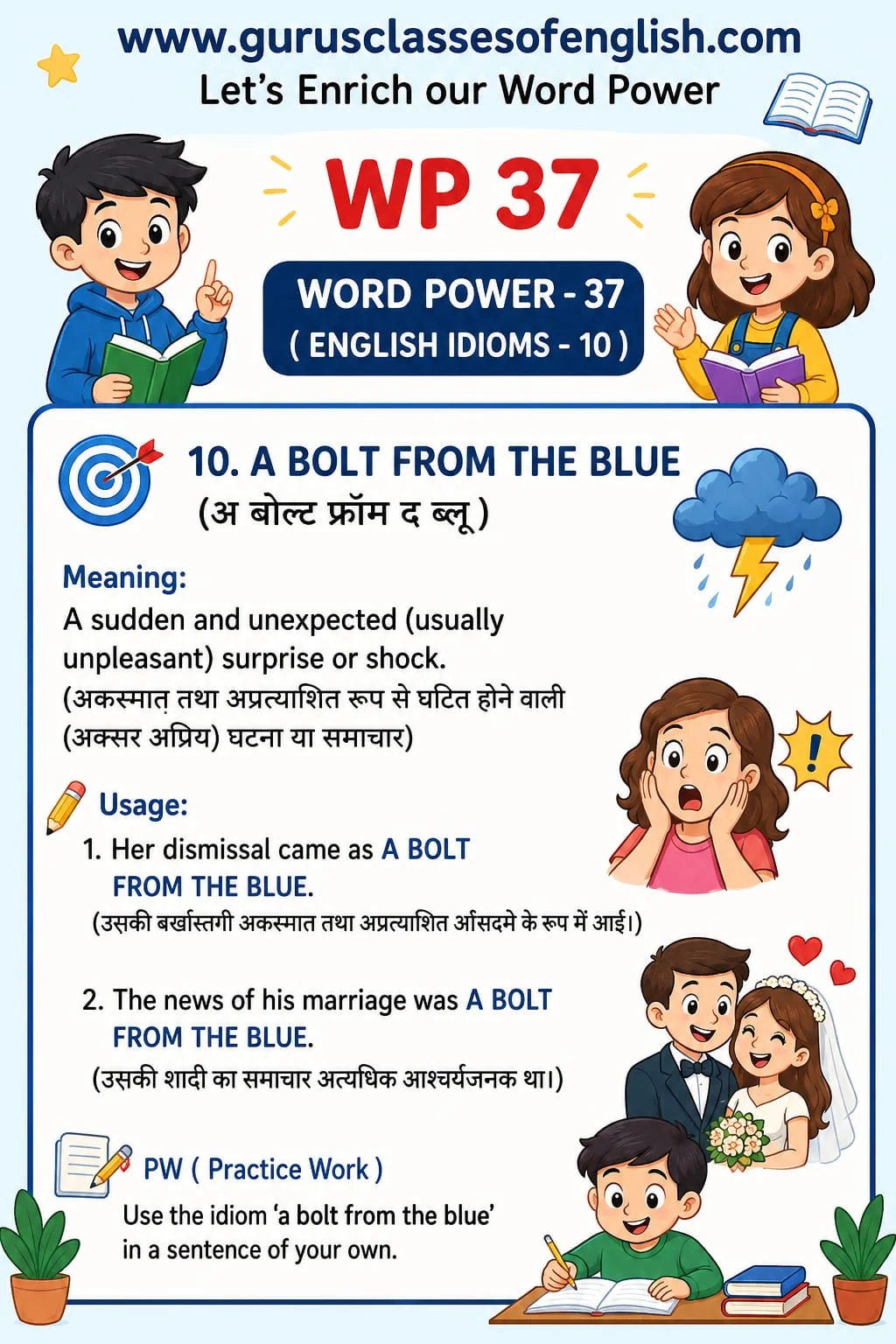
Learn “a bolt from the blue”: a sudden and unexpected, usually unpleasant, surprise or shock. Read examples from Word Power 37 and try a sentence of your own.
Read lesson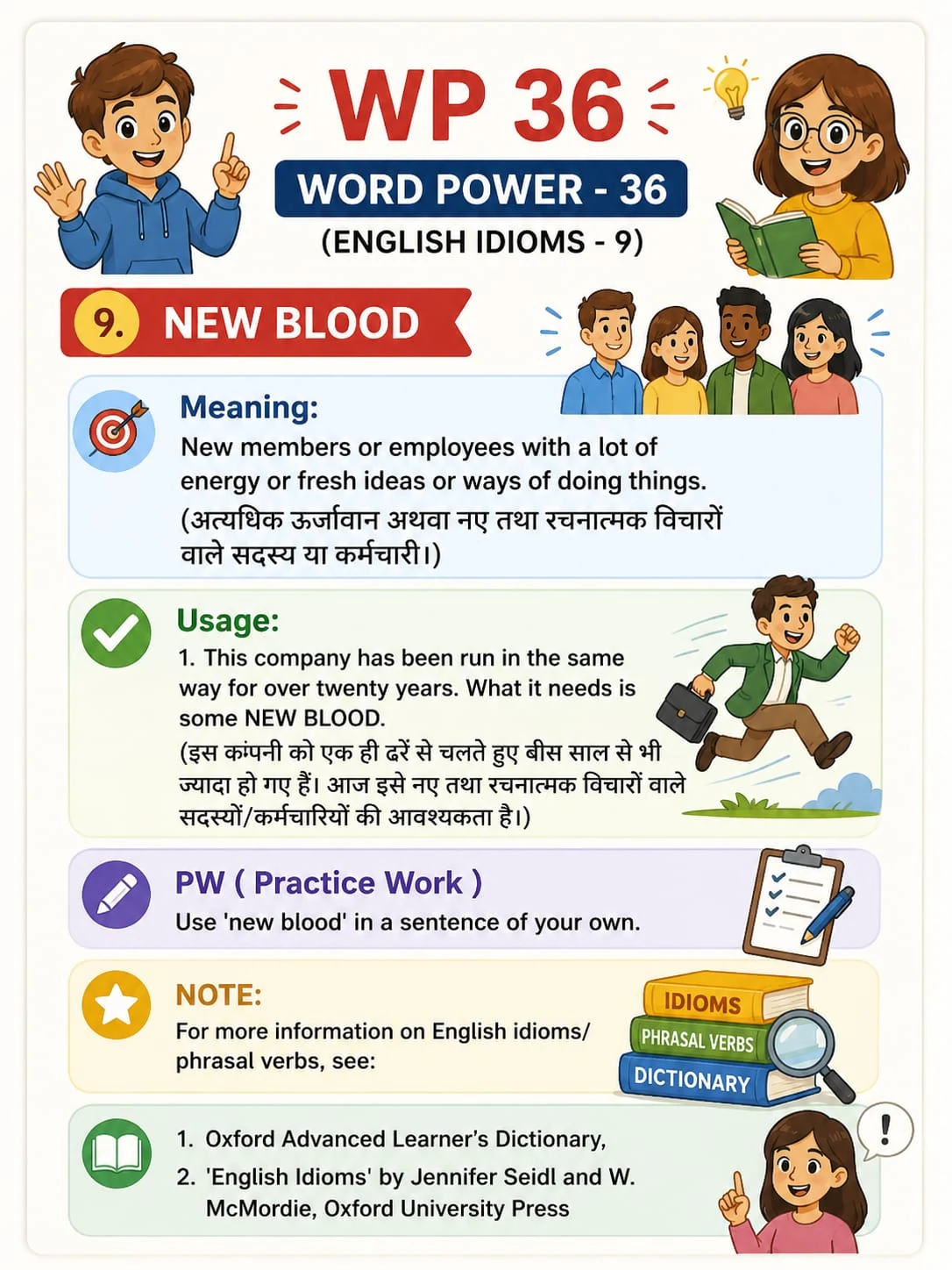
Learn “new blood”: new members or employees with a lot of energy or fresh ideas. Read examples from Word Power 36 and try a sentence of your own.
Read lesson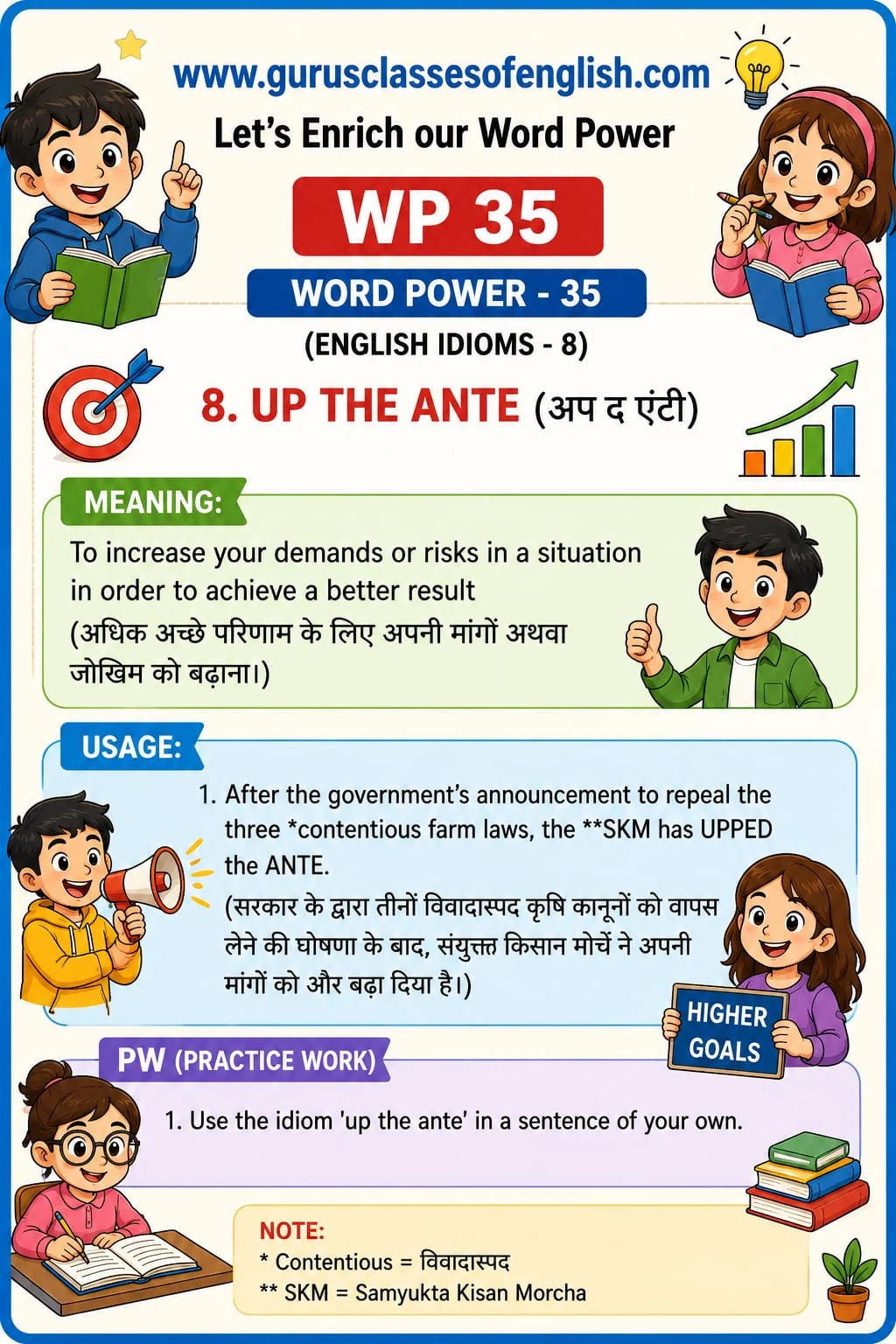
Learn “up the ante”: to increase demands or risks in a situation in order to achieve a better result. Read examples from Word Power 35 and try a sentence of your own.
Read lesson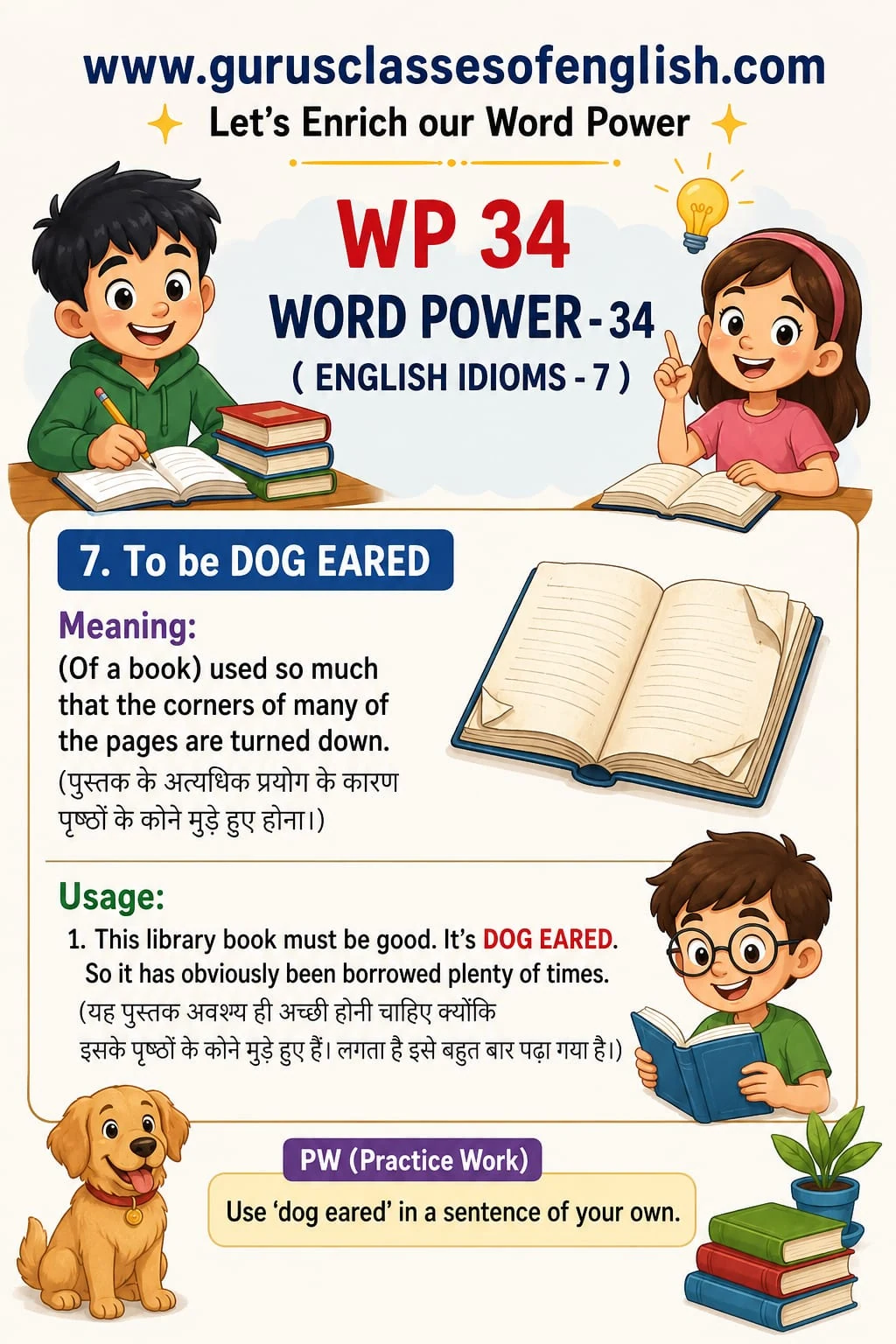
Learn “dog-eared”: having the corners of many pages turned down because a book has been used so much. Read examples from Word Power 34 and try a sentence of your own.
Read lesson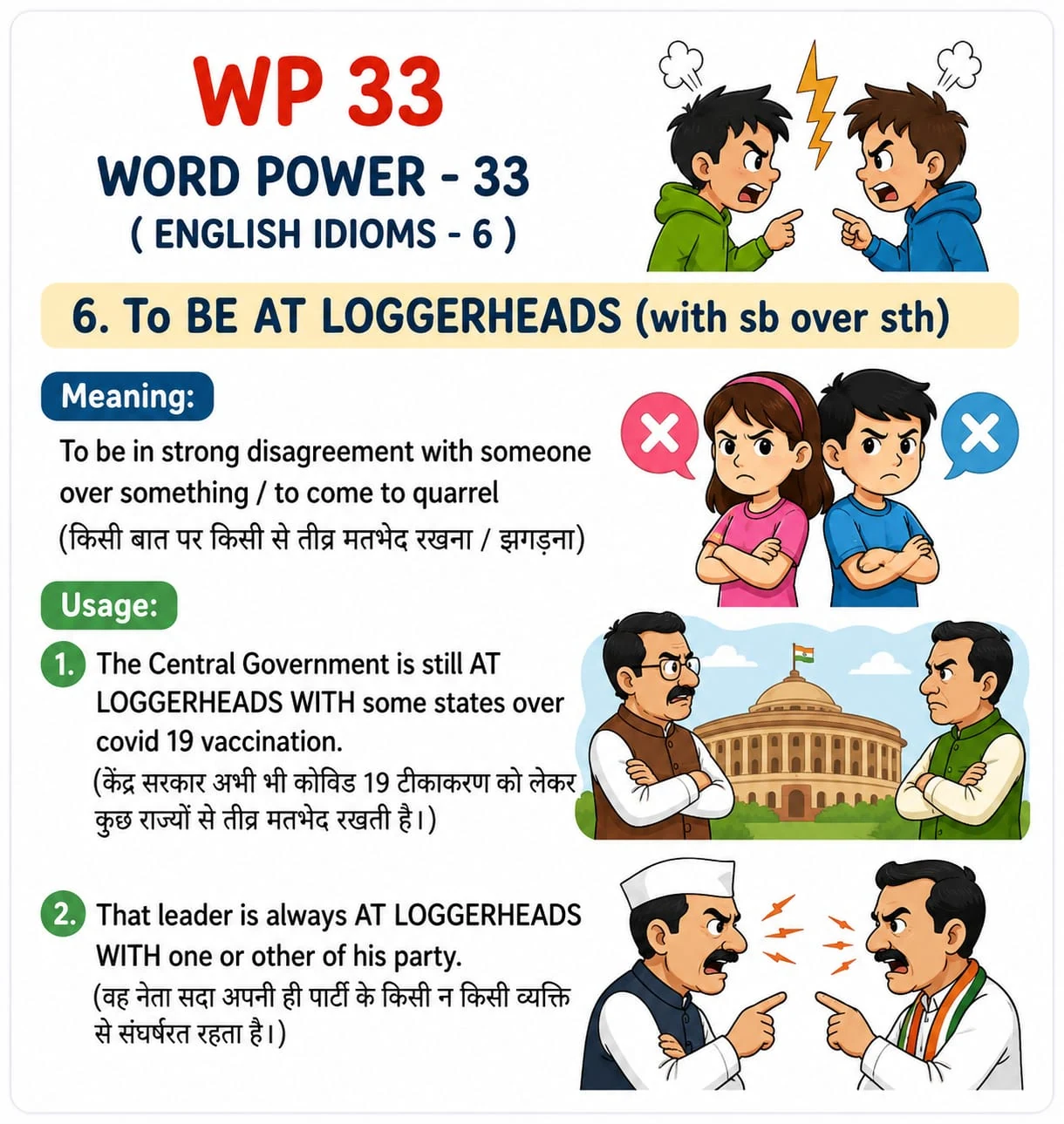
Learn “be at loggerheads”: to be in strong disagreement with someone over something; to come to quarrel. Read examples from Word Power 33 and try a sentence of your own.
Read lesson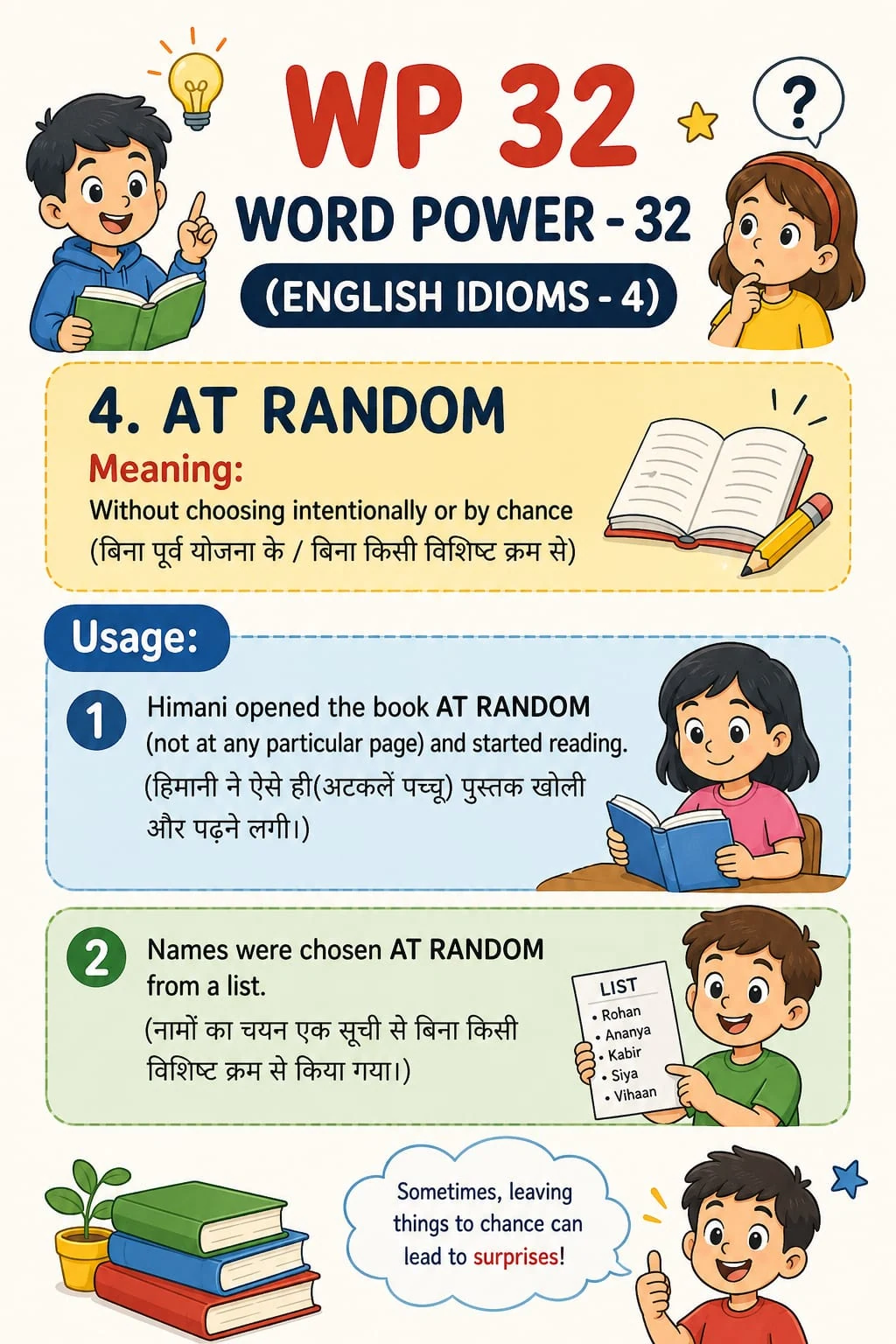
Learn “at random”: without choosing intentionally or by chance. Read examples from Word Power 32 and try a sentence of your own.
Read lesson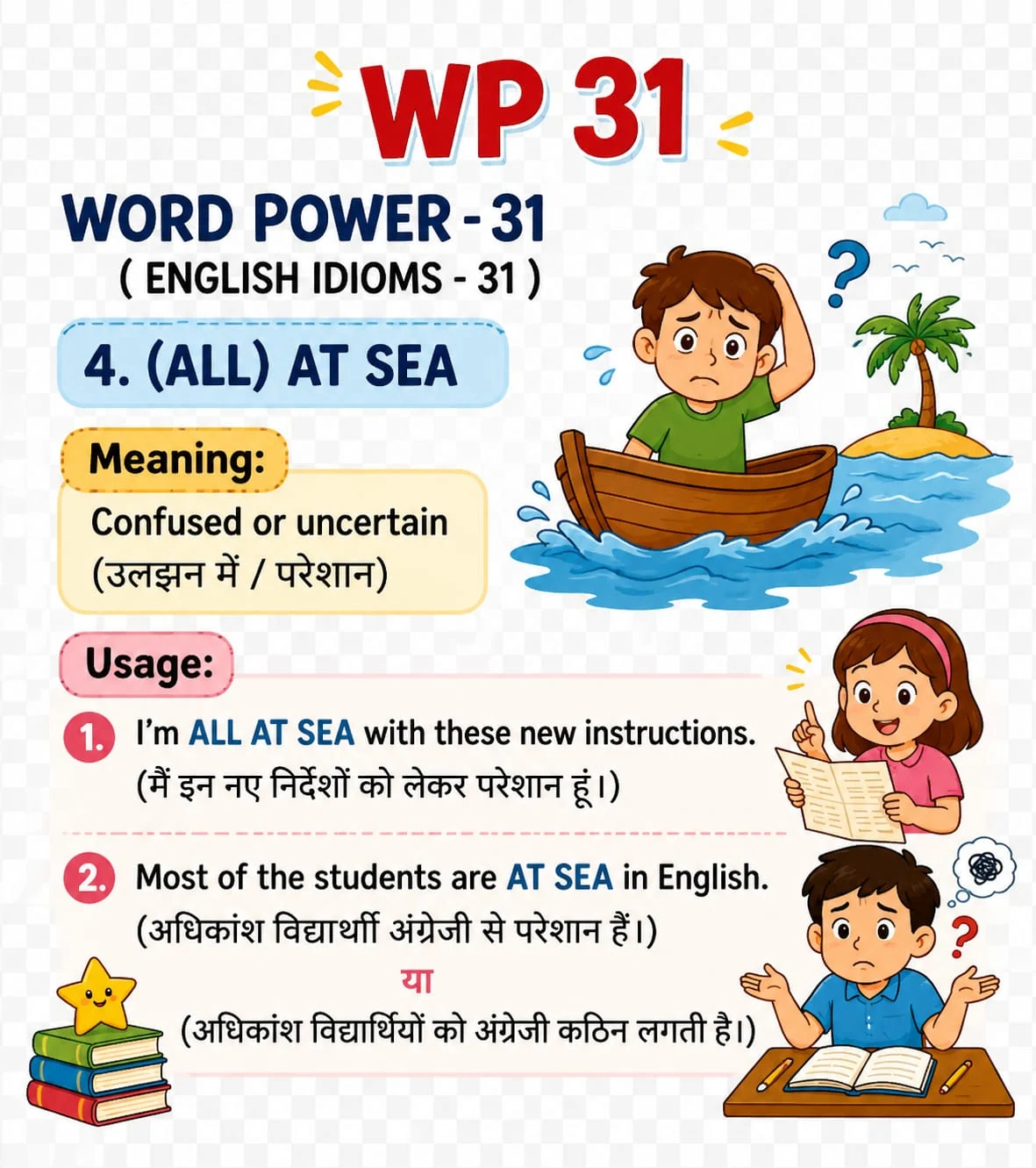
Learn “all at sea”: confused or uncertain. Read examples from Word Power 31 and try a sentence of your own.
Read lesson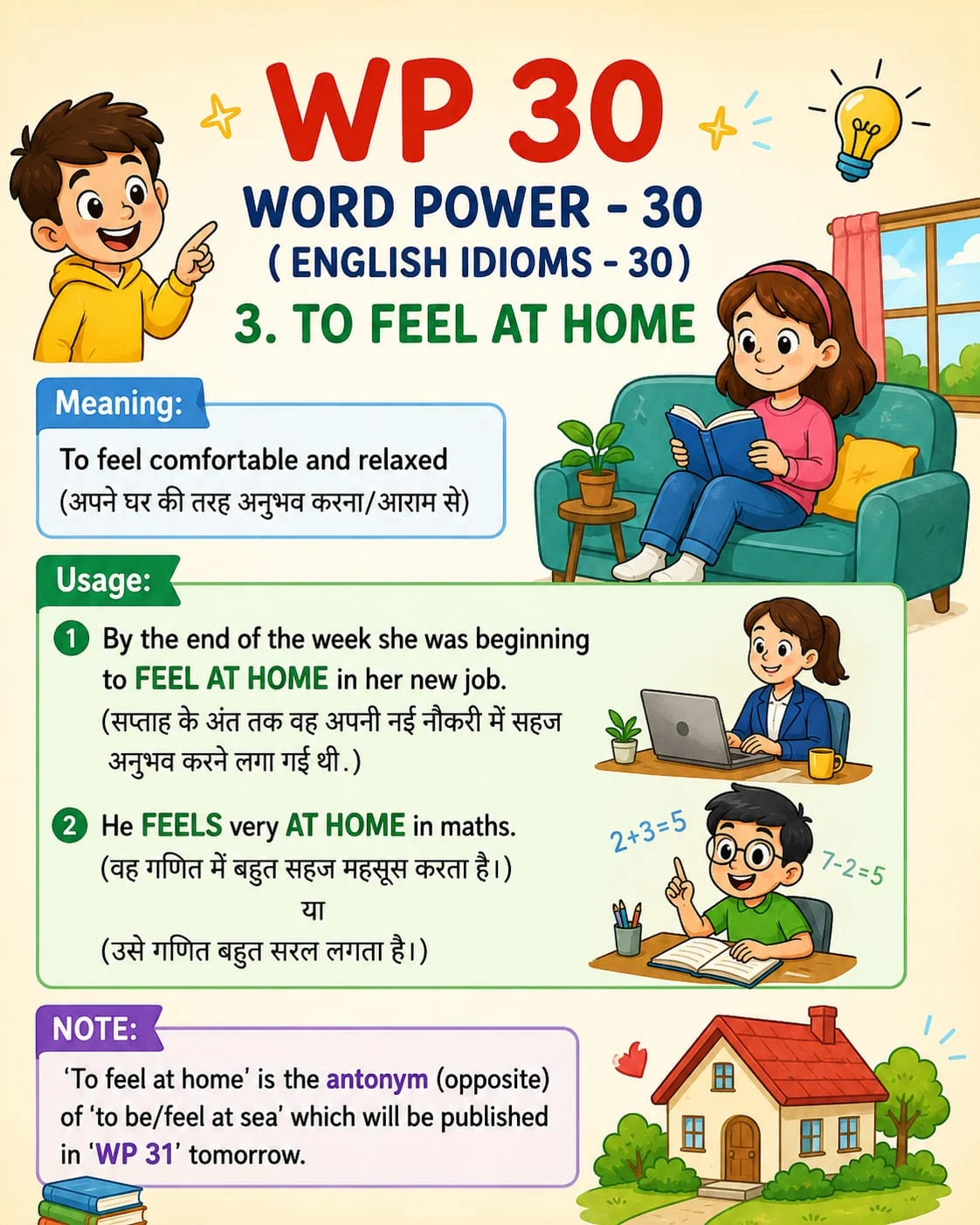
Learn “feel at home”: to feel comfortable and relaxed. Read examples from Word Power 30 and try a sentence of your own.
Read lesson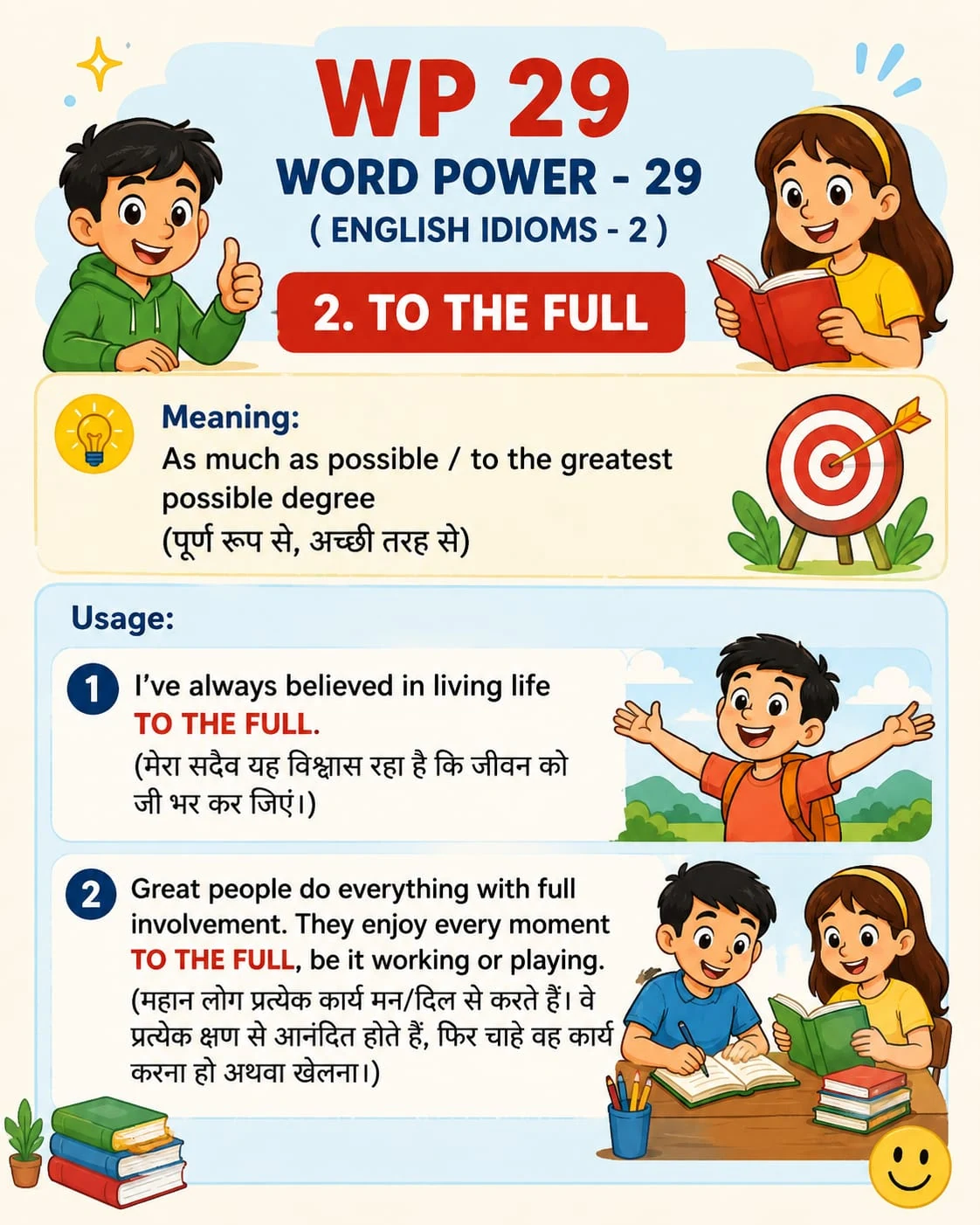
Learn “to the full”: as much as possible; to the greatest possible degree. Read examples from Word Power 29 and try a sentence of your own.
Read lesson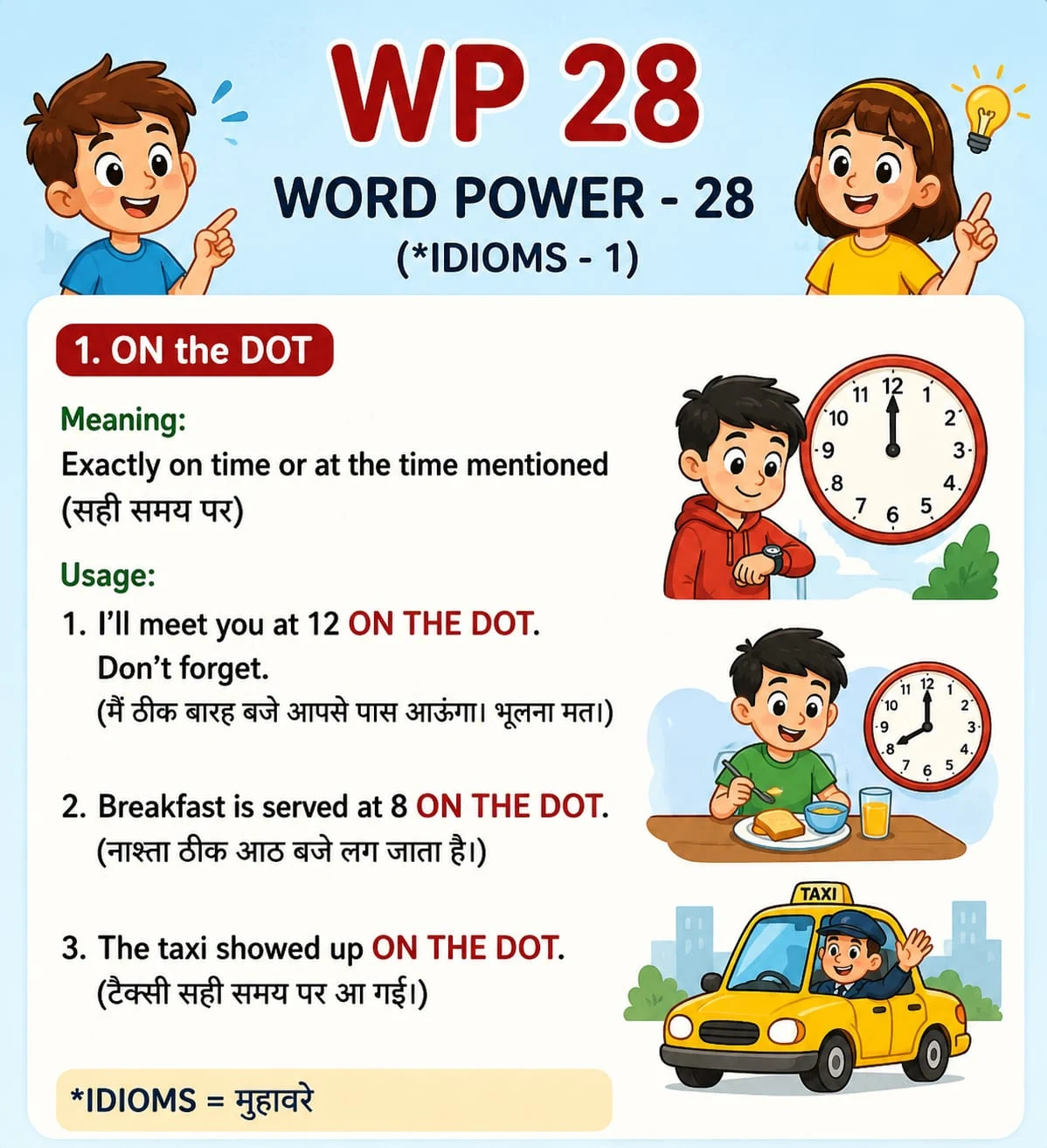
Learn “on the dot”: exactly on time or at the time mentioned. Read examples from Word Power 28 and try a sentence of your own.
Read lesson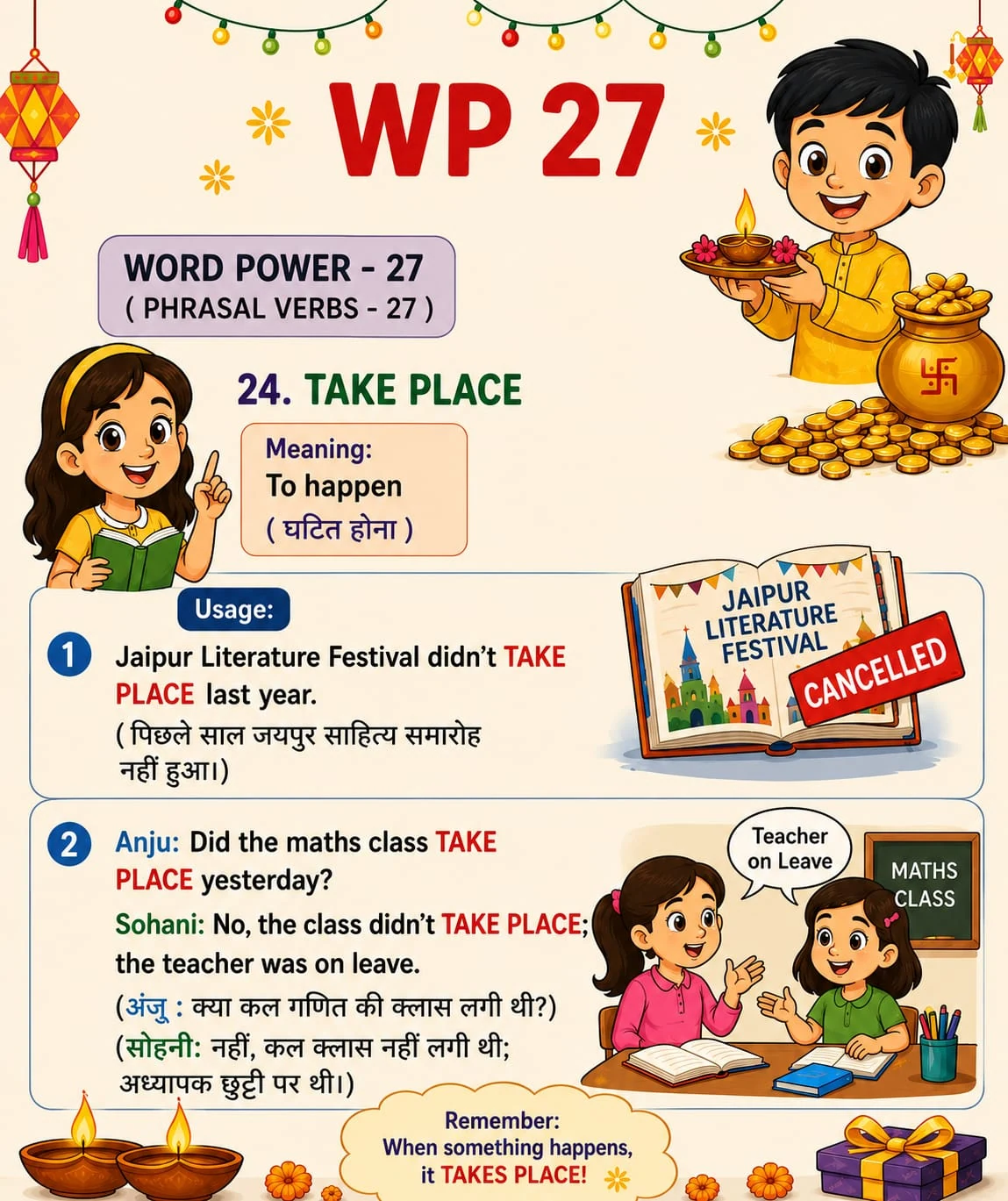
Learn “take place”: to happen. Read examples from Word Power 27 and try a sentence of your own.
Read lesson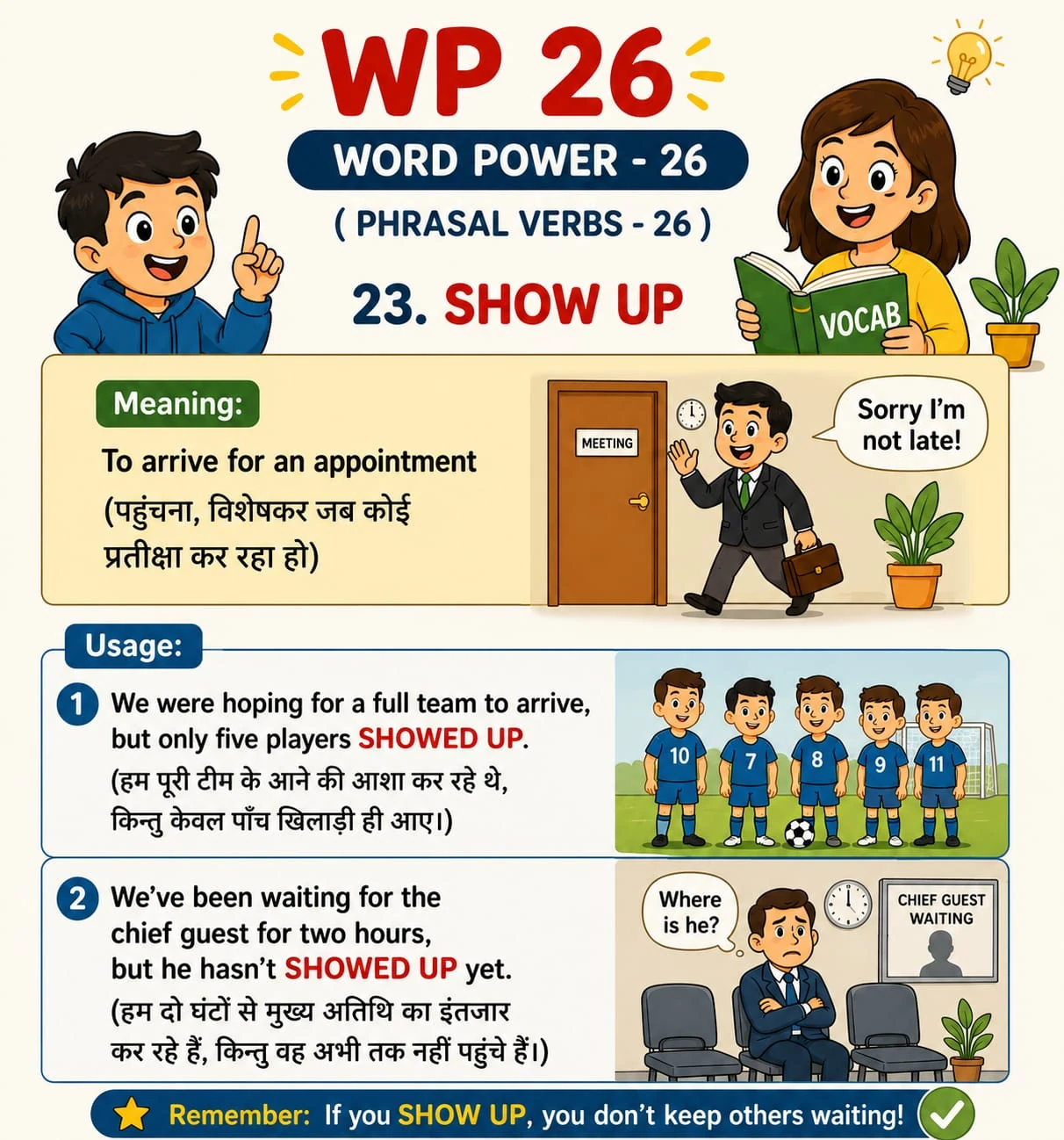
Learn “show up”: to arrive for an appointment. Read examples from Word Power 26 and try a sentence of your own.
Read lesson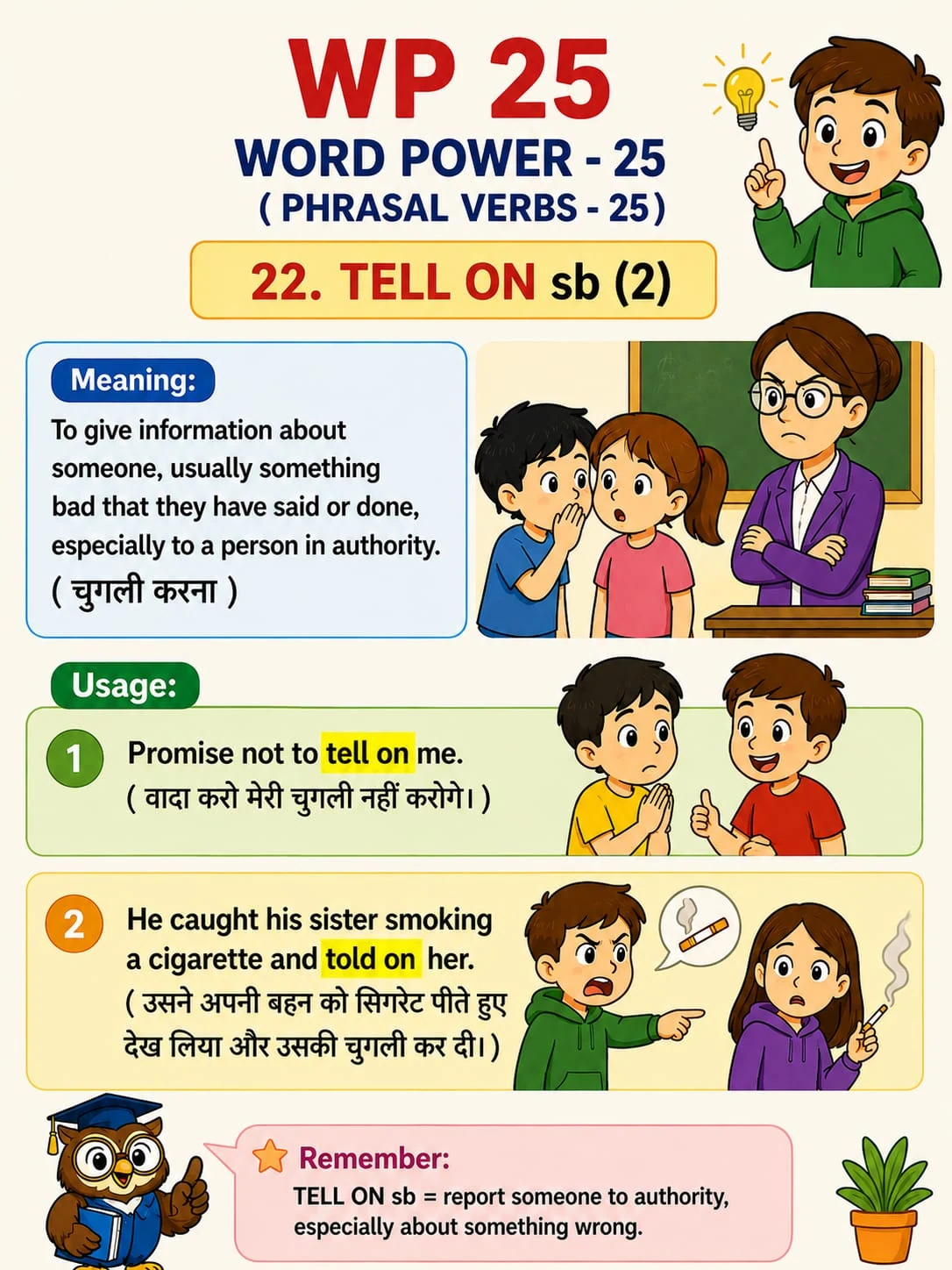
Learn “tell on somebody: report to an authority”: to give information about someone, usually something bad that they have said or done, especially to a person in authority. Read examples from Word Power 25 and try a sentence of your own.
Read lesson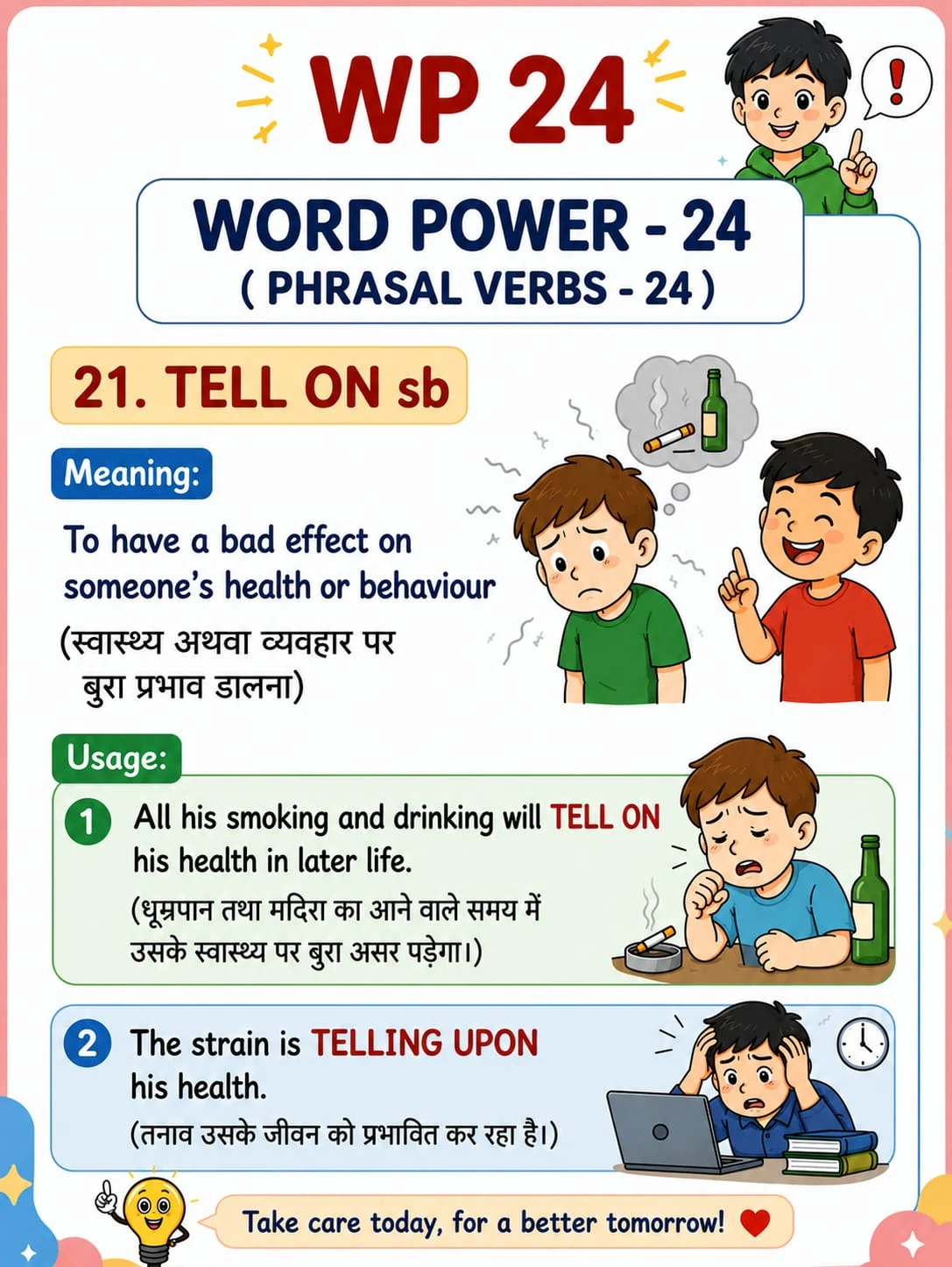
Learn “tell on somebody: affect health or behaviour”: to have a bad effect on someone's health or behaviour. Read examples from Word Power 24 and try a sentence of your own.
Read lesson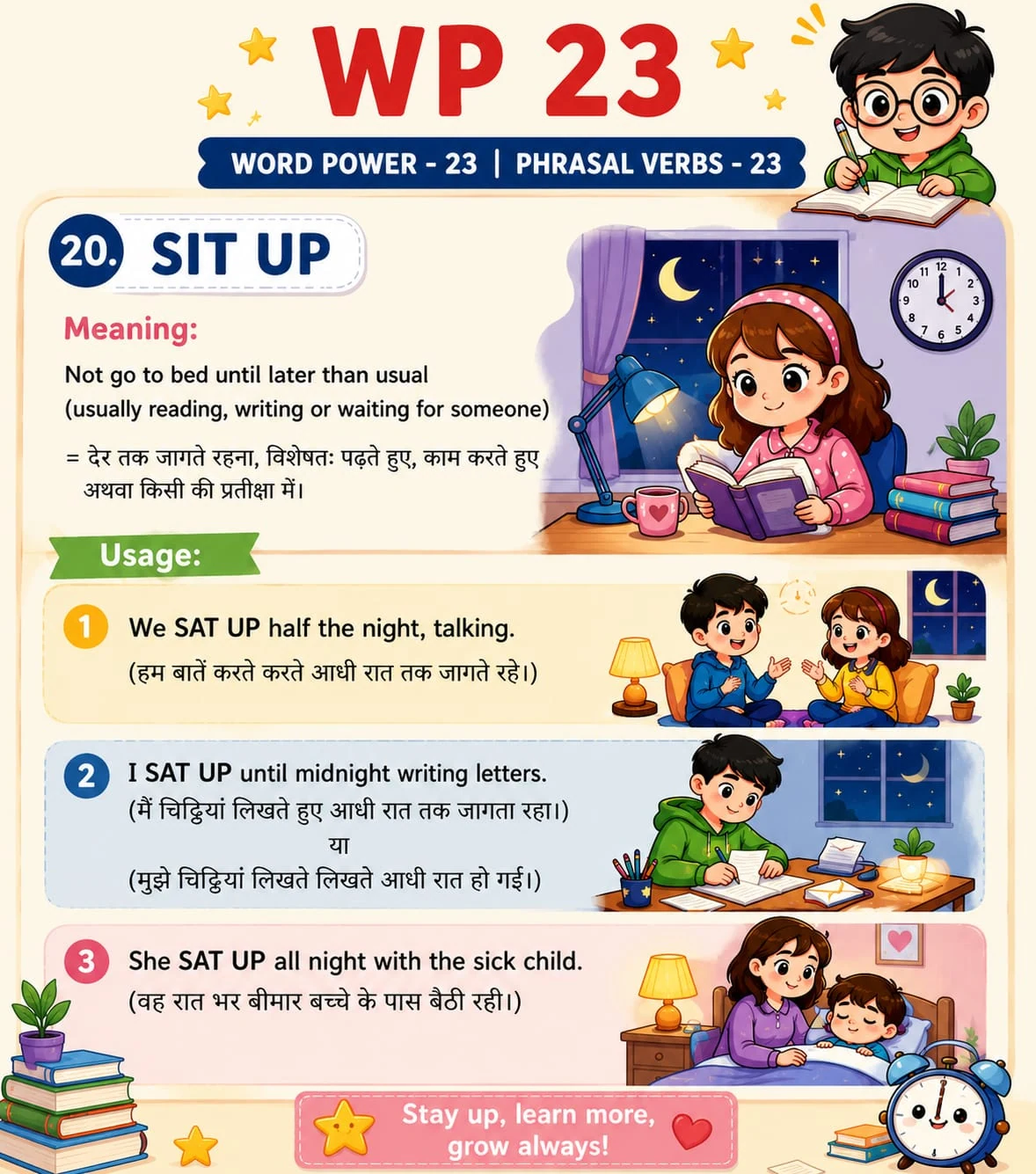
Learn “sit up”: to not go to bed until later than usual, usually reading, writing or waiting for someone. Read examples from Word Power 23 and try a sentence of your own.
Read lesson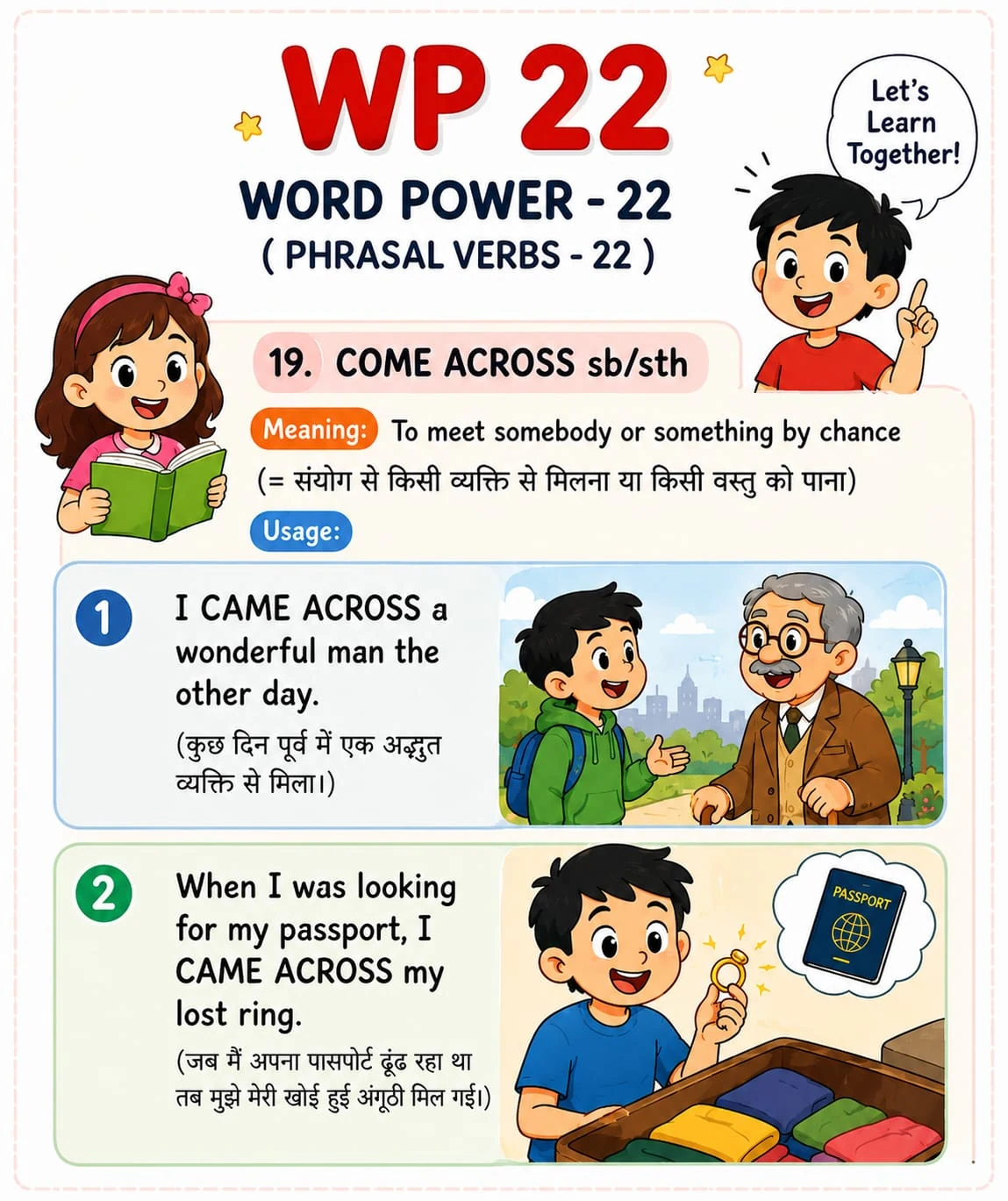
Learn “come across”: to meet somebody or find something by chance. Read examples from Word Power 22 and try a sentence of your own.
Read lesson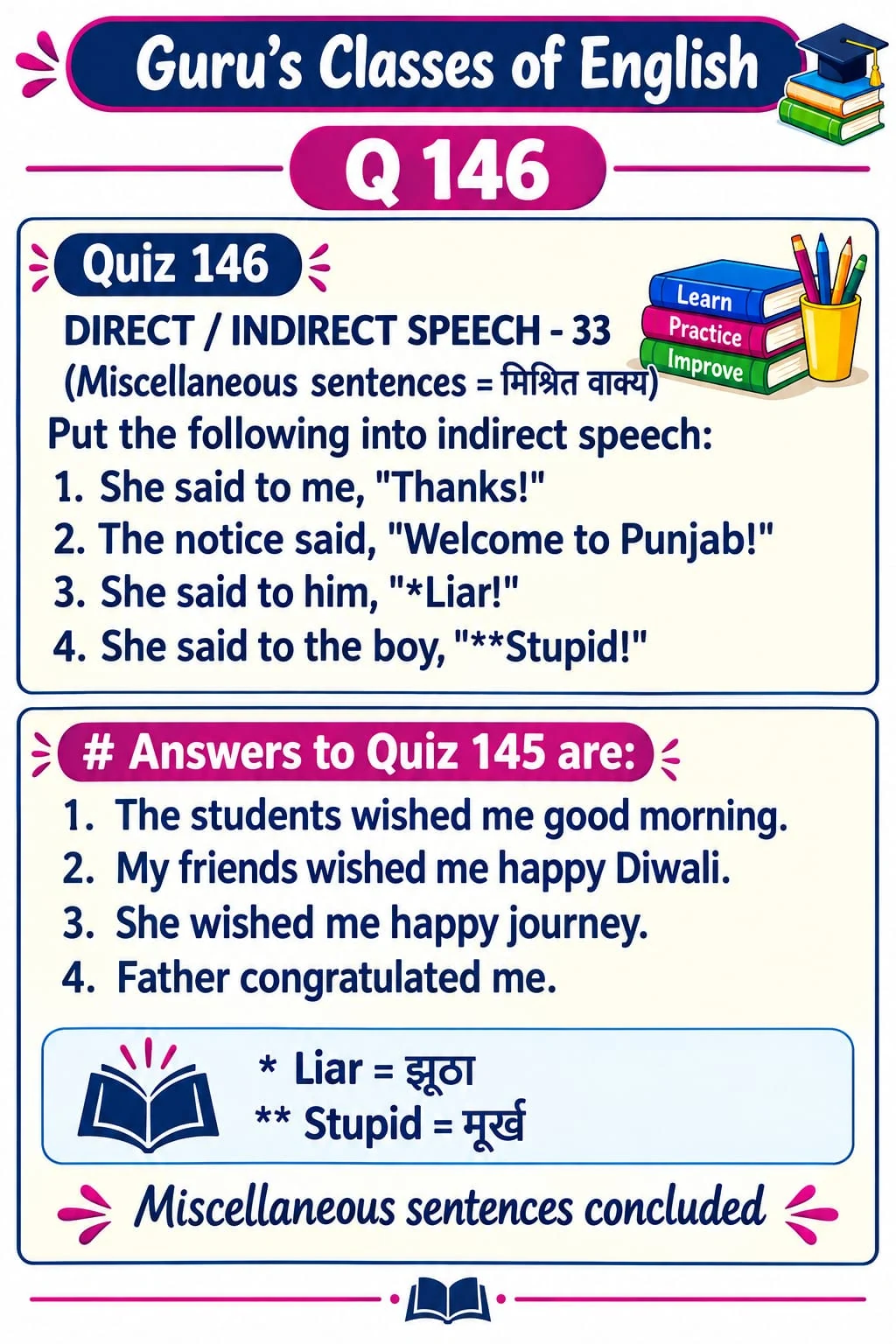
Practise reporting thanks, welcomes and remarks.
Read lesson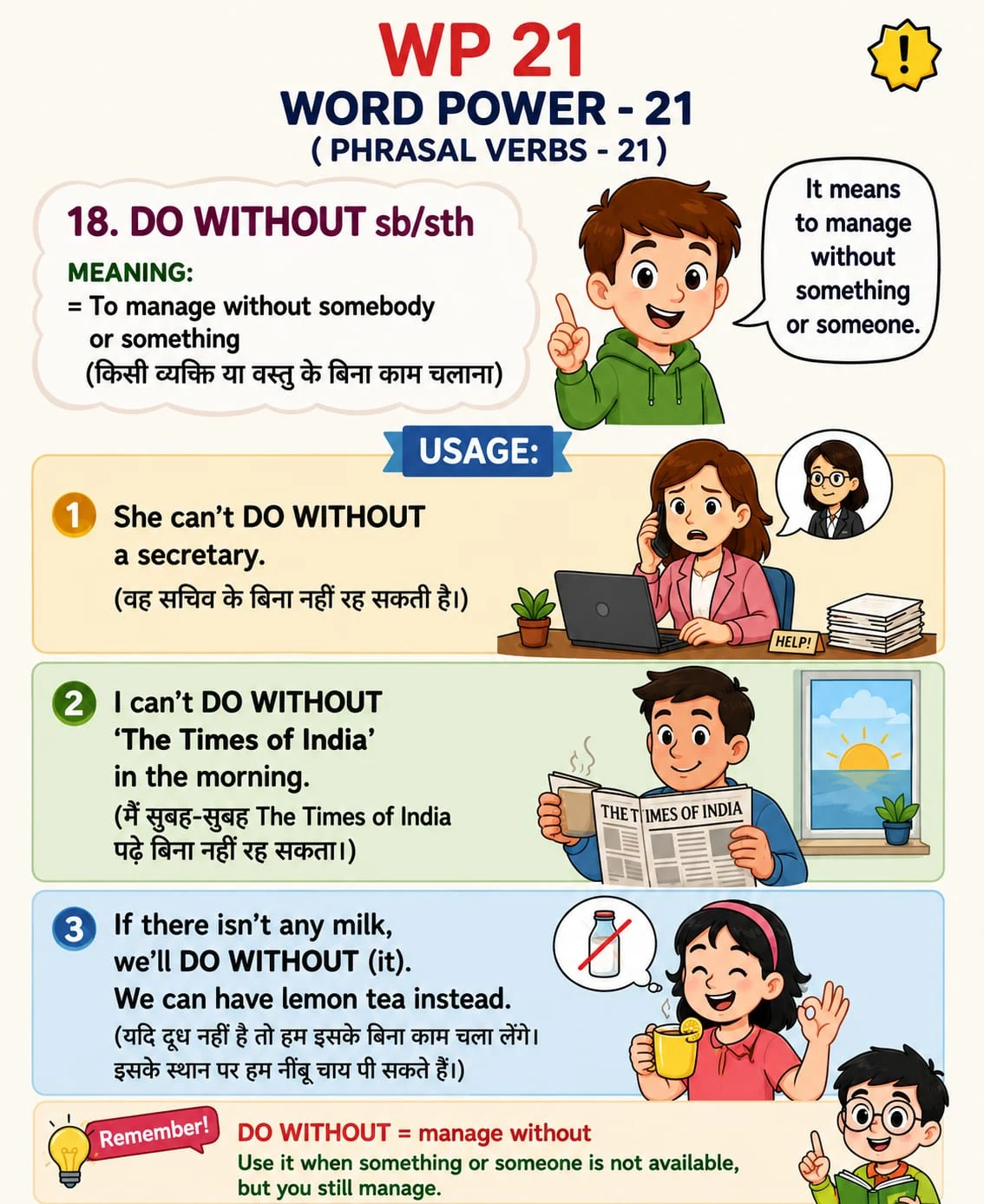
Learn “do without”: to manage without somebody or something. Read examples from Word Power 21 and try a sentence of your own.
Read lesson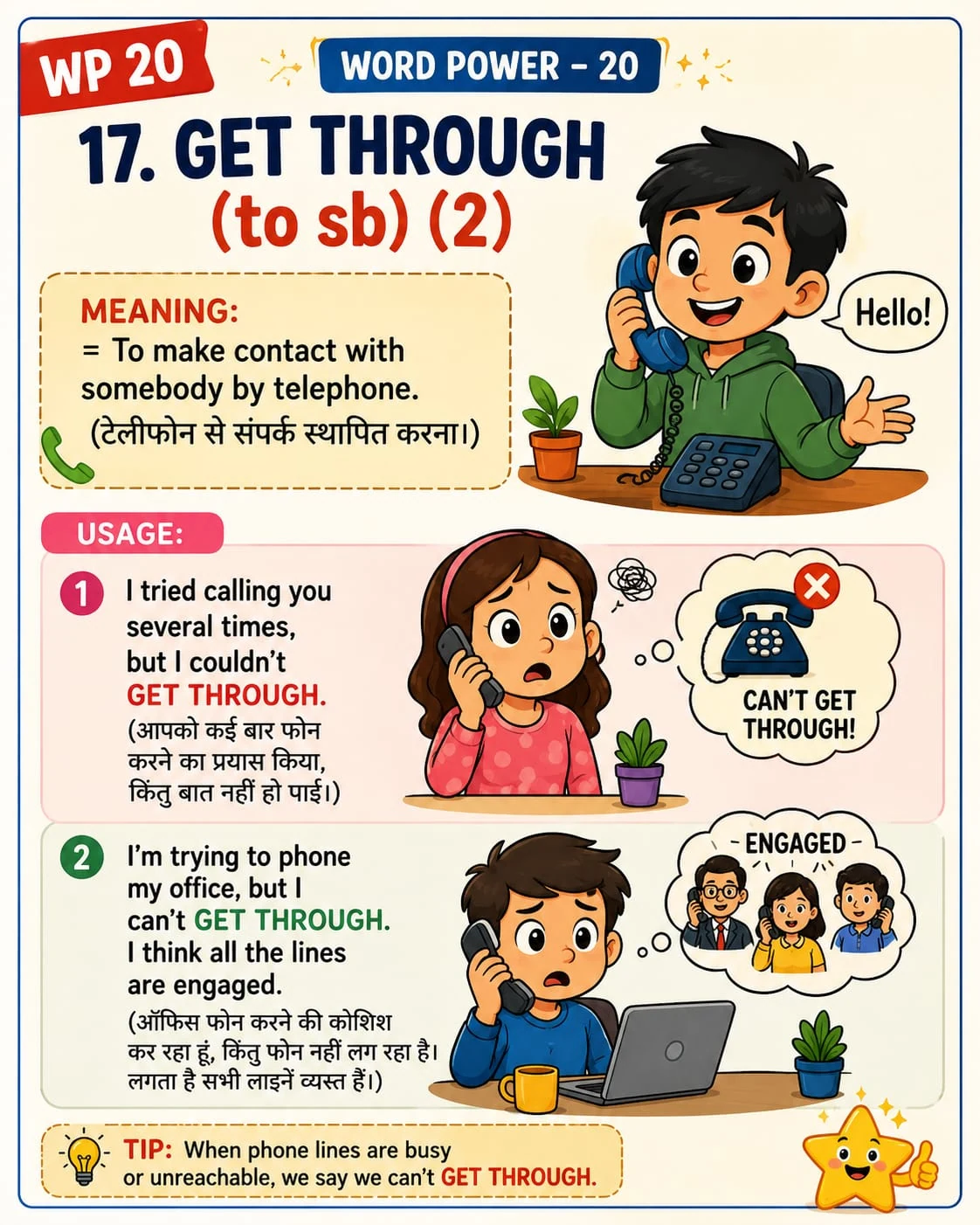
Learn “get through: contact by phone”: to make contact with somebody by telephone. Read examples from Word Power 20 and try a sentence of your own.
Read lesson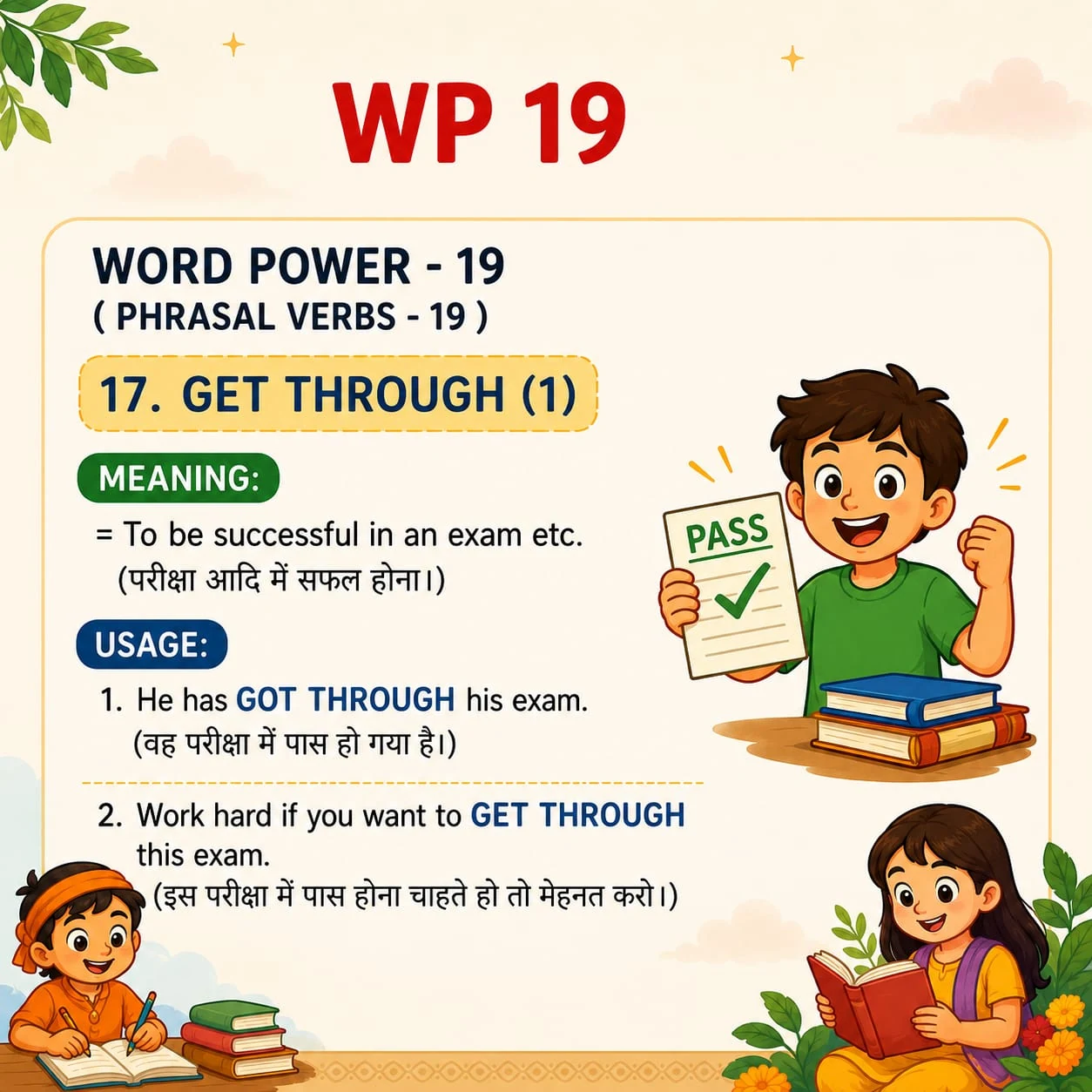
Learn “get through: pass an exam”: to be successful in an exam. Read examples from Word Power 19 and try a sentence of your own.
Read lesson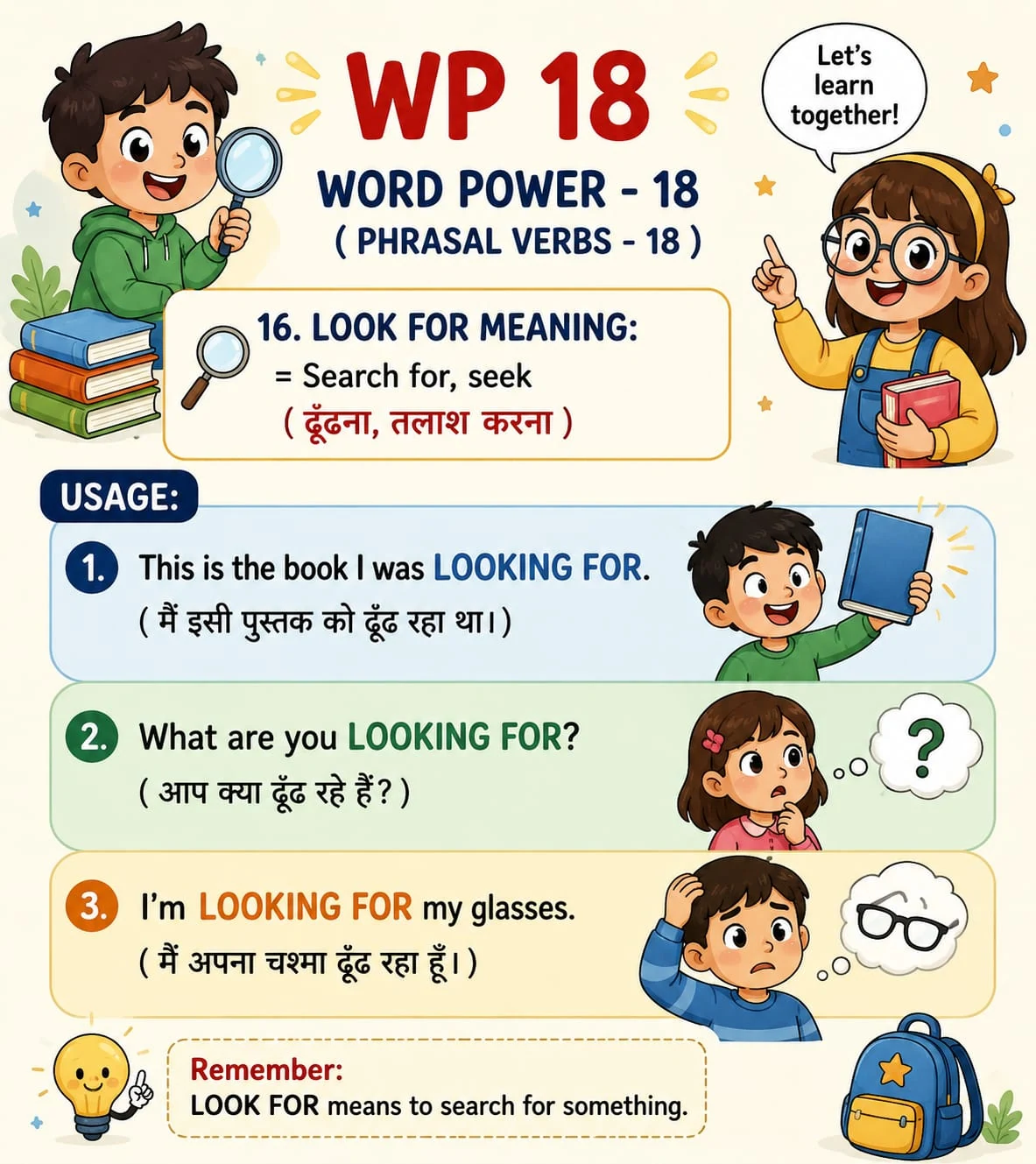
Learn “look for”: to search for or seek something. Read examples from Word Power 18 and try a sentence of your own.
Read lesson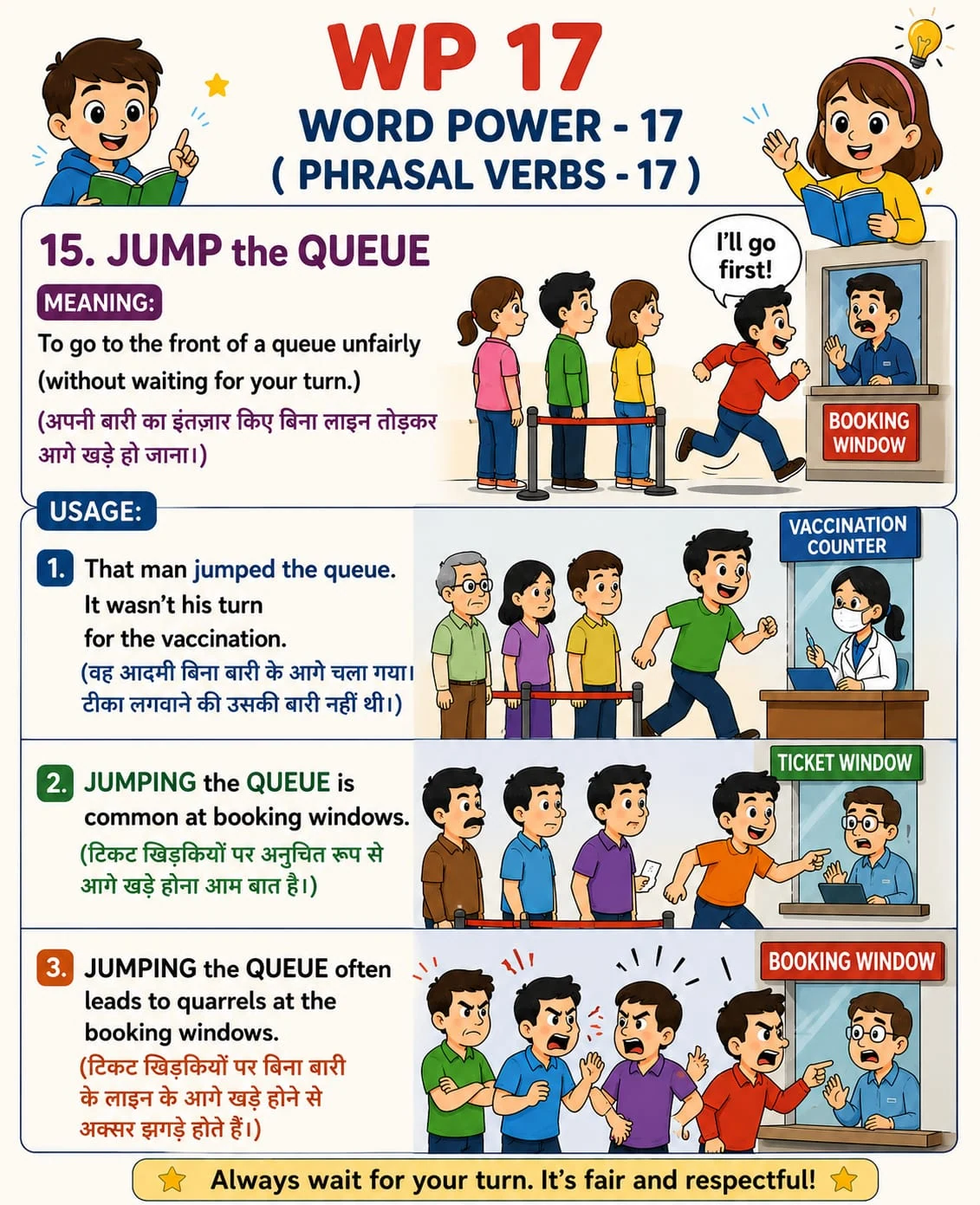
Learn “jump the queue”: to go to the front of a queue unfairly without waiting for your turn. Read examples from Word Power 17 and try a sentence of your own.
Read lesson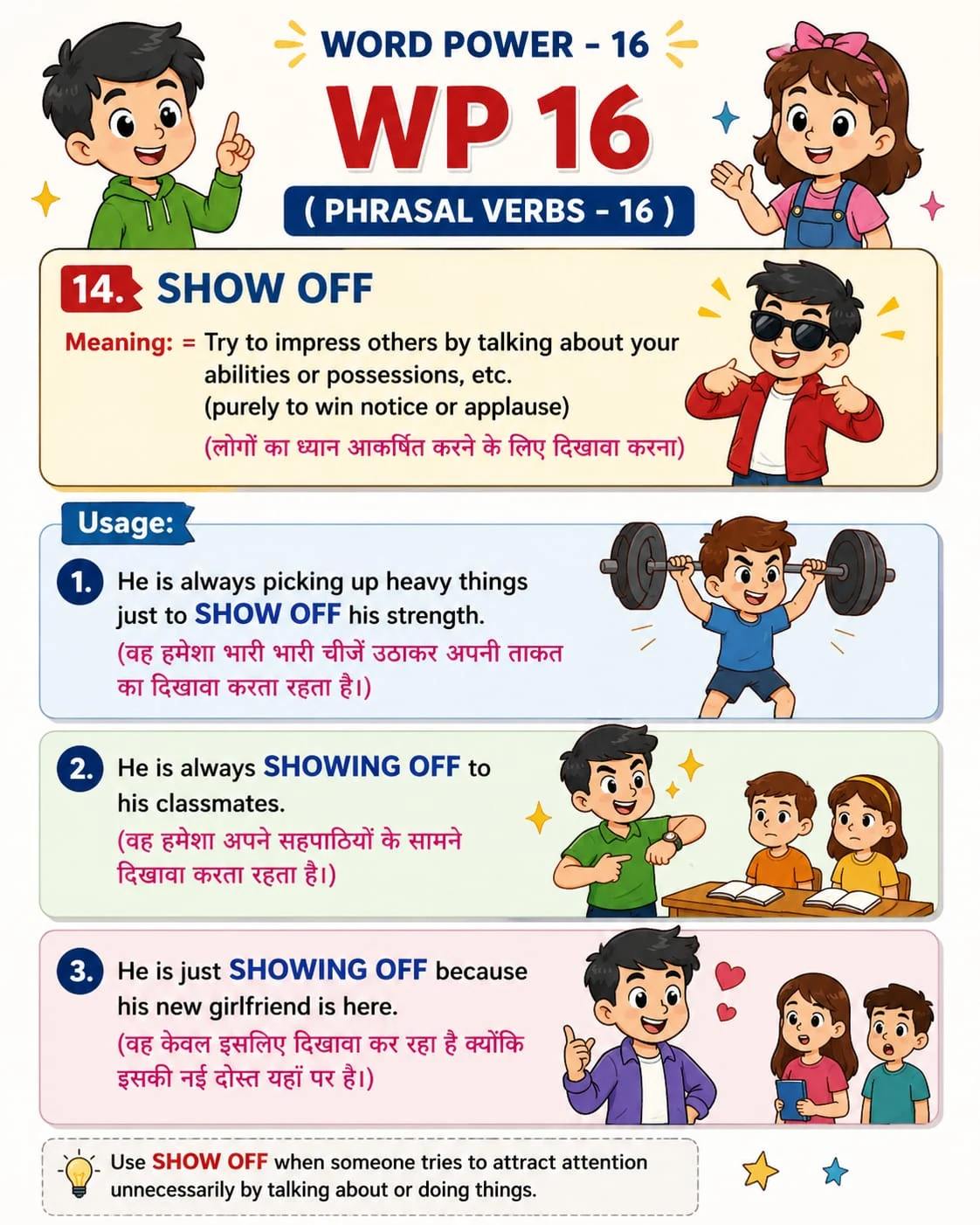
Learn “show off”: to try to impress others by talking about your abilities or possessions, purely to win notice or applause. Read examples from Word Power 16 and try a sentence of your own.
Read lesson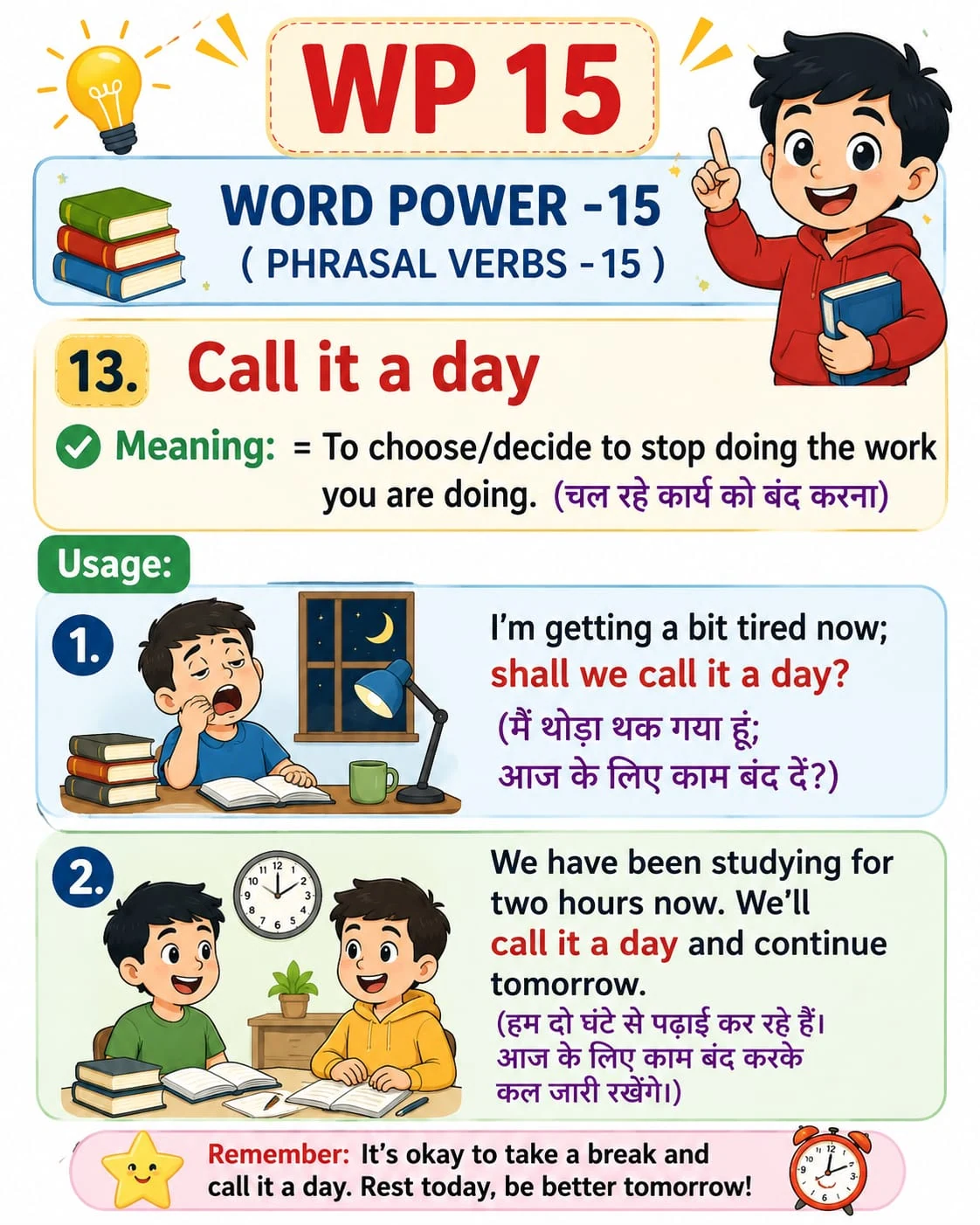
Learn “call it a day”: to choose or decide to stop doing the work you are doing. Read examples from Word Power 15 and try a sentence of your own.
Read lesson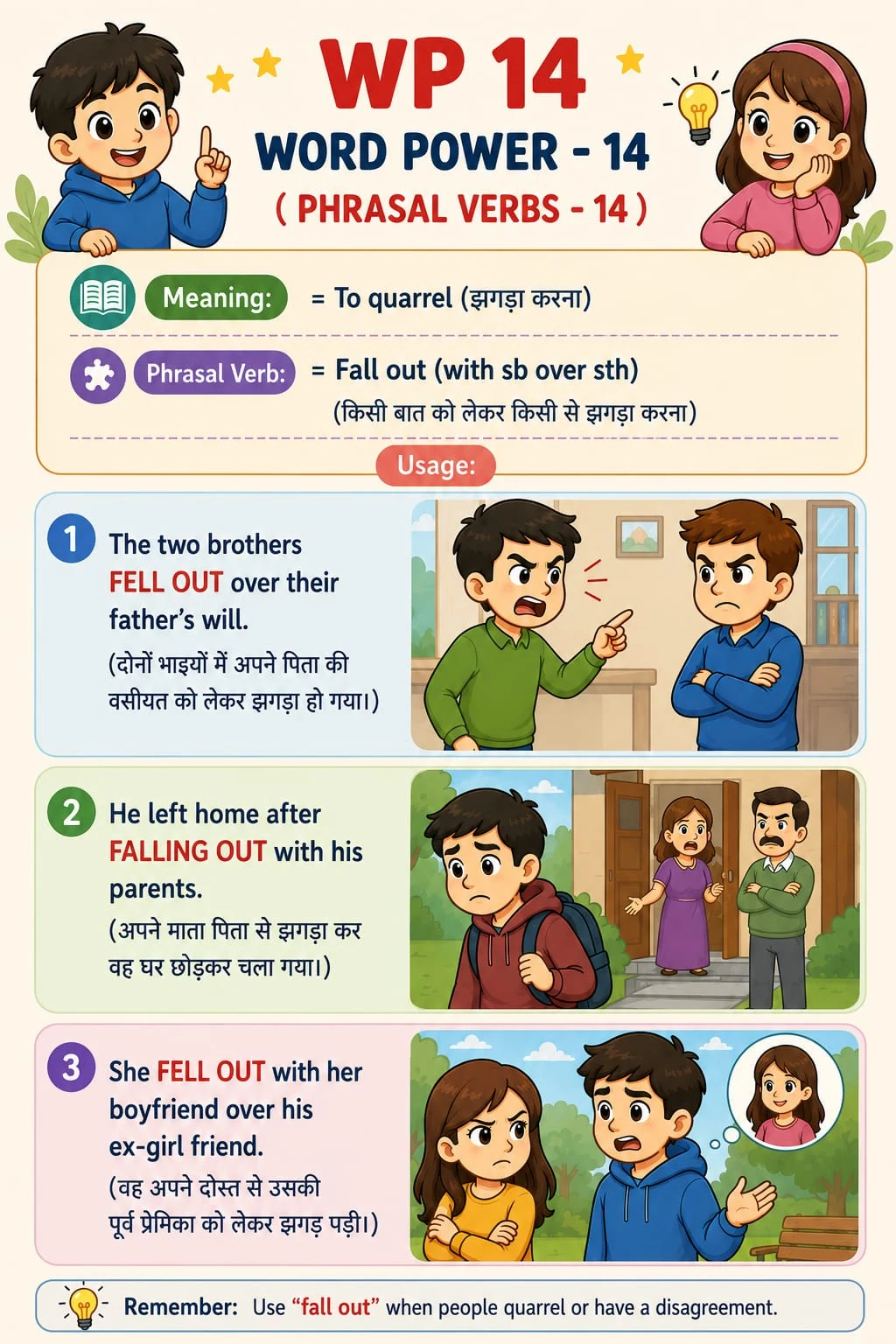
Learn “fall out”: to quarrel with somebody over something. Read examples from Word Power 14 and try a sentence of your own.
Read lesson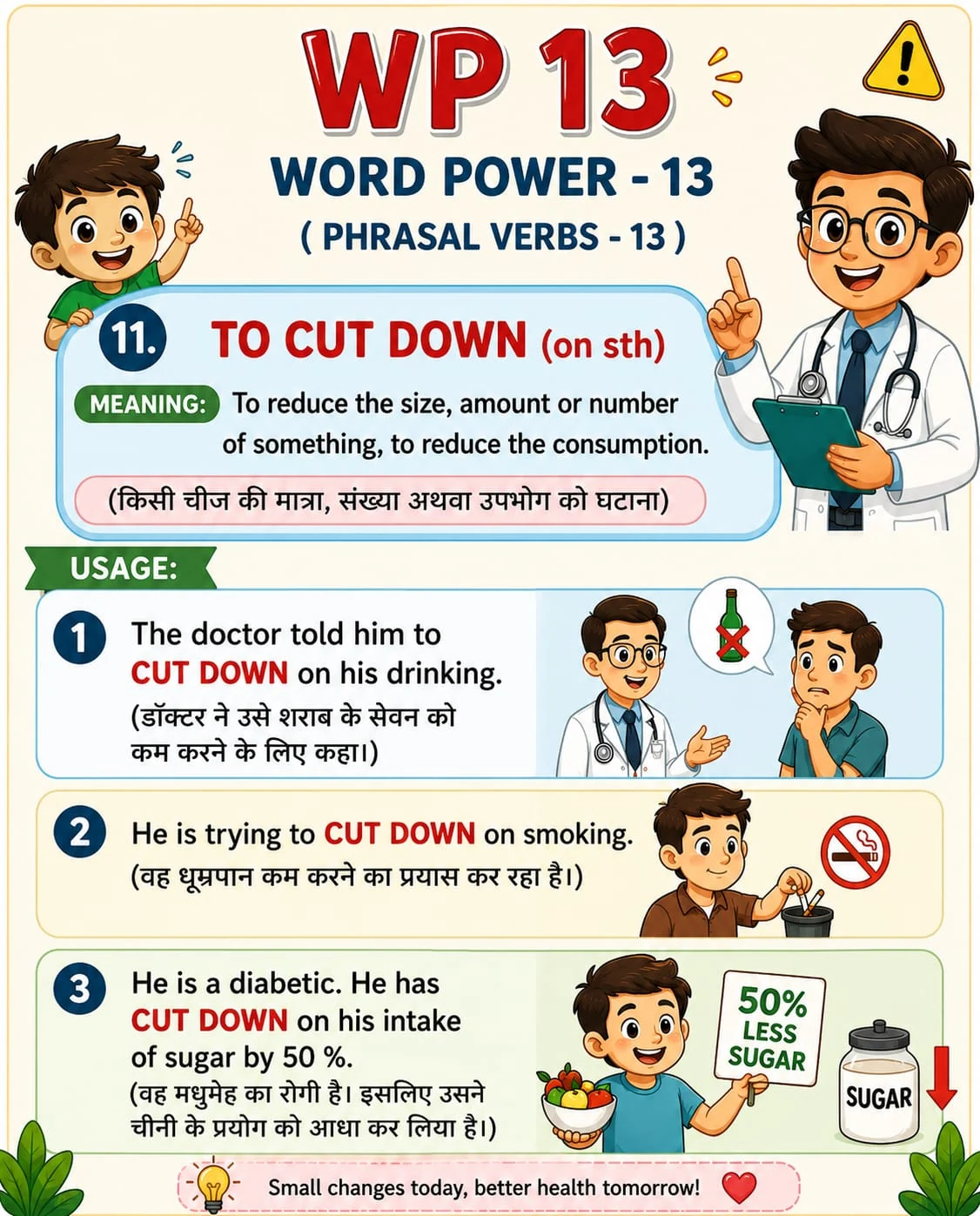
Learn “cut down on”: to reduce the size, amount or number of something, especially its consumption. Read examples from Word Power 13 and try a sentence of your own.
Read lesson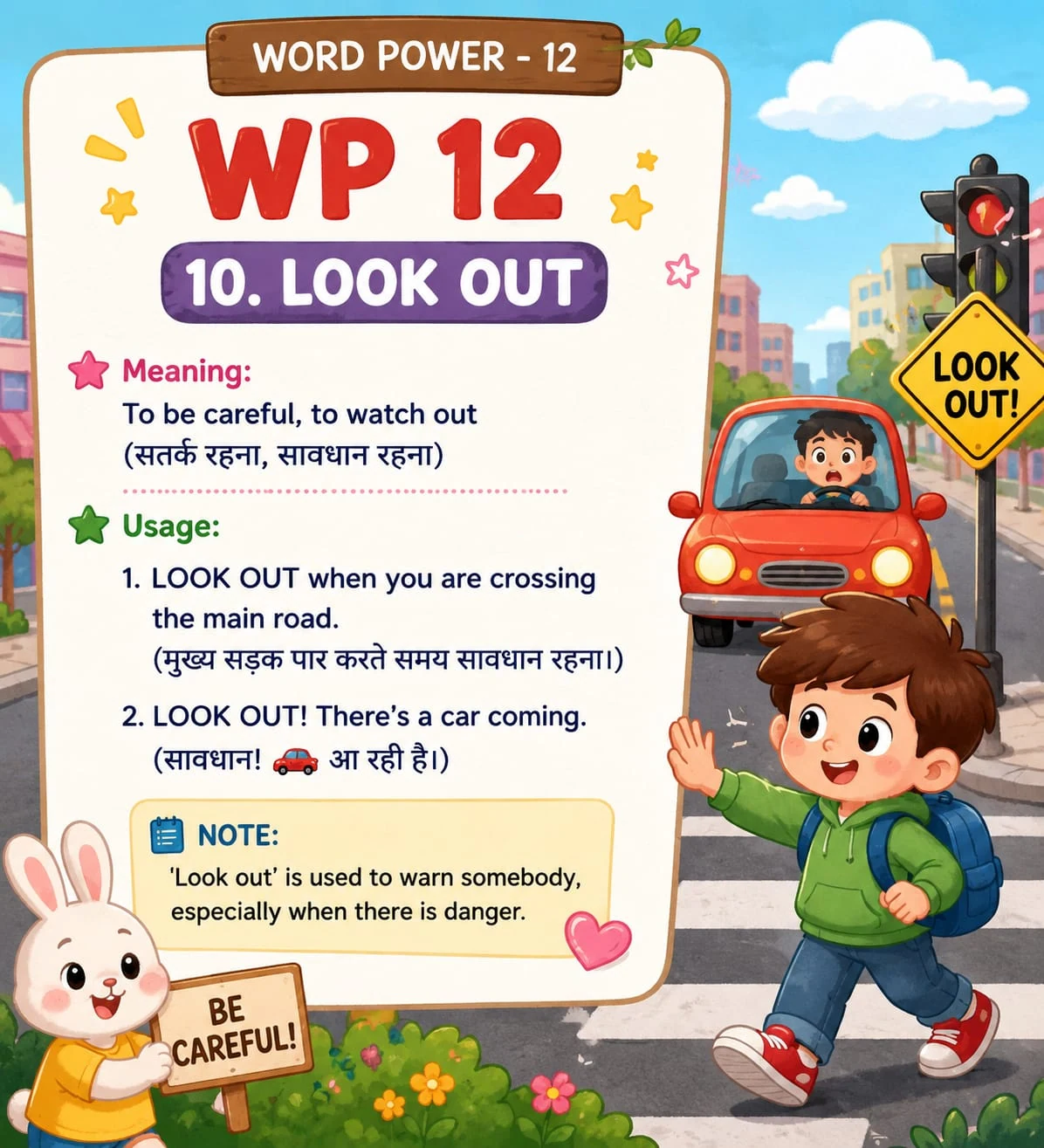
Learn “look out”: to be careful; to watch out. Read examples from Word Power 12 and try a sentence of your own.
Read lesson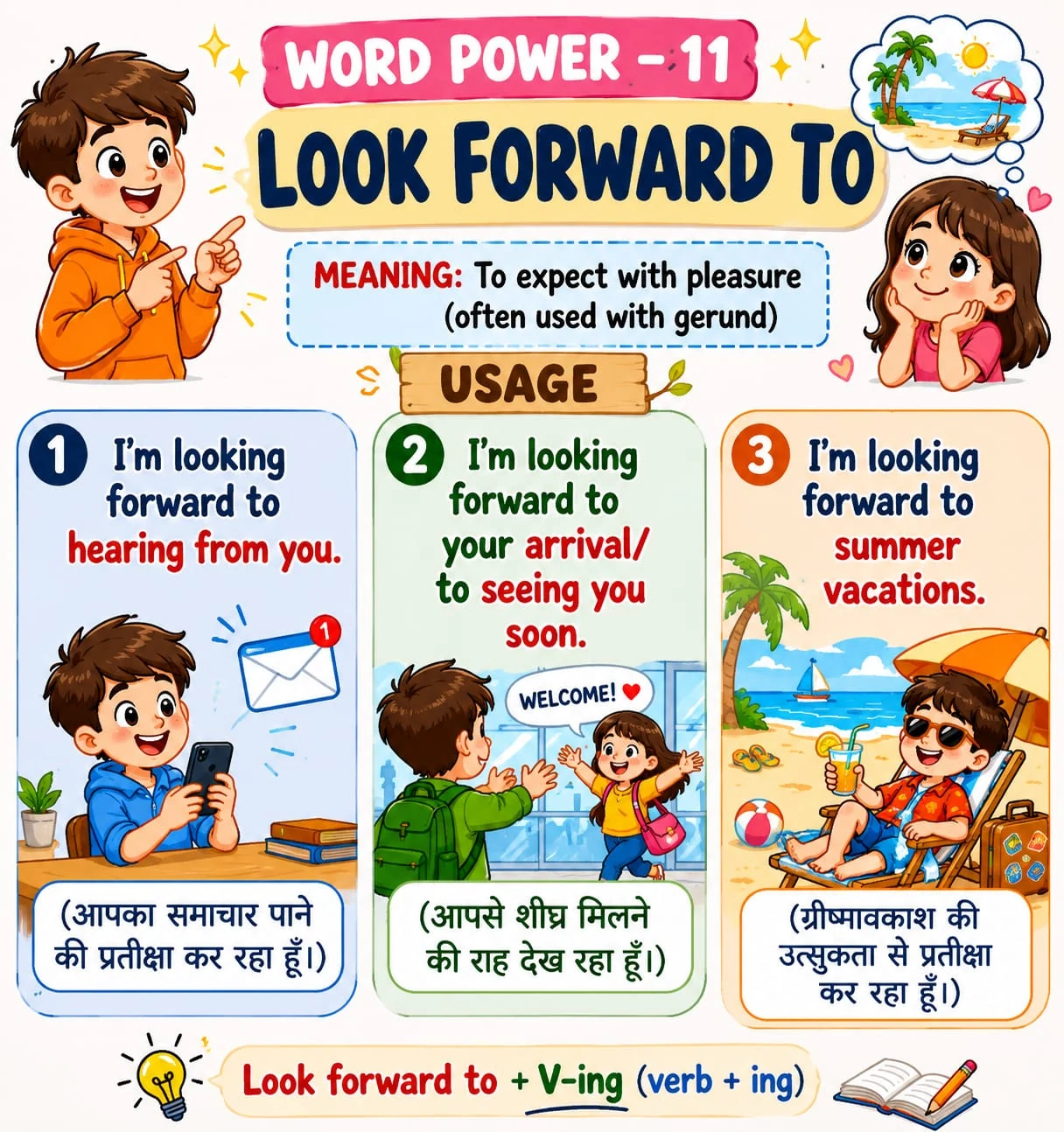
Learn “look forward to”: to expect with pleasure. Read examples from Word Power 11 and try a sentence of your own.
Read lesson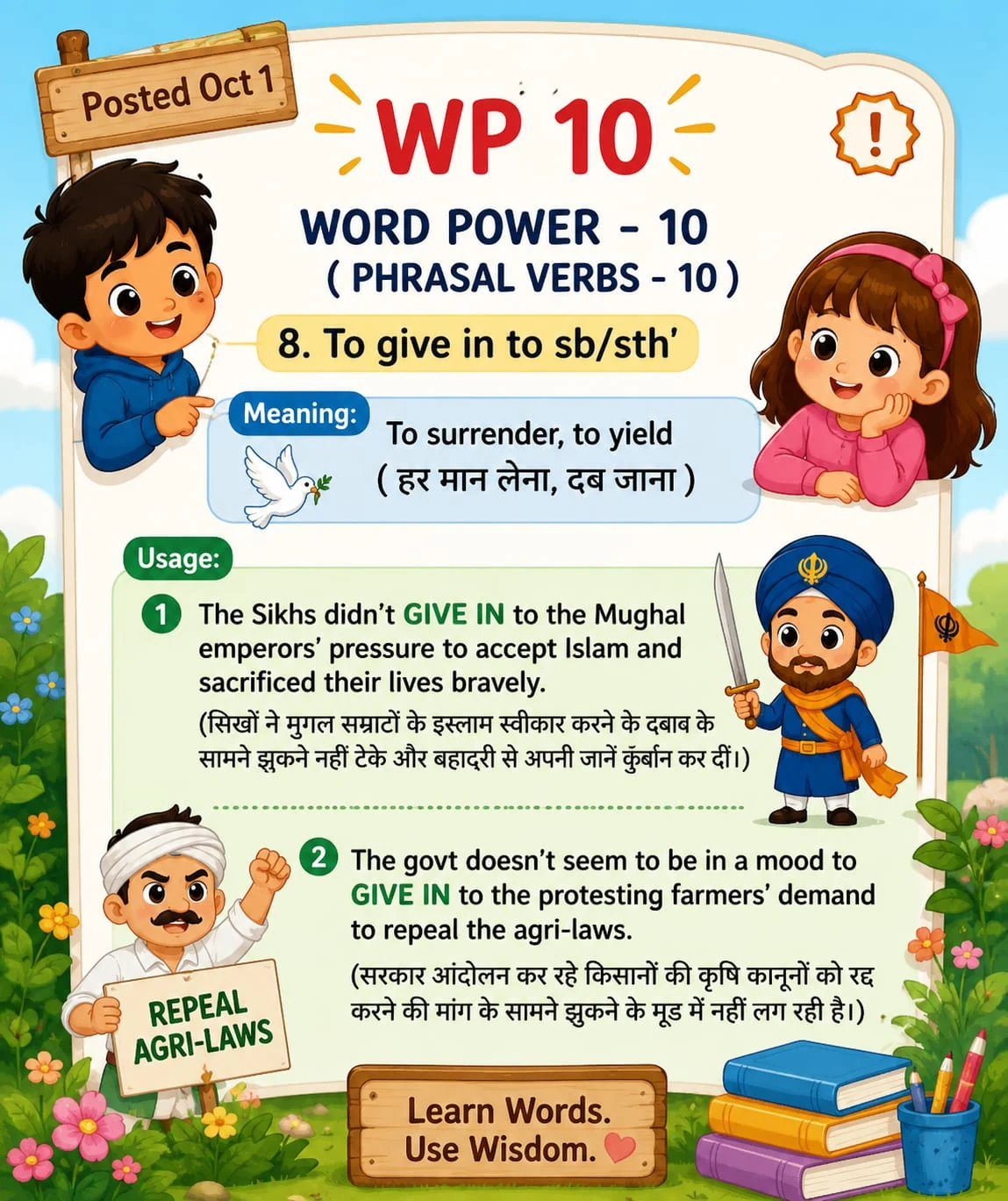
Learn “give in to”: to surrender or yield. Read examples from Word Power 10 and try a sentence of your own.
Read lesson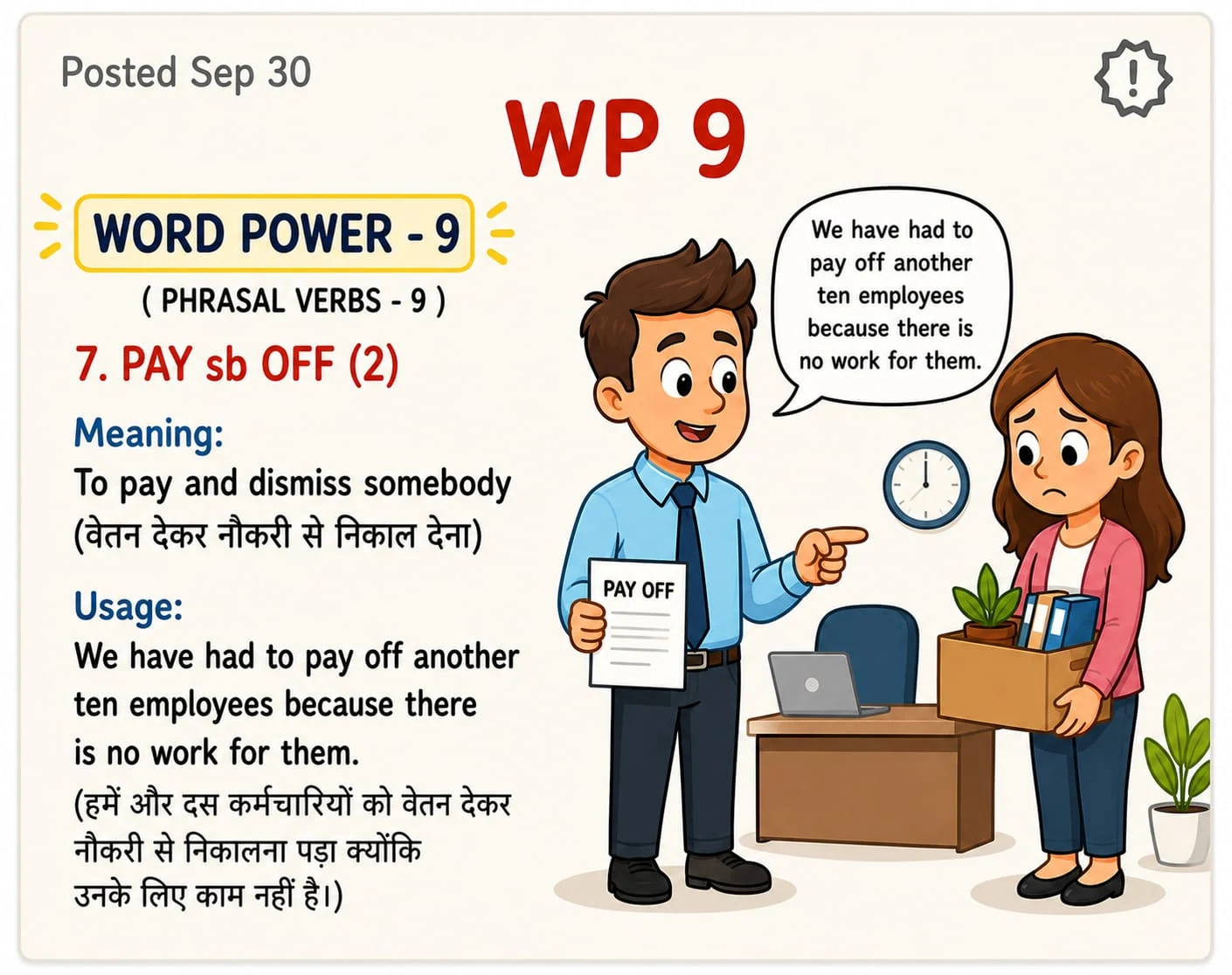
Learn “pay somebody off: dismiss an employee”: to pay and dismiss somebody. Read examples from Word Power 9 and try a sentence of your own.
Read lesson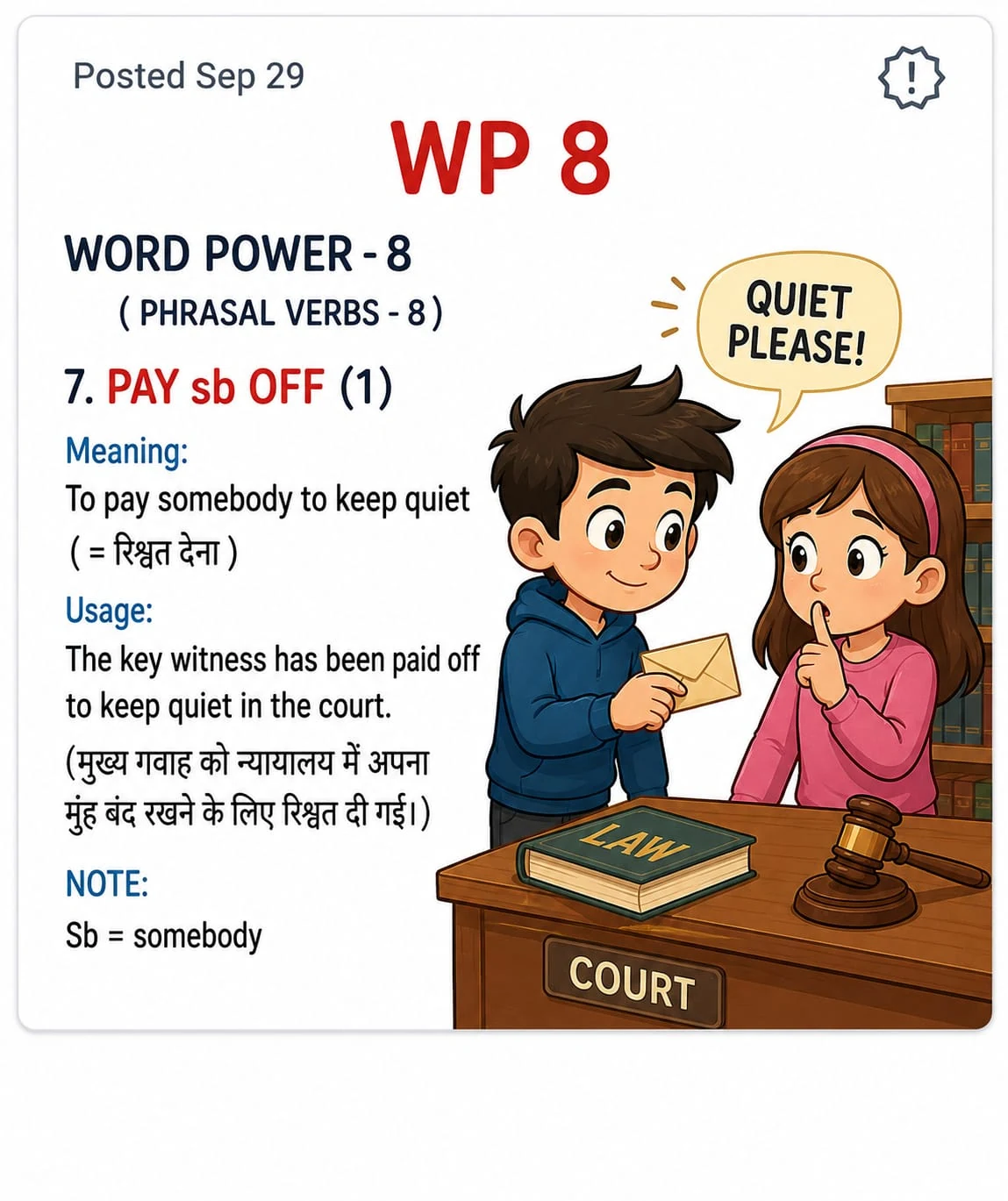
Learn “pay somebody off: keep someone quiet”: to pay somebody to keep quiet. Read examples from Word Power 8 and try a sentence of your own.
Read lesson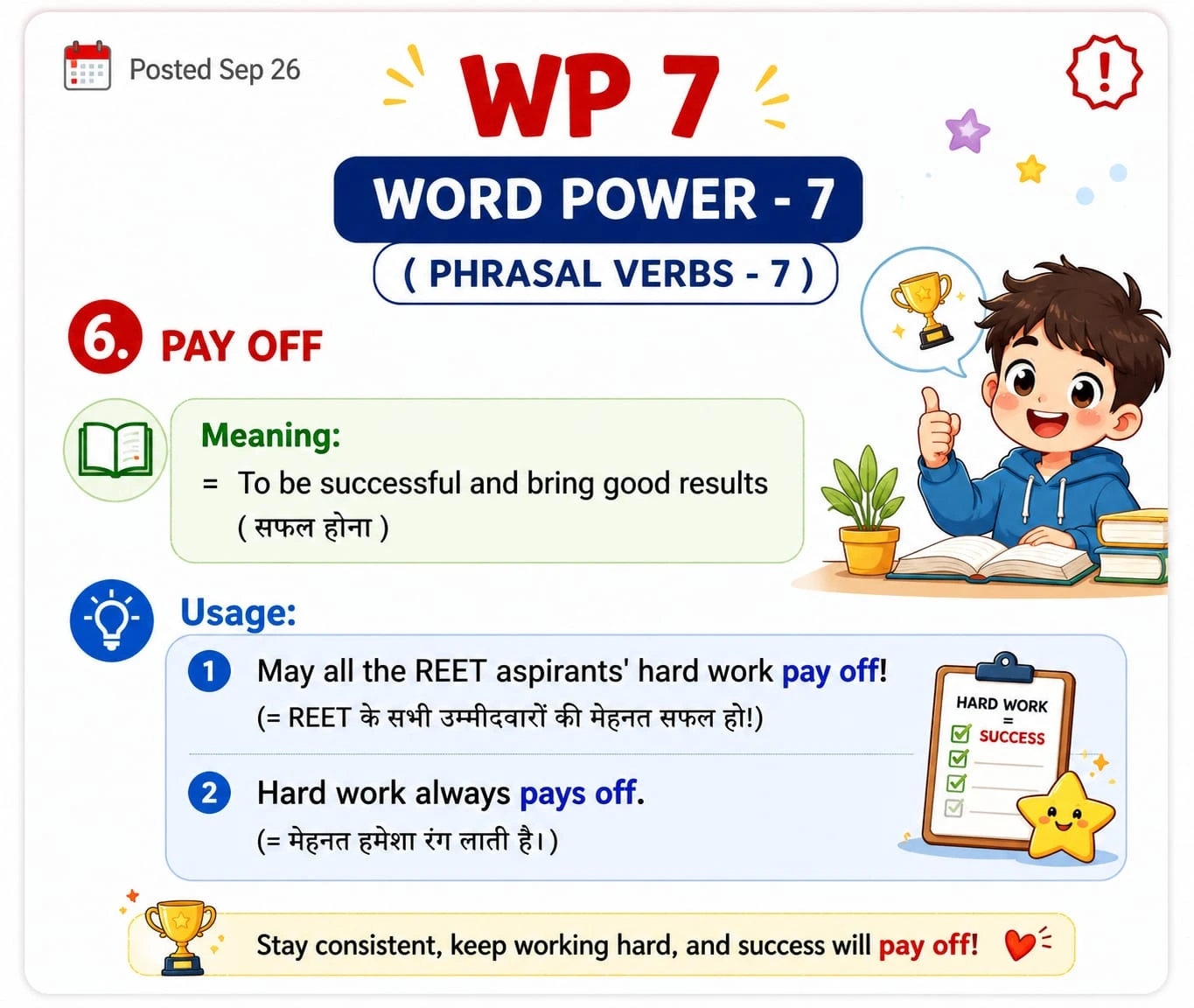
Learn the meaning of the phrasal verb “pay off” with two examples and Hindi translations from Word Power 7.
Read lesson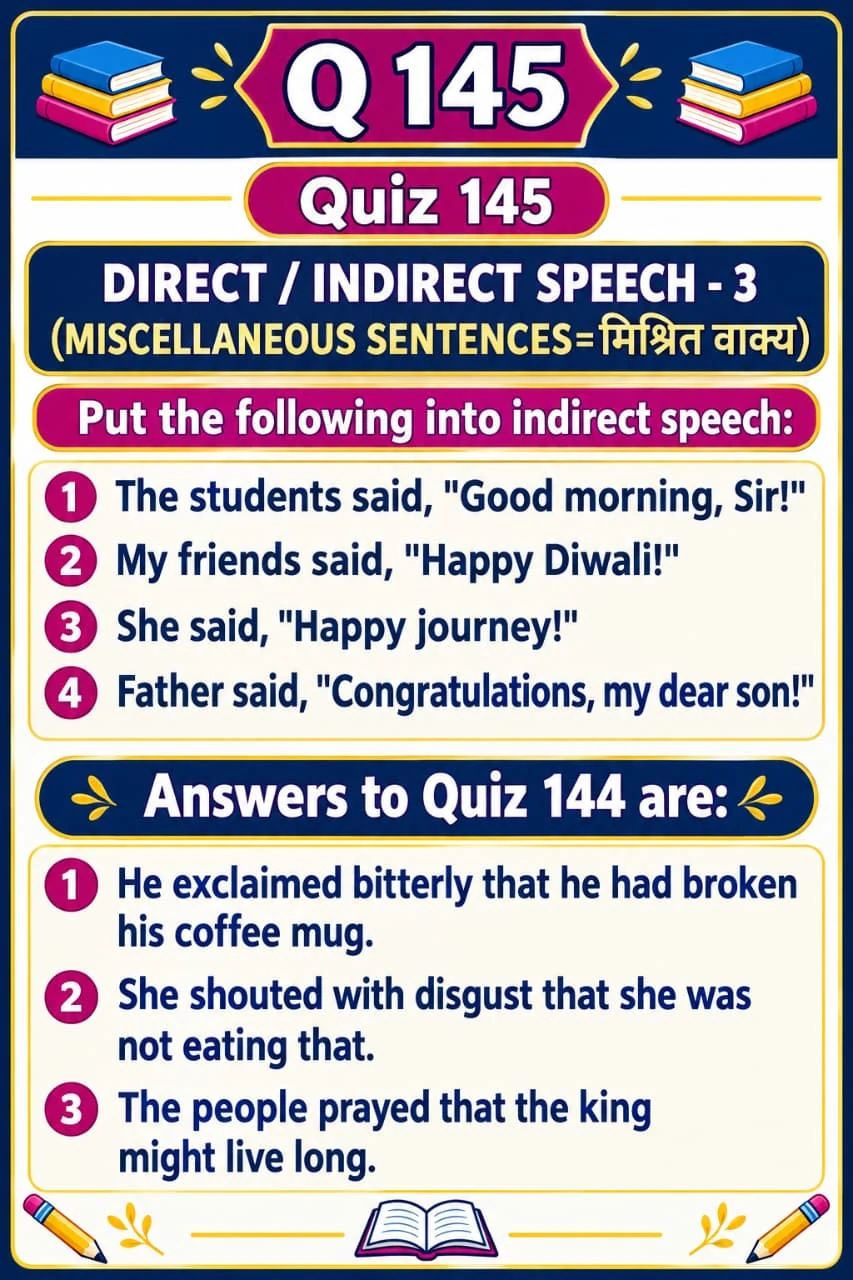
Report greetings, good wishes and congratulations.
Read lesson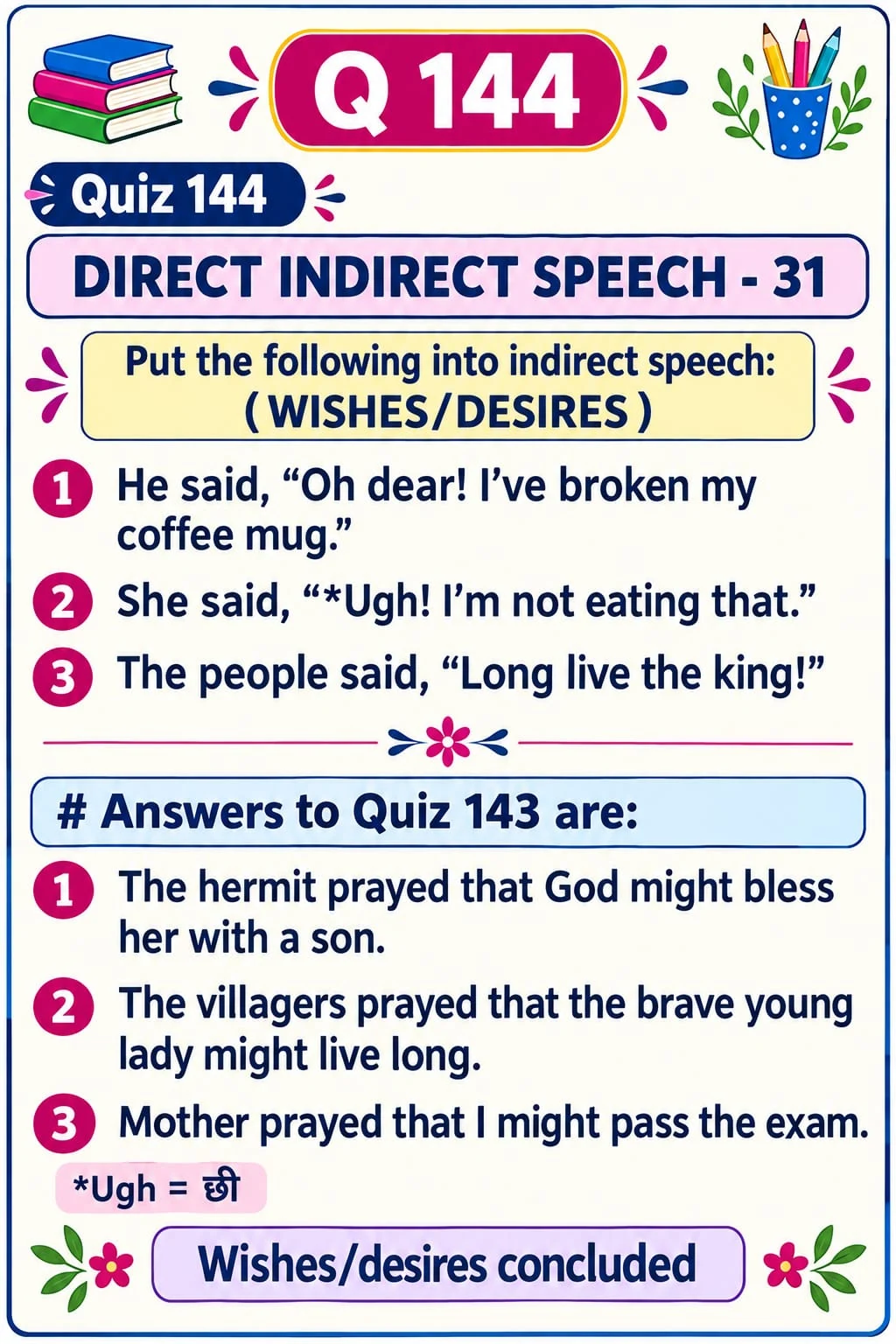
Practise reporting strong feelings and a wish for a king.
Read lesson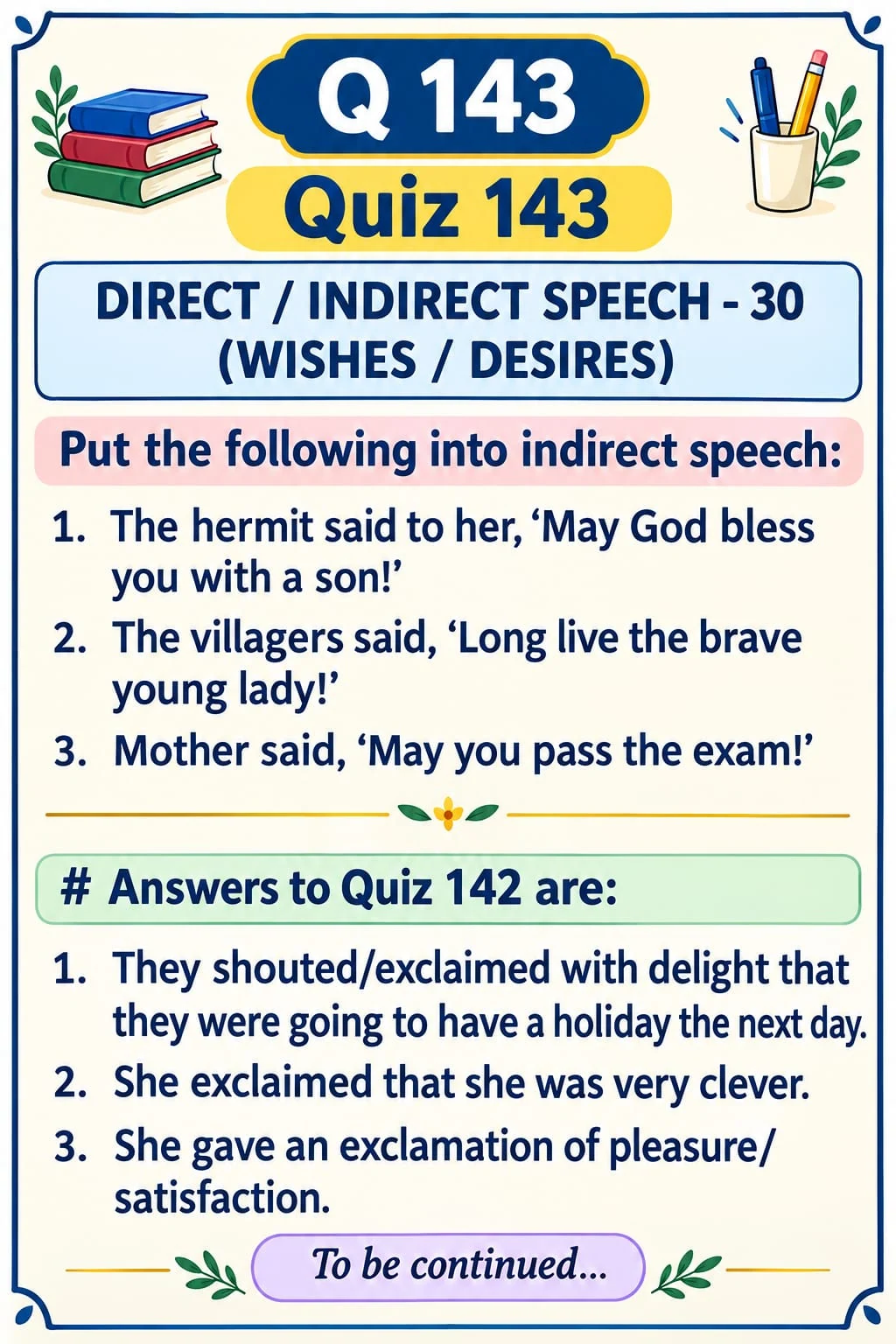
Practise reporting wishes with may and long live.
Read lesson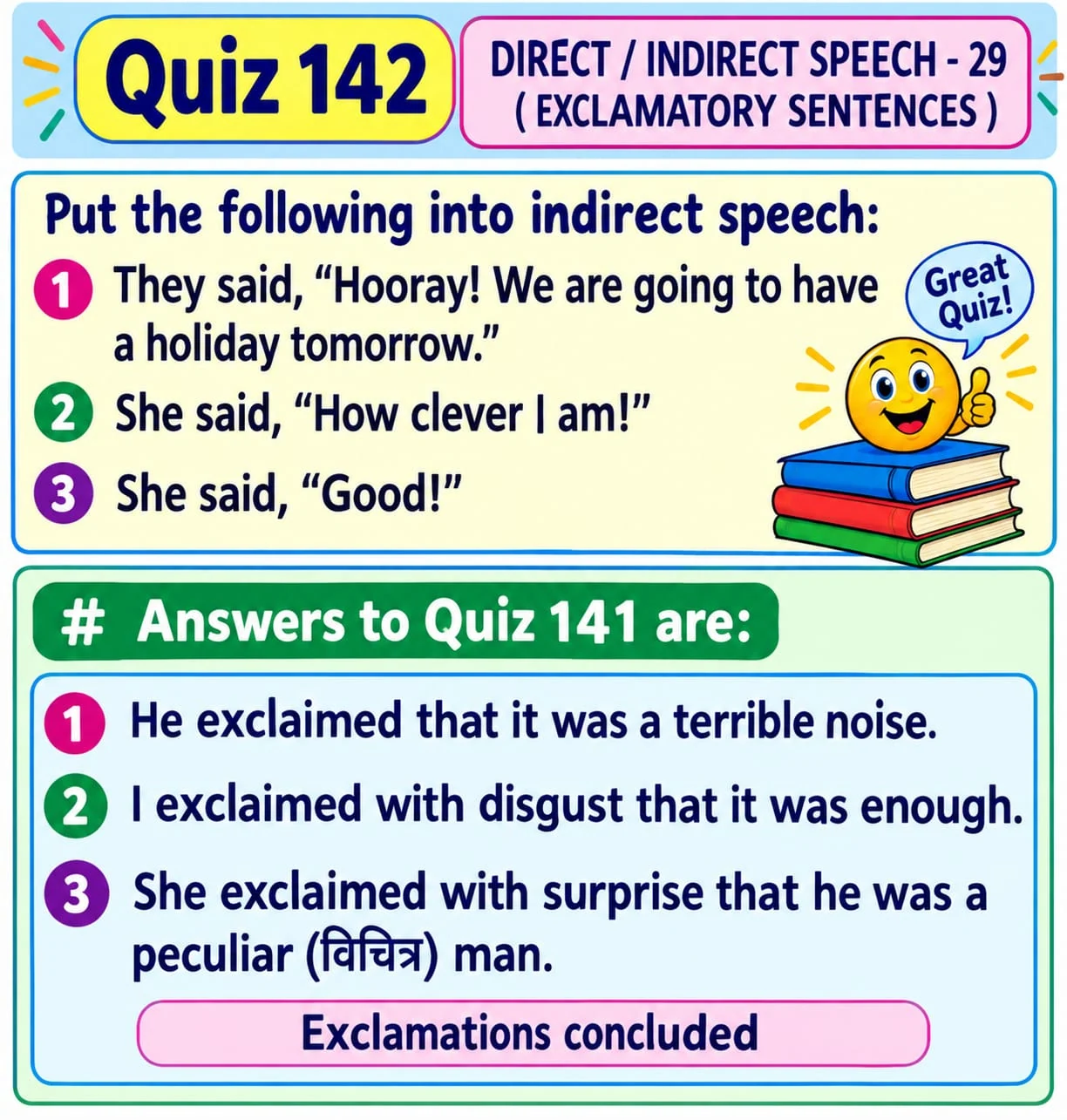
Report joy, surprise and approval in indirect speech.
Read lesson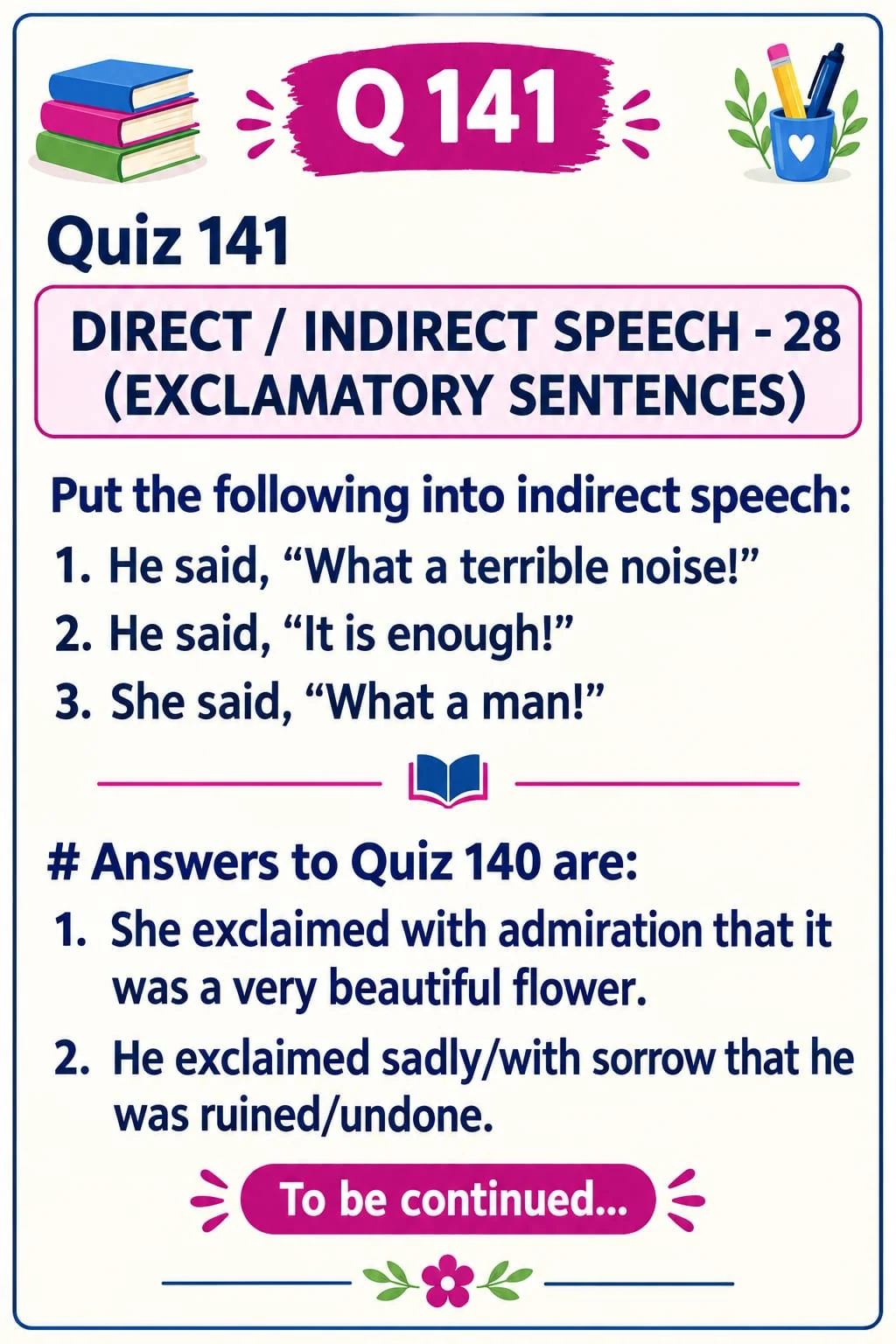
Turn exclamations into statements in reported speech.
Read lesson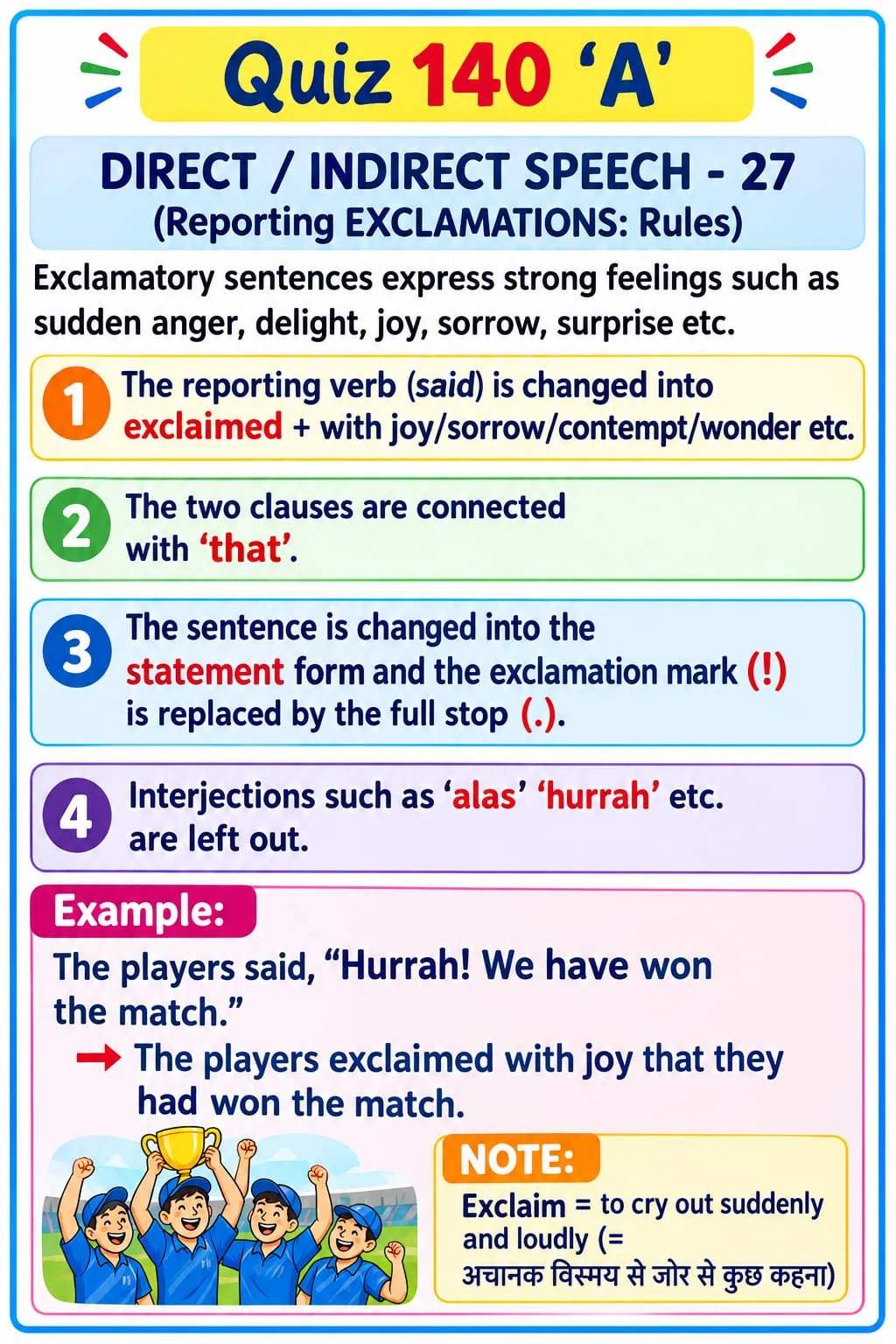
Learn how reporting verbs, that and statement word order are used with exclamations.
Read lesson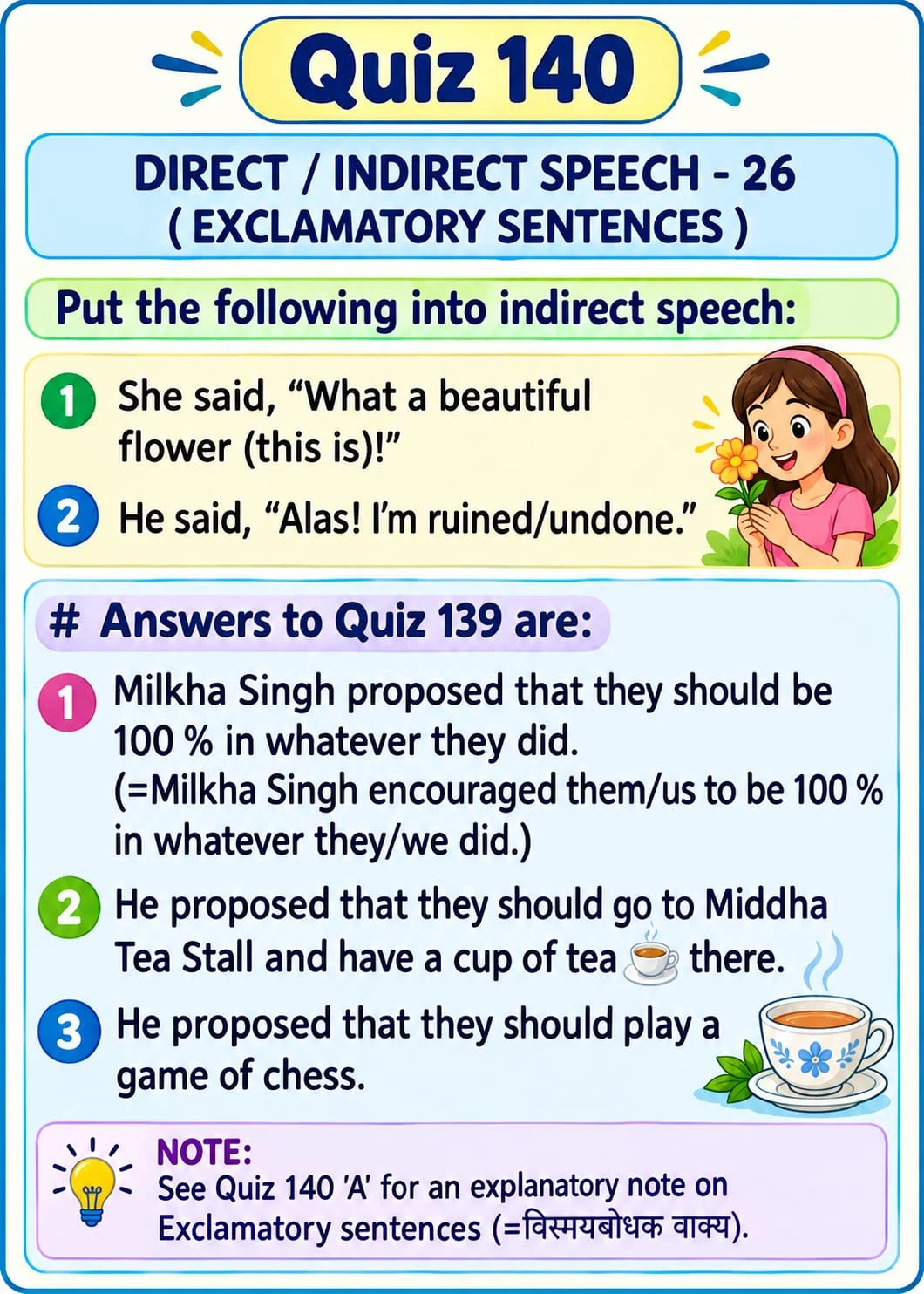
Report admiration and sorrow using the sentences in this quiz.
Read lesson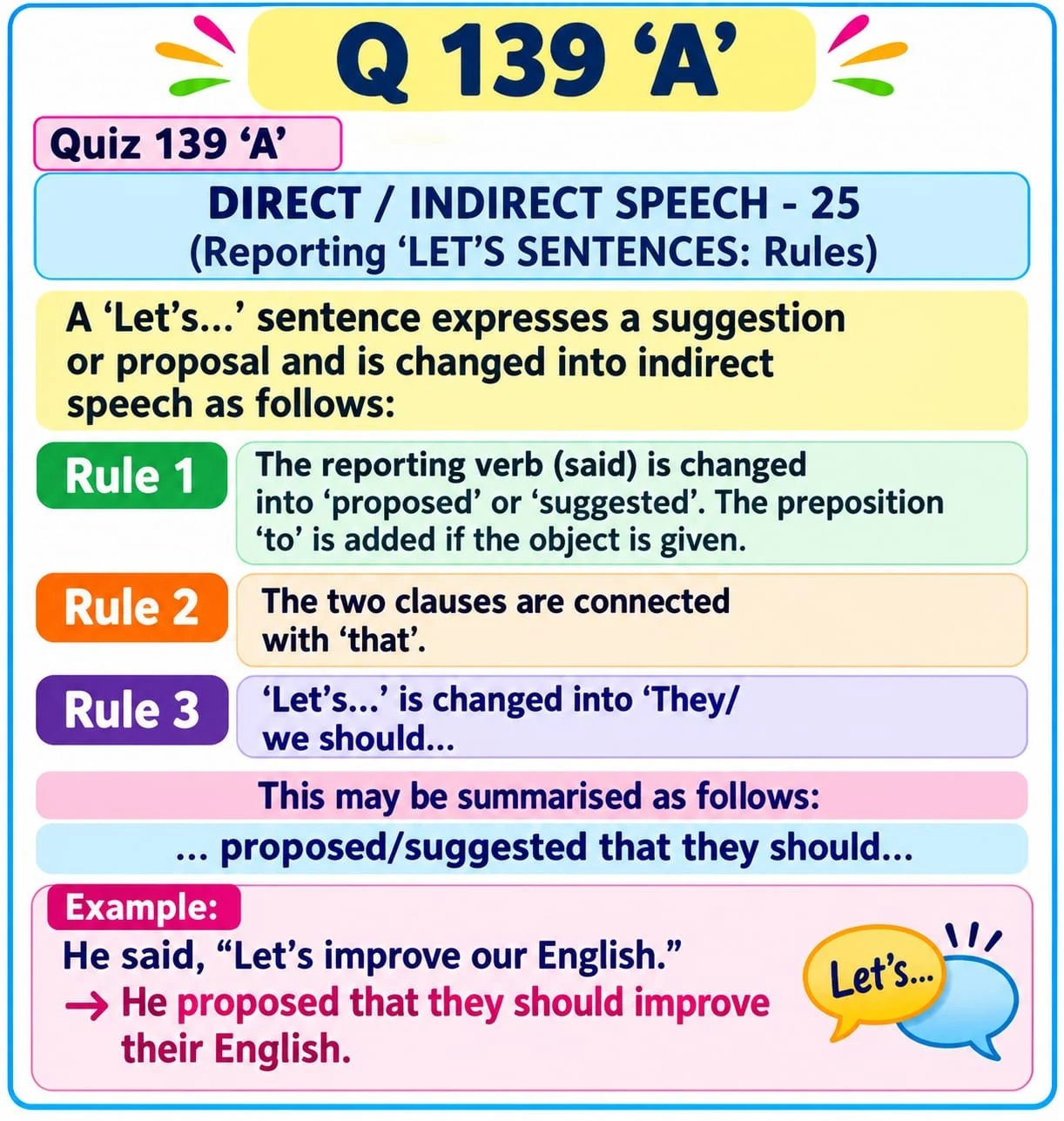
Learn to report suggestions with proposed or suggested and a should clause.
Read lesson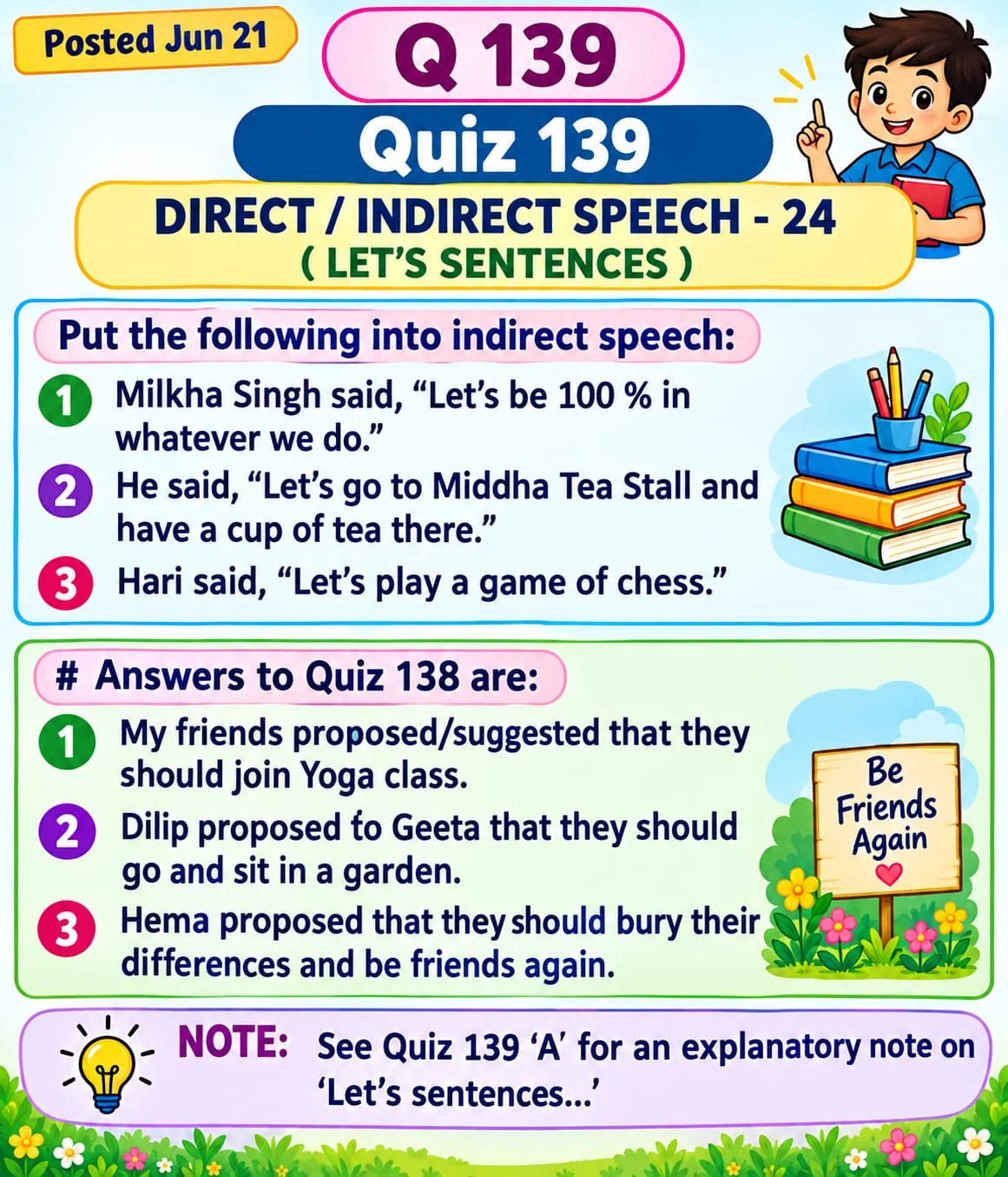
Change let's suggestions into indirect speech.
Read lesson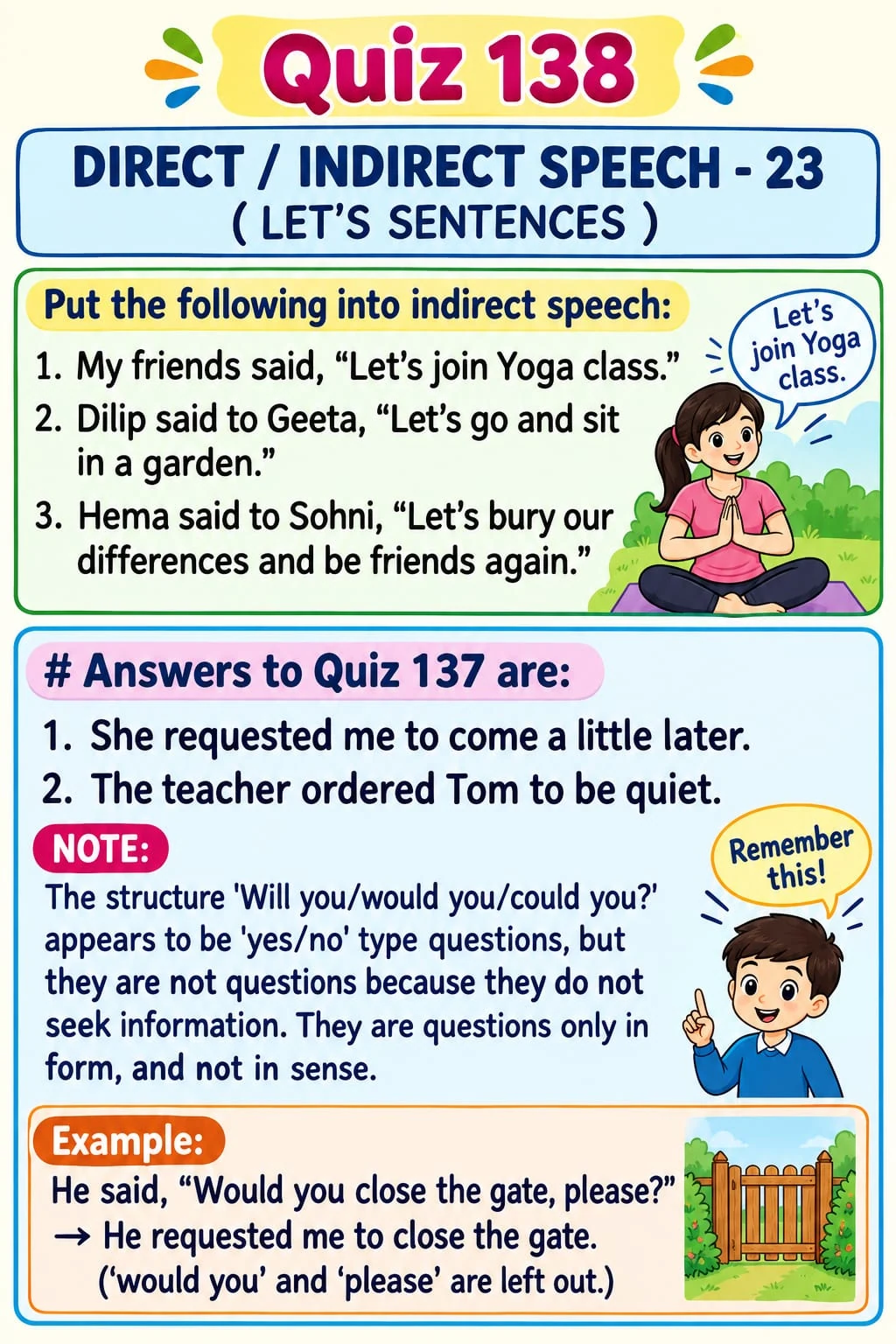
Practise reporting suggestions made with let's.
Read lesson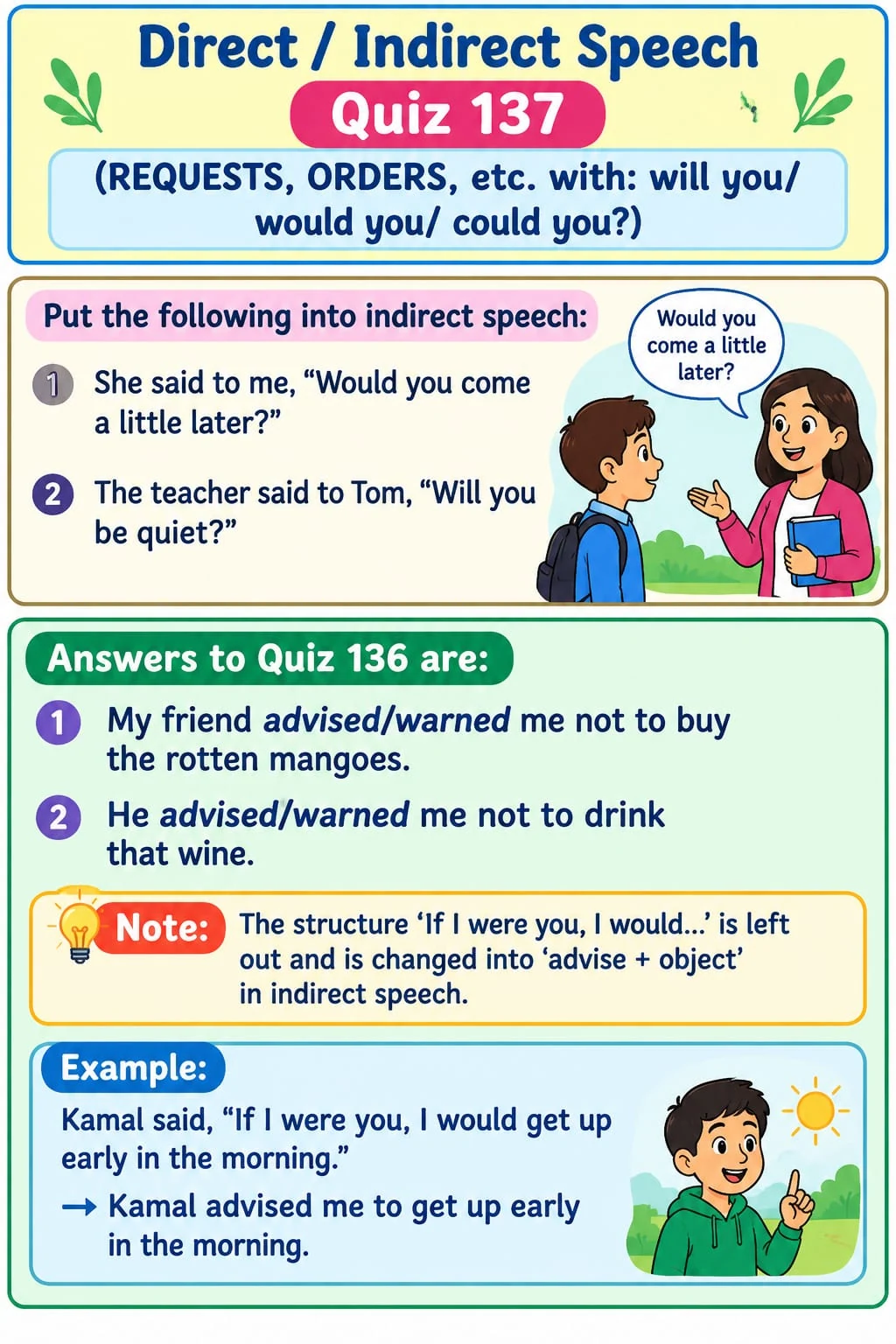
Recognise a polite request rather than a question about willingness.
Read lesson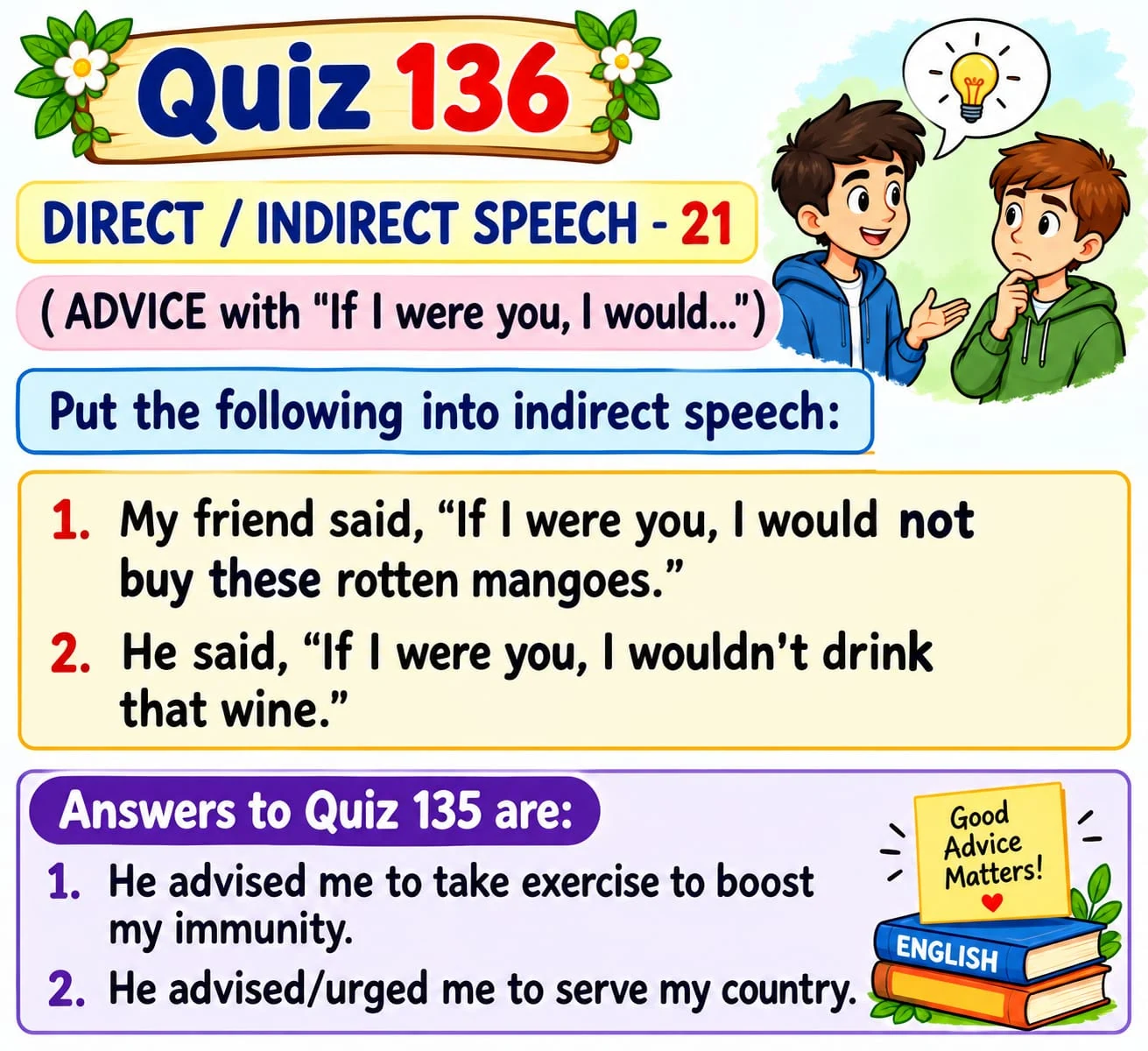
Use advised and an infinitive when reporting this form of advice.
Read lesson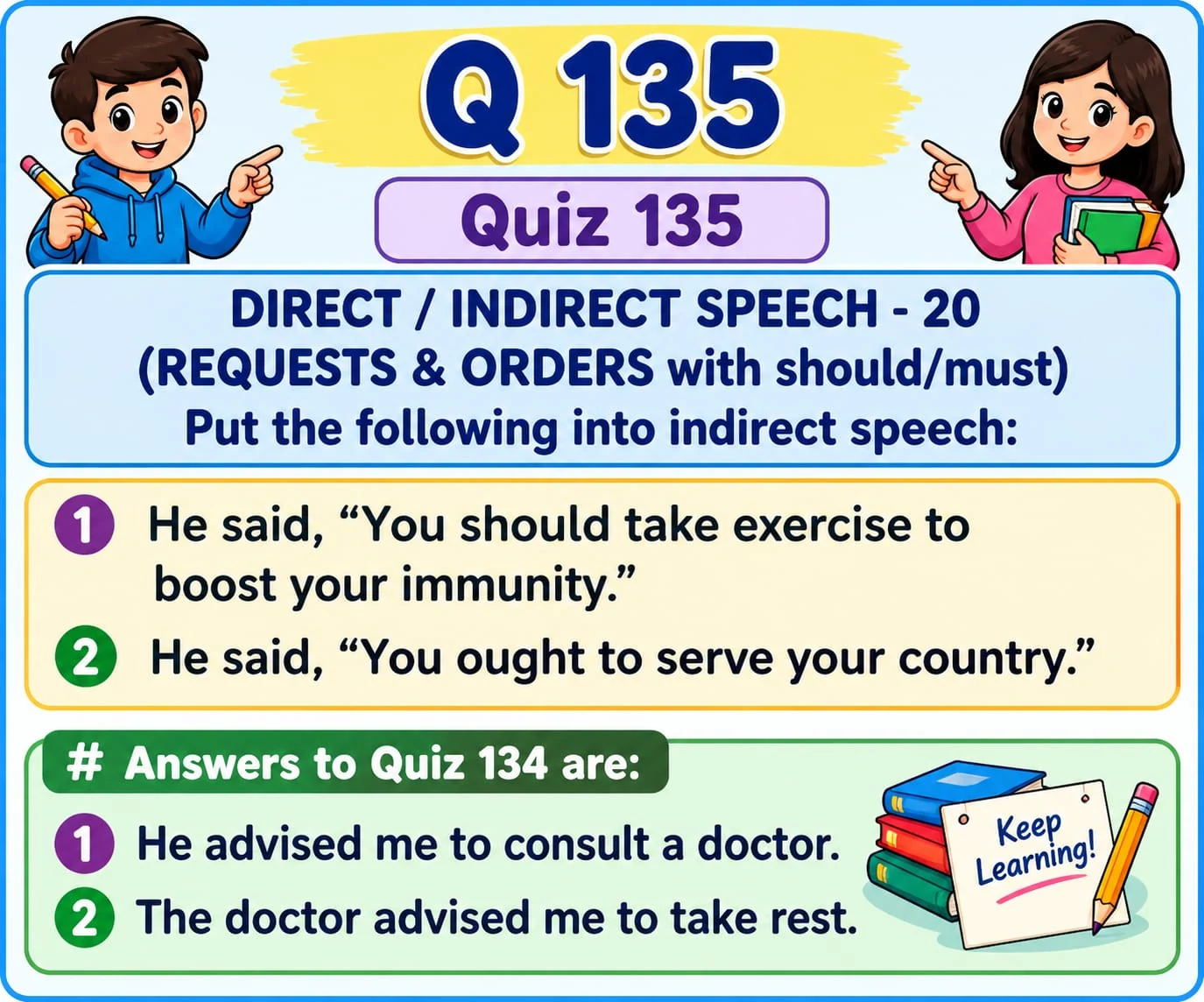
Practise turning advice and duty into indirect speech.
Read lesson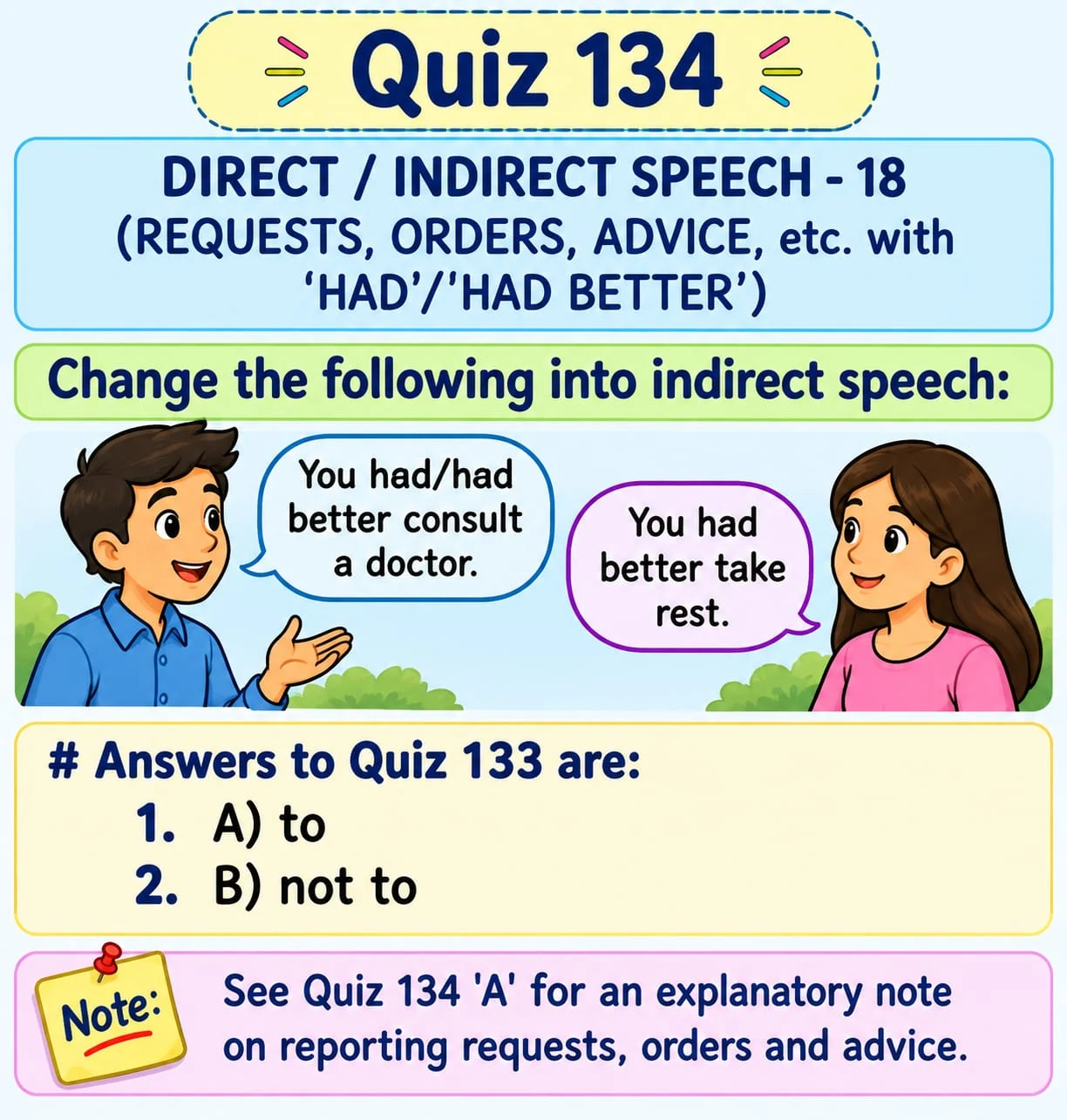
Change advice with had better into indirect speech.
Read lesson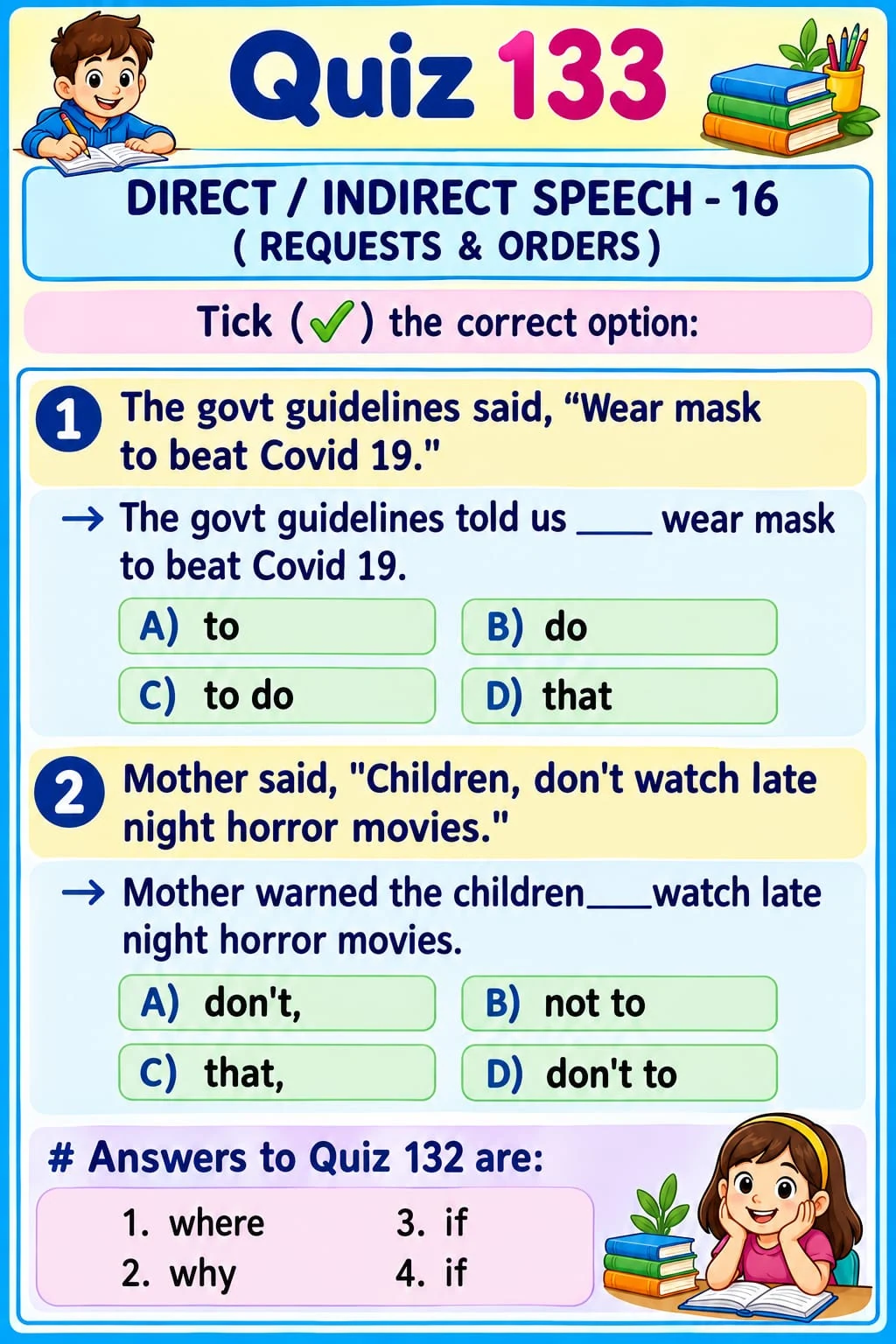
Choose the correct infinitive when reporting an instruction or a negative instruction.
Read lesson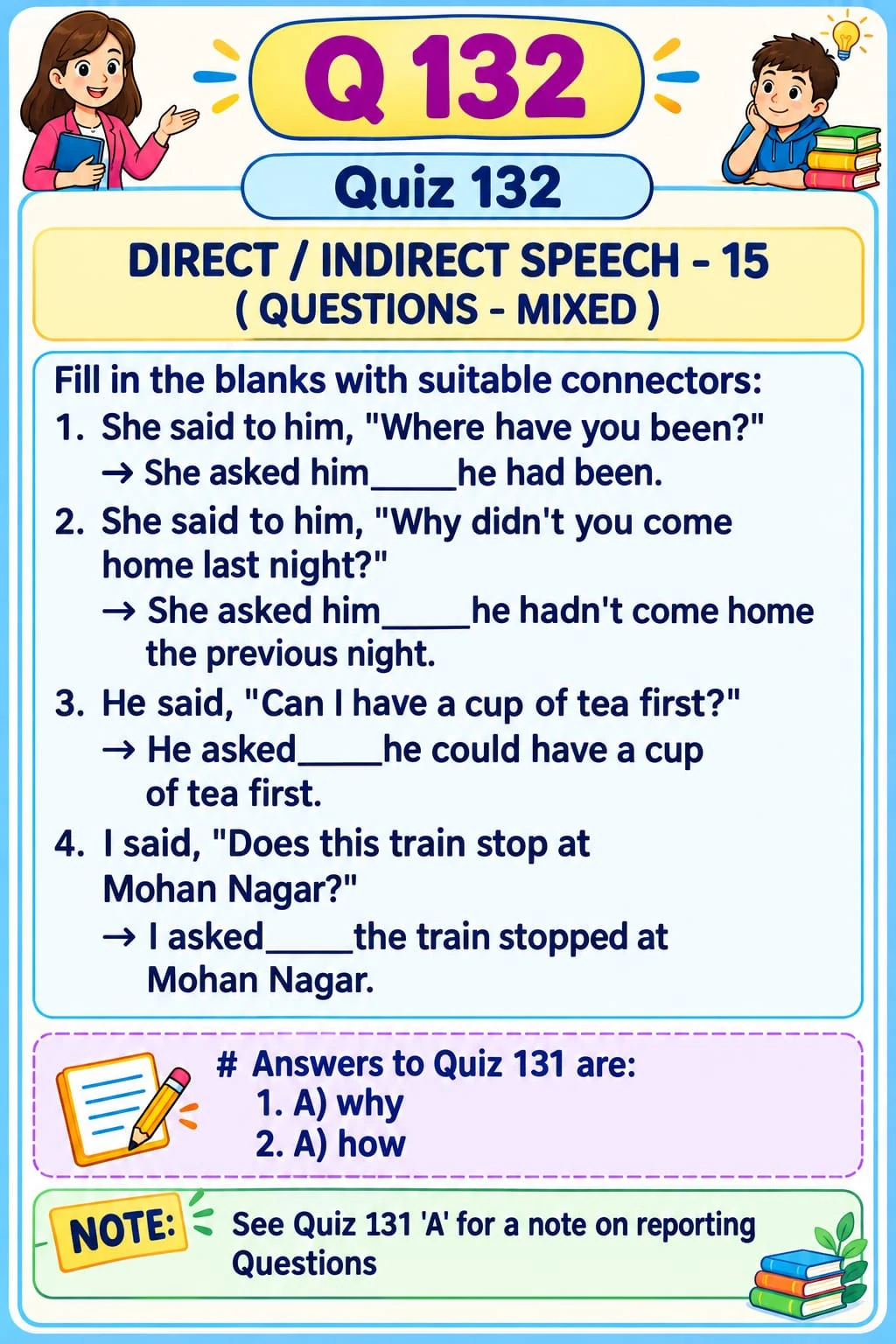
Complete reported questions with suitable connectors.
Read lesson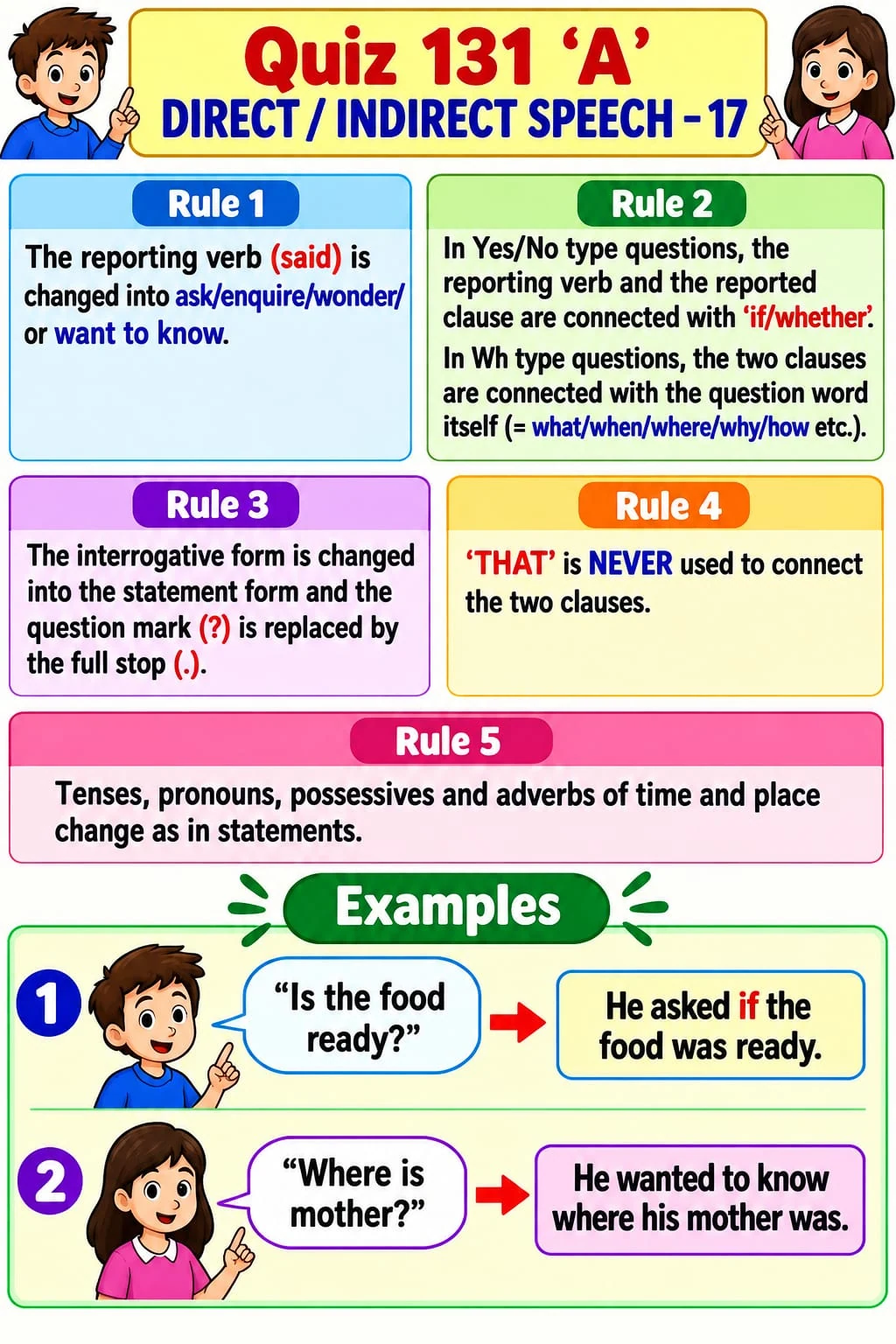
Review reporting verbs, connectors and statement word order for indirect questions.
Read lesson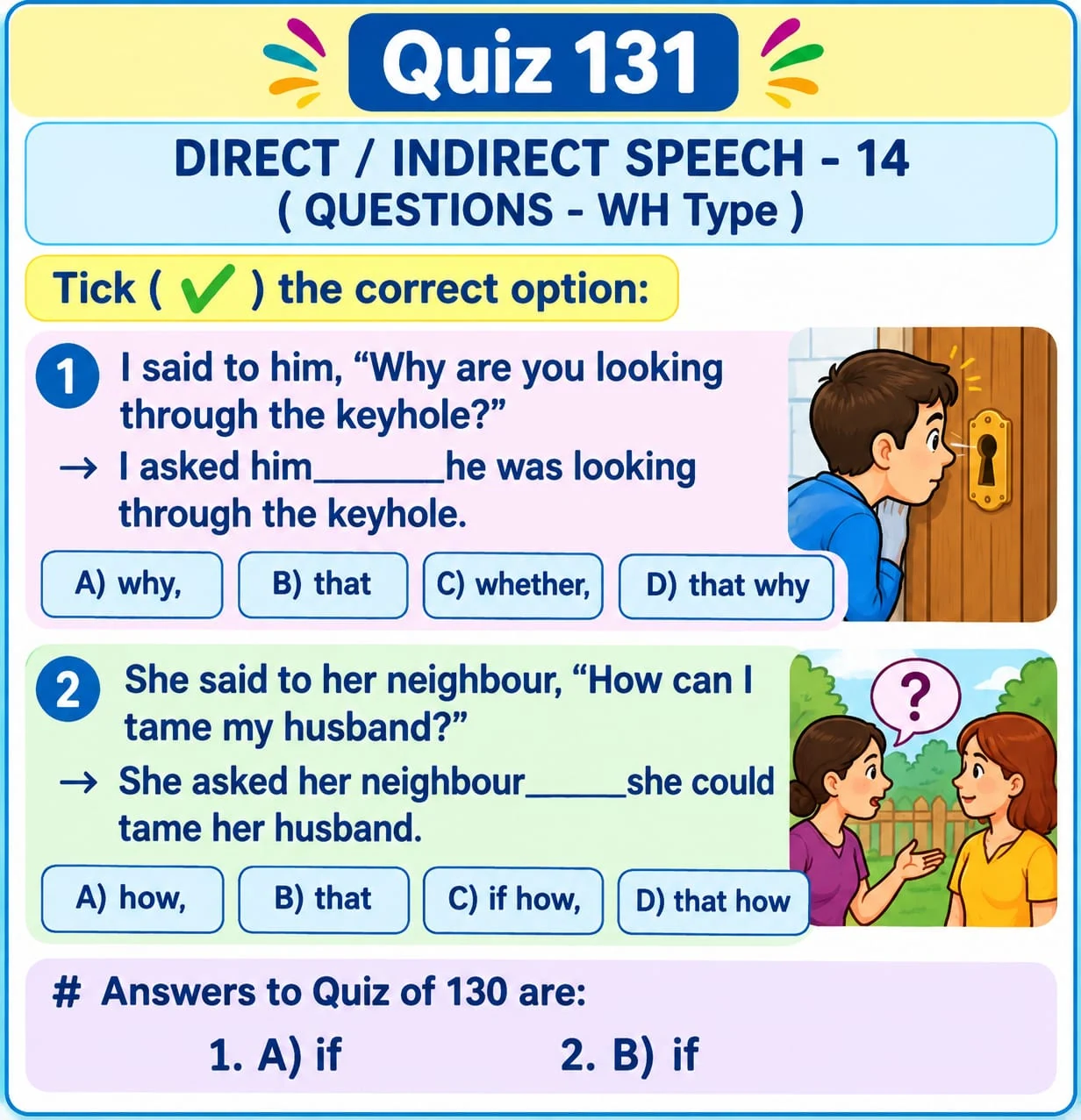
Choose the correct connector when reporting why and how questions.
Read lesson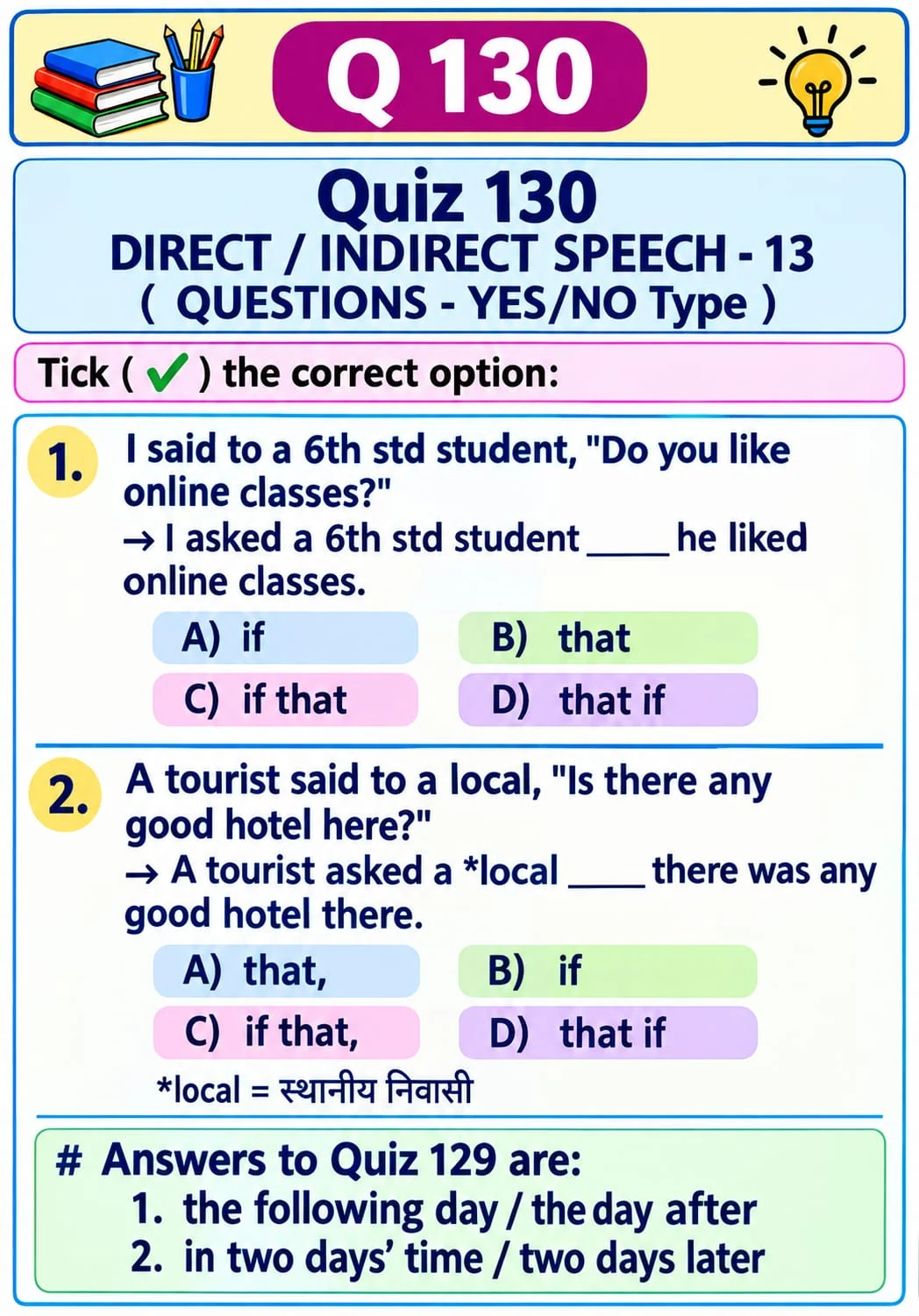
Use if or whether to report questions that have a yes or no answer.
Read lesson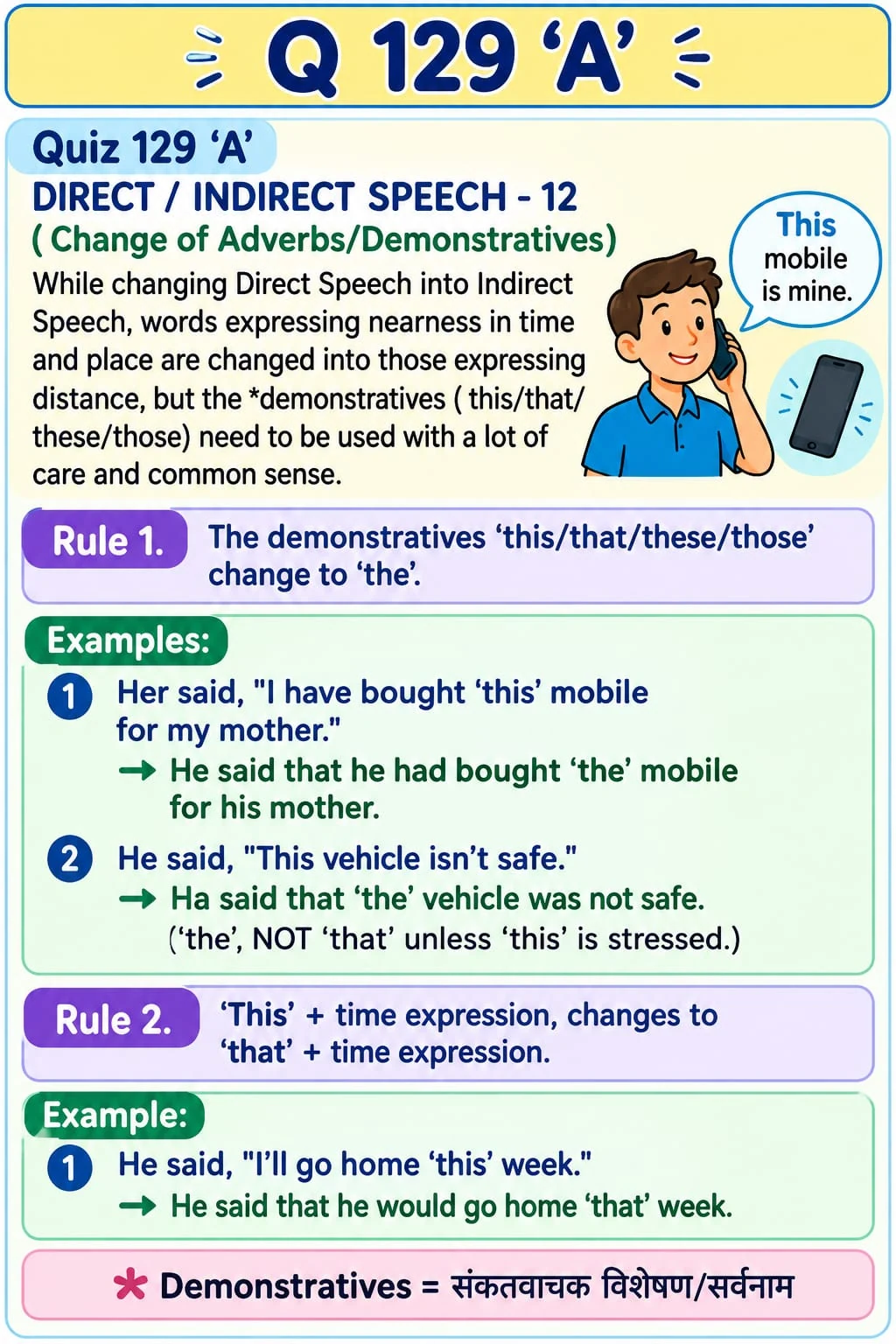
Learn how this, that, these, those and time expressions change in reported speech.
Read lesson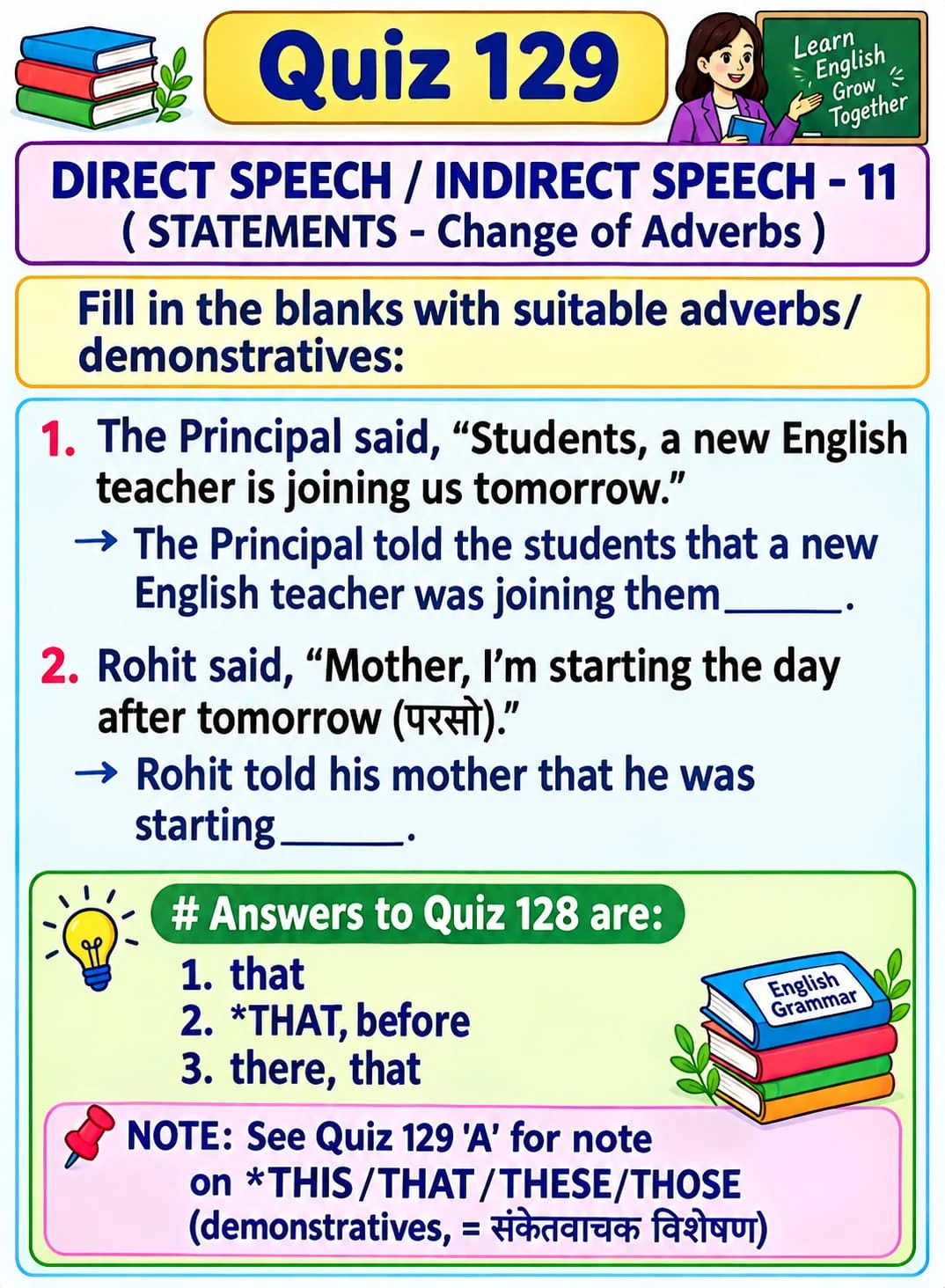
Practise changing tomorrow and starting time expressions into reported speech.
Read lesson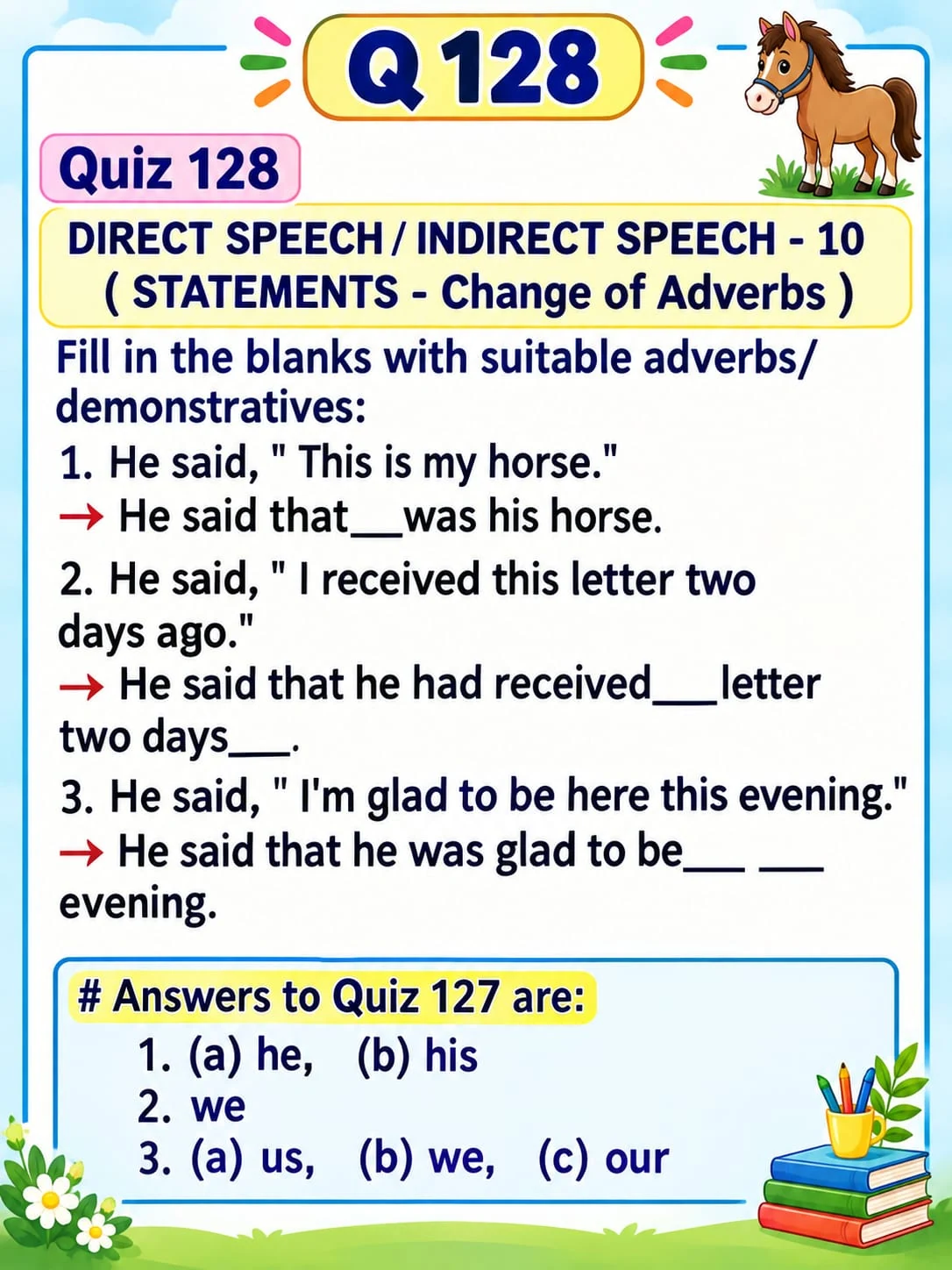
Fill the gaps with suitable adverbs and demonstratives.
Read lesson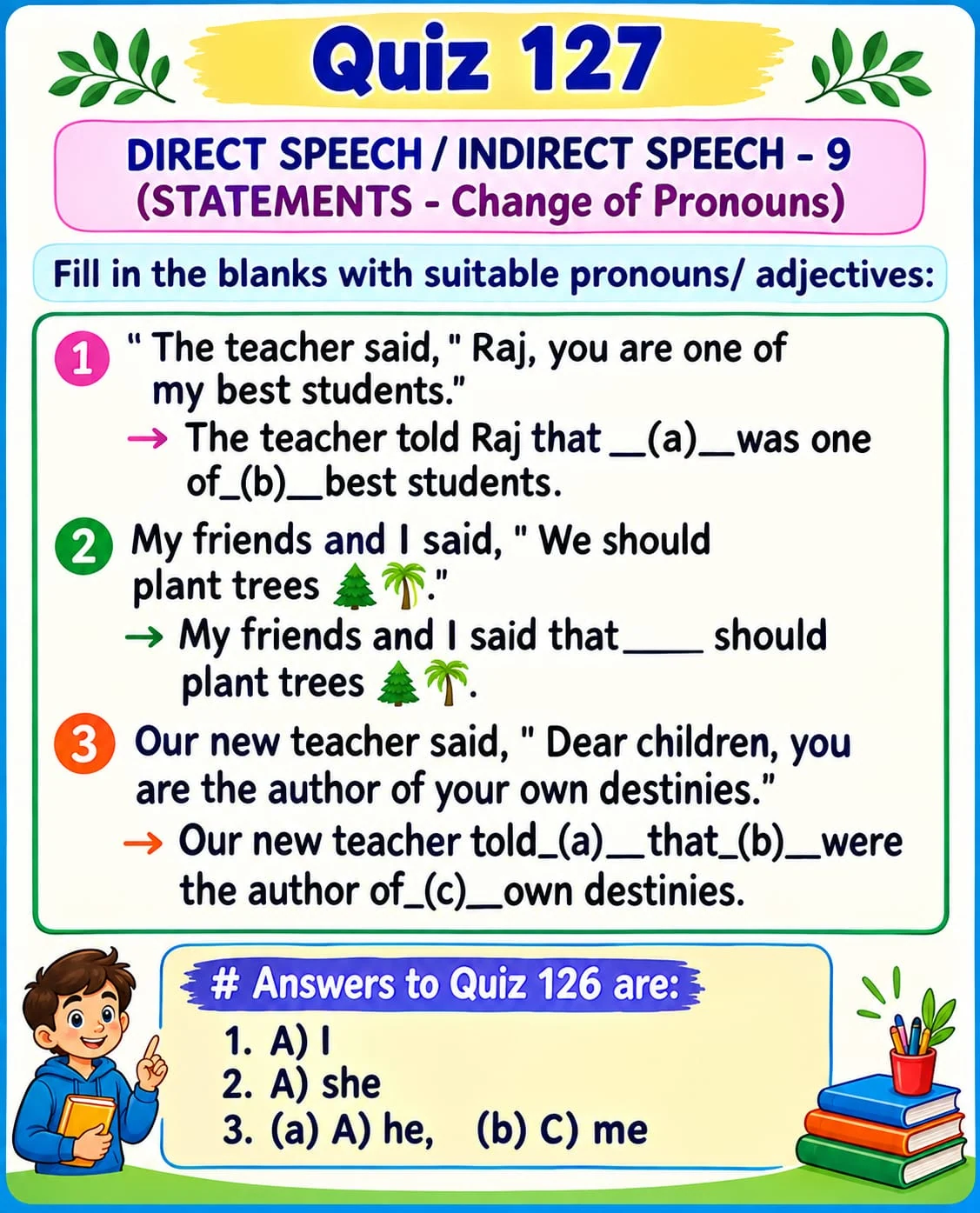
Choose pronouns and possessive adjectives to match the speaker and listener.
Read lesson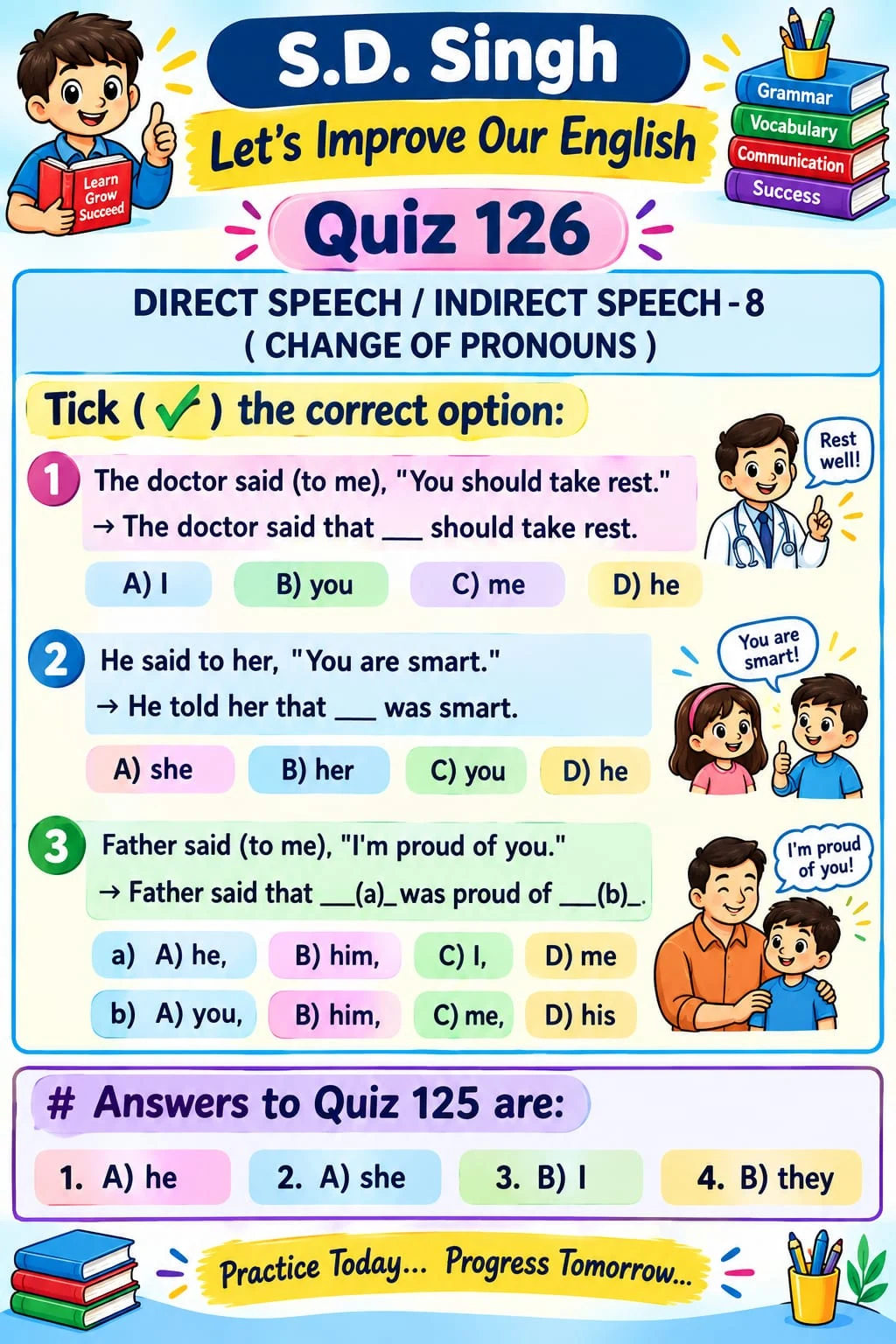
Select the right pronoun when the speaker or listener changes.
Read lesson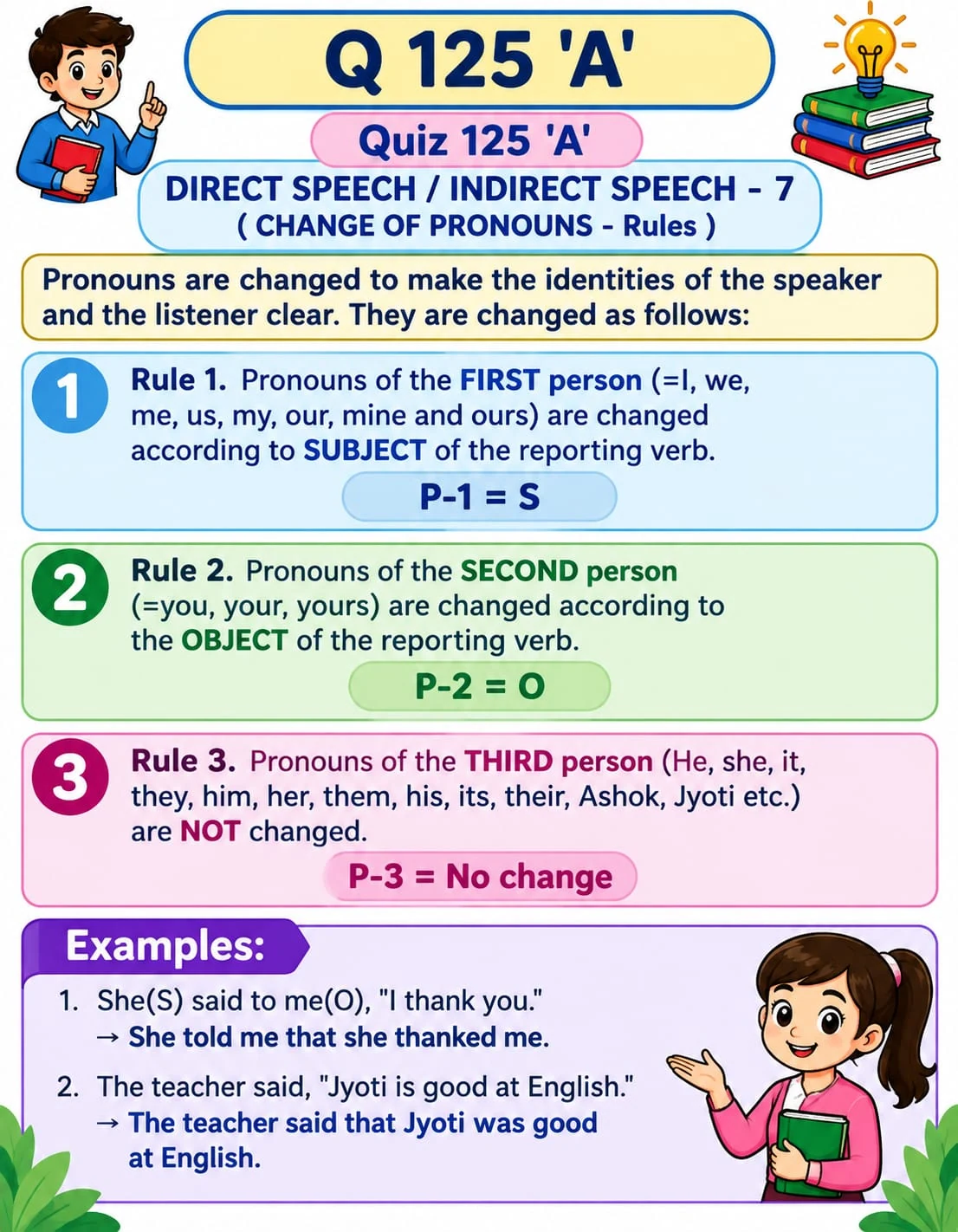
Review the first, second and third person rules for reported speech.
Read lesson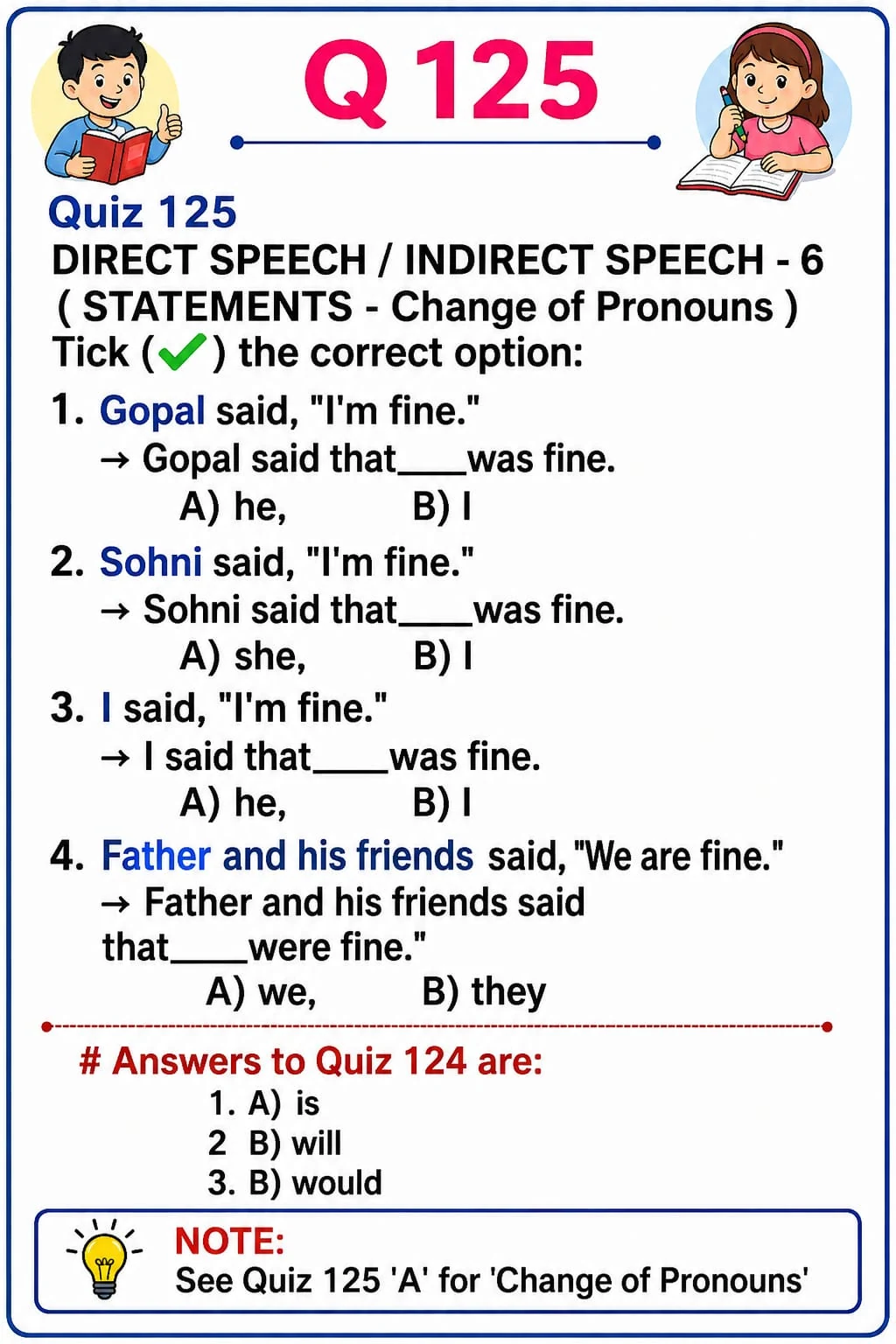
Choose pronouns that reflect who spoke and who is being reported.
Read lesson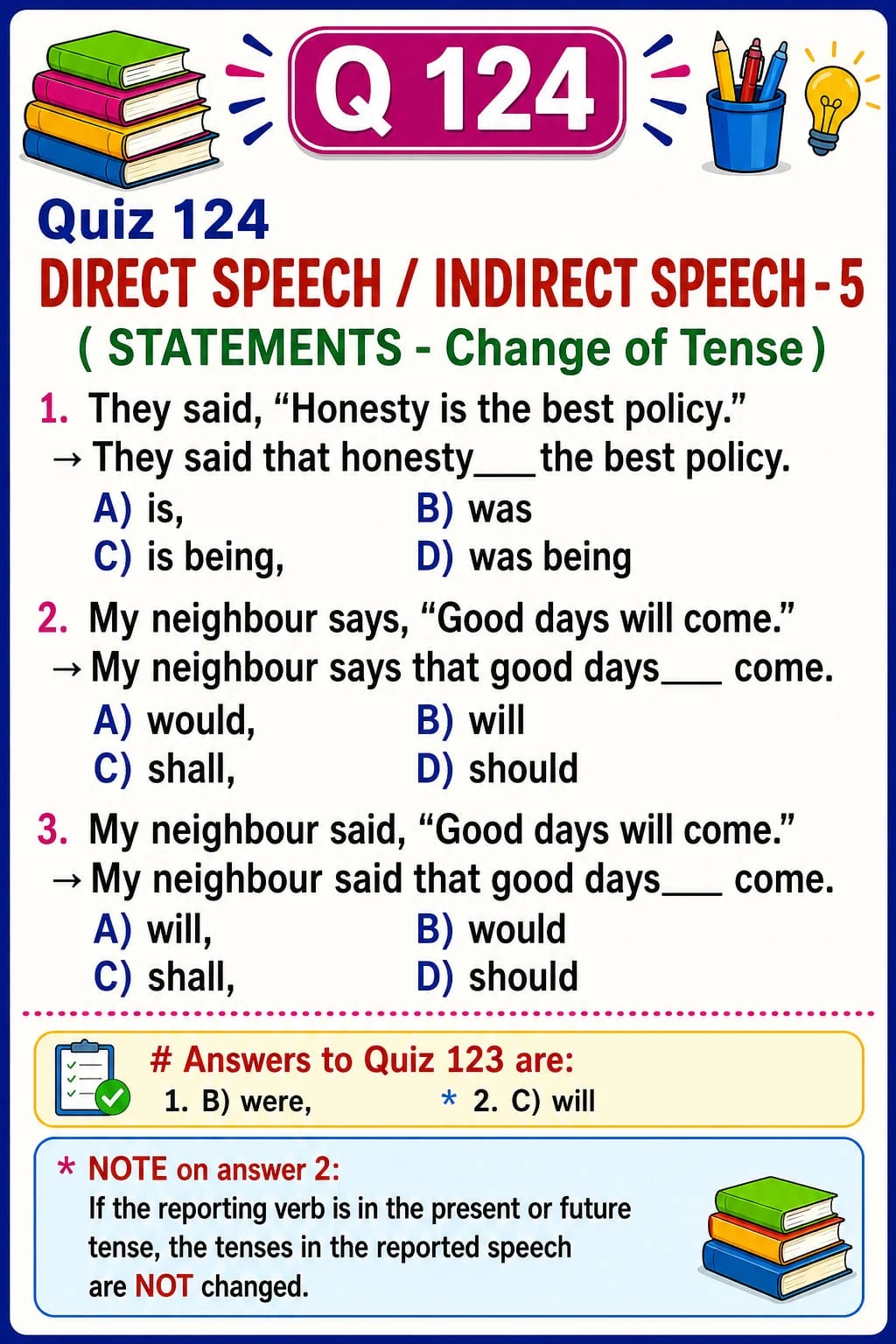
Choose the reported tense and notice when a general truth stays unchanged.
Read lesson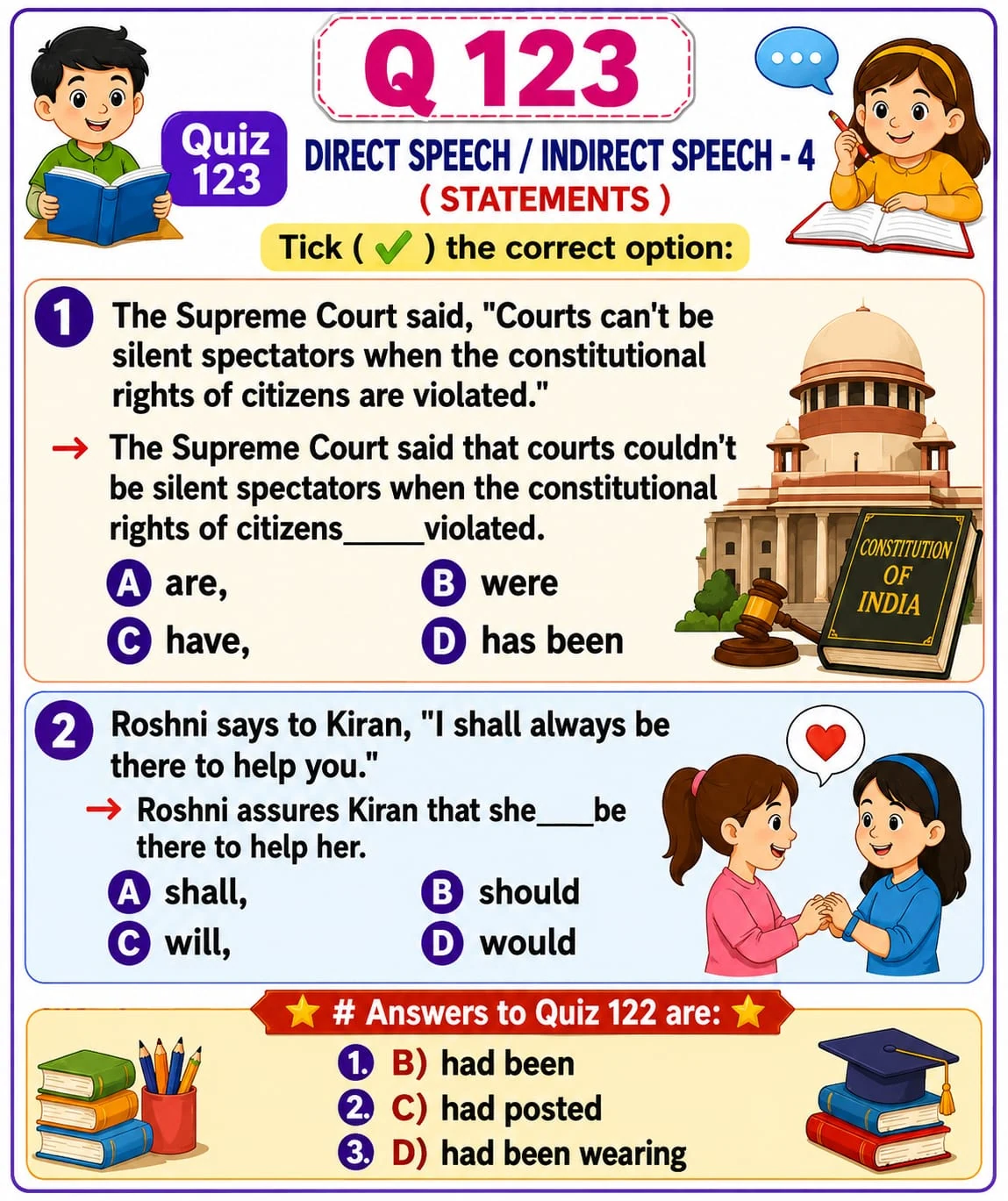
Choose the correct tense when reporting statements.
Read lesson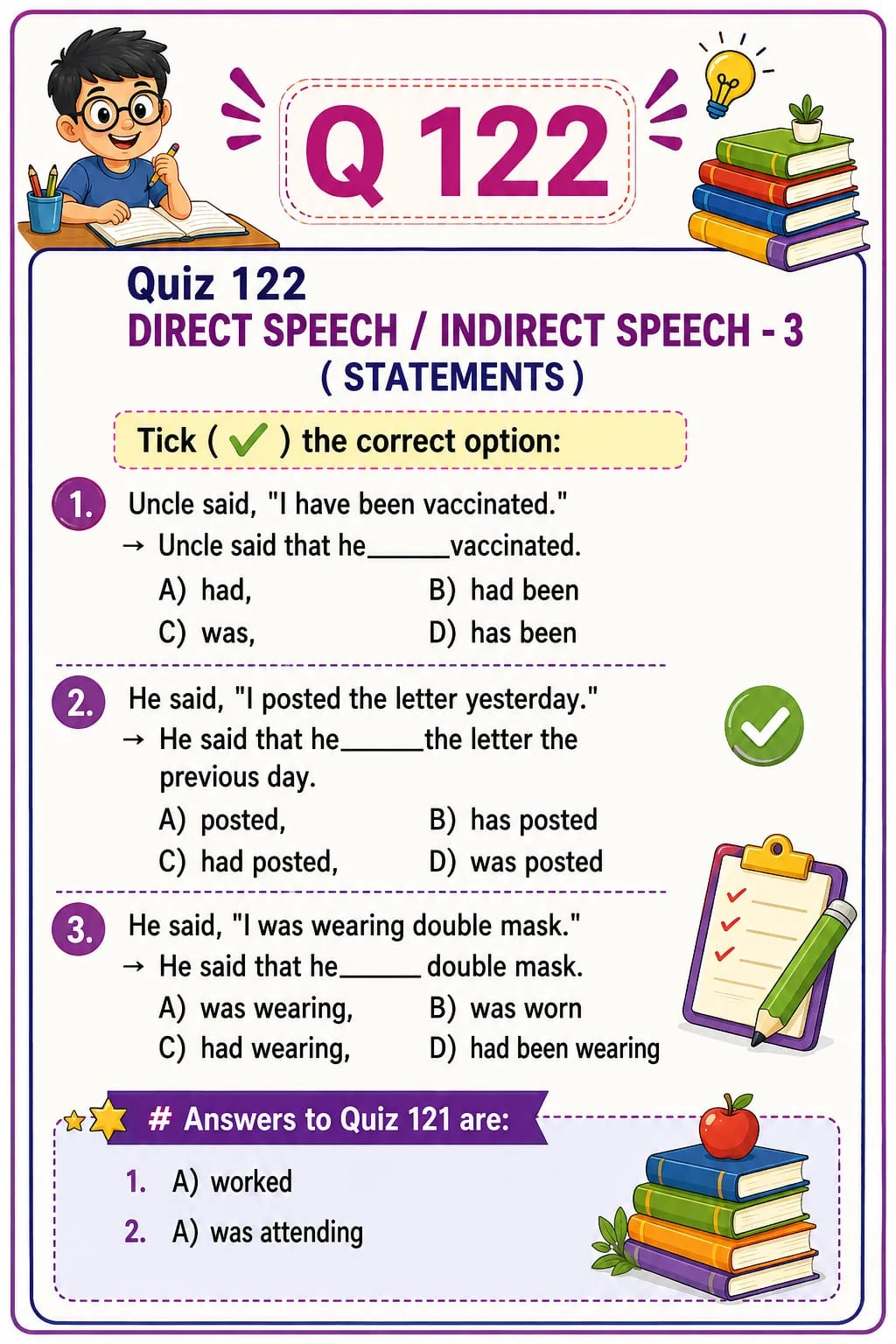
Choose the correct tense for each reported statement.
Read lesson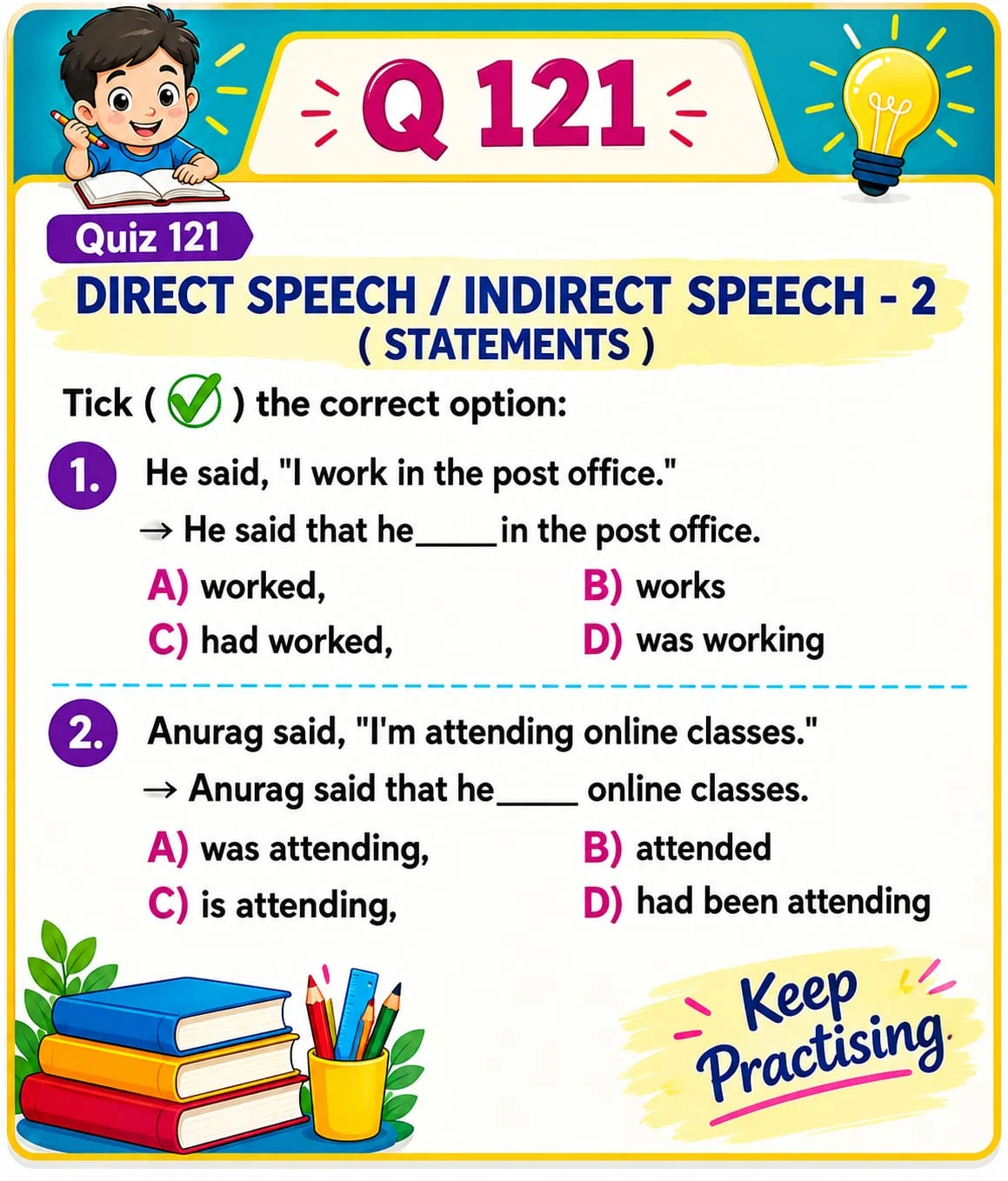
Choose the correct tense for two reported statements.
Read lesson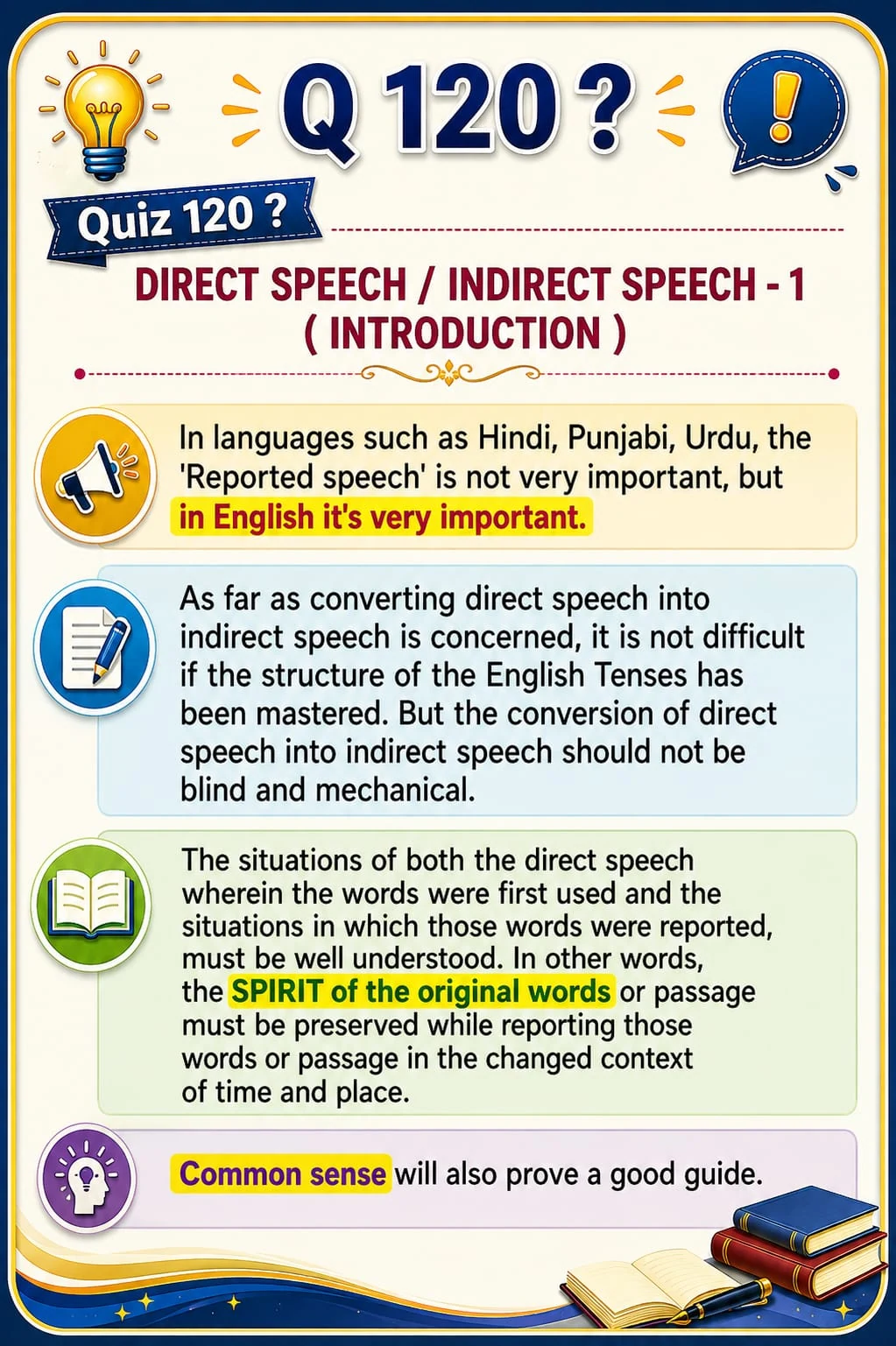
Understand the change of speaker and point of view in reported speech.
Read lesson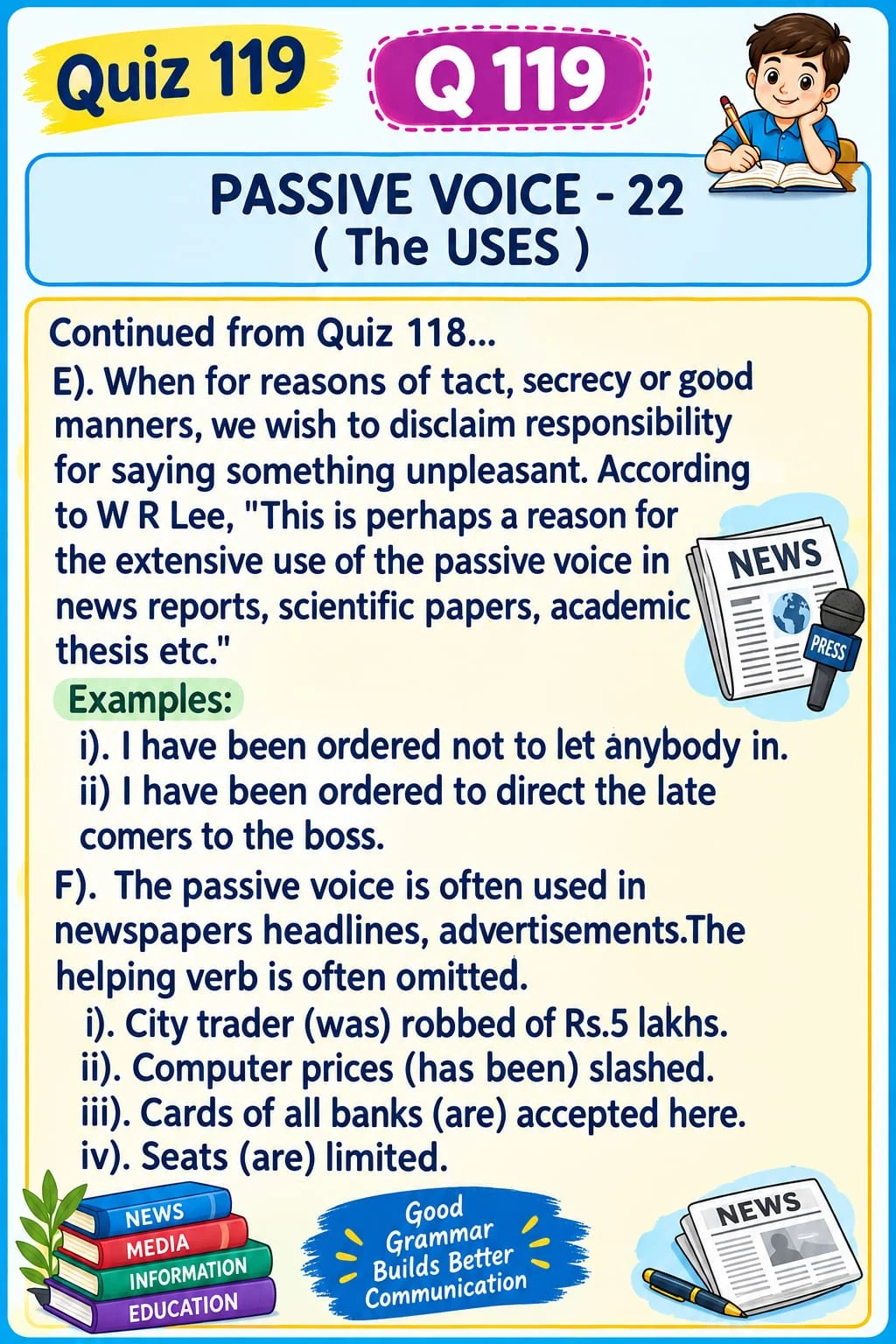
Explore passive constructions used for tact and in newspaper headlines.
Read lesson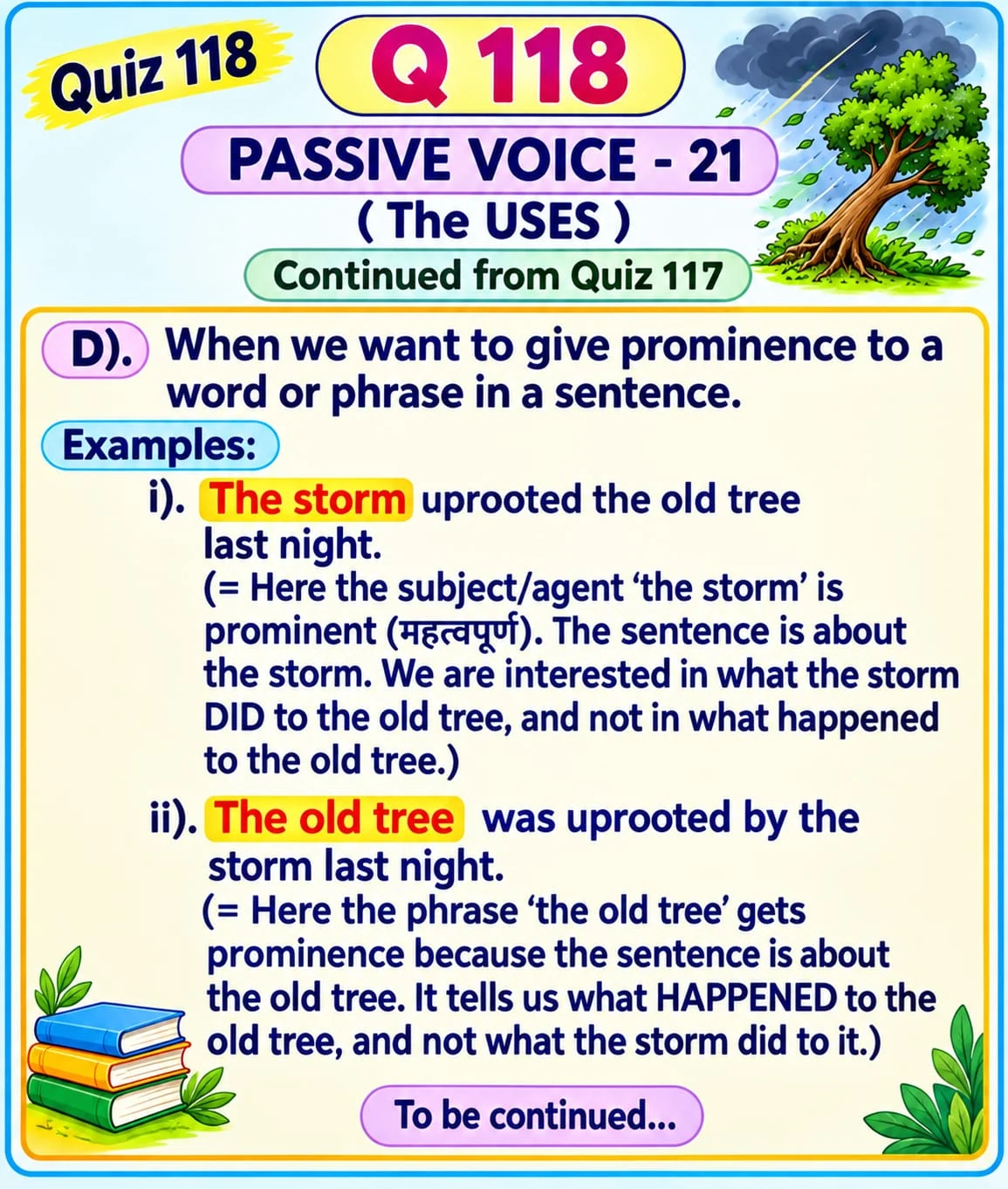
See how the passive changes the focus of a sentence.
Read lesson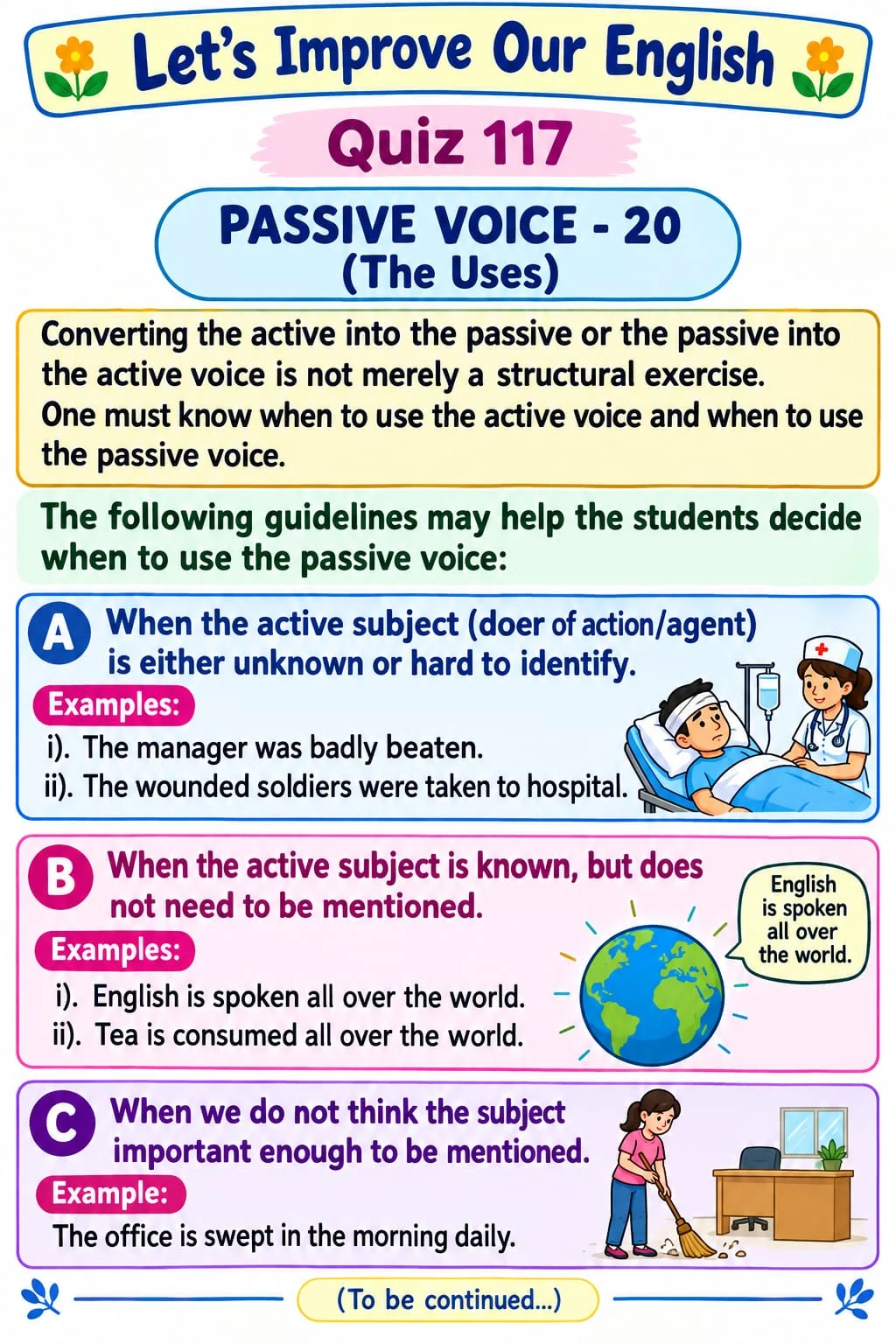
Choose active or passive voice according to the focus and purpose of a sentence.
Read lesson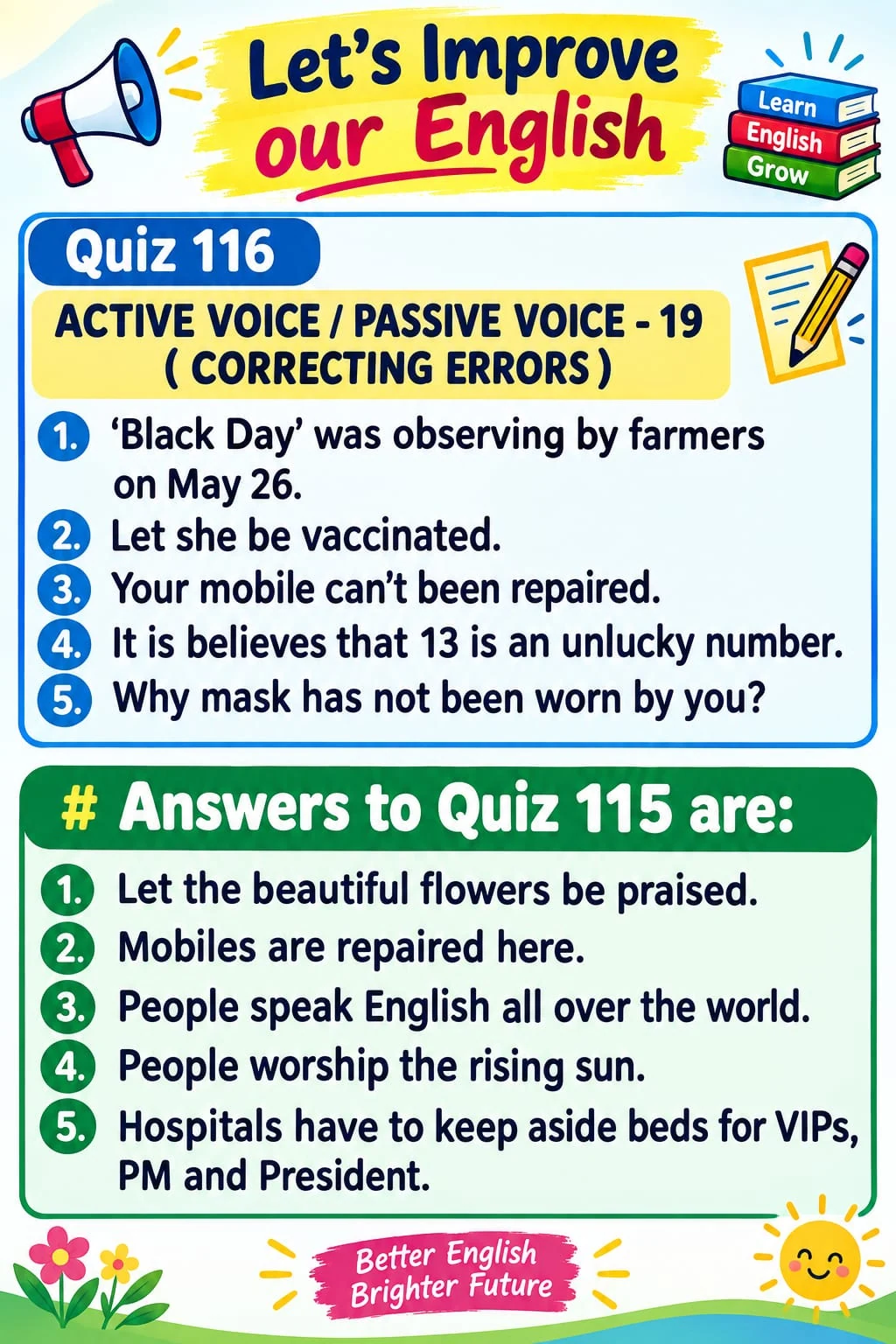
Spot and correct voice errors in five sentences.
Read lesson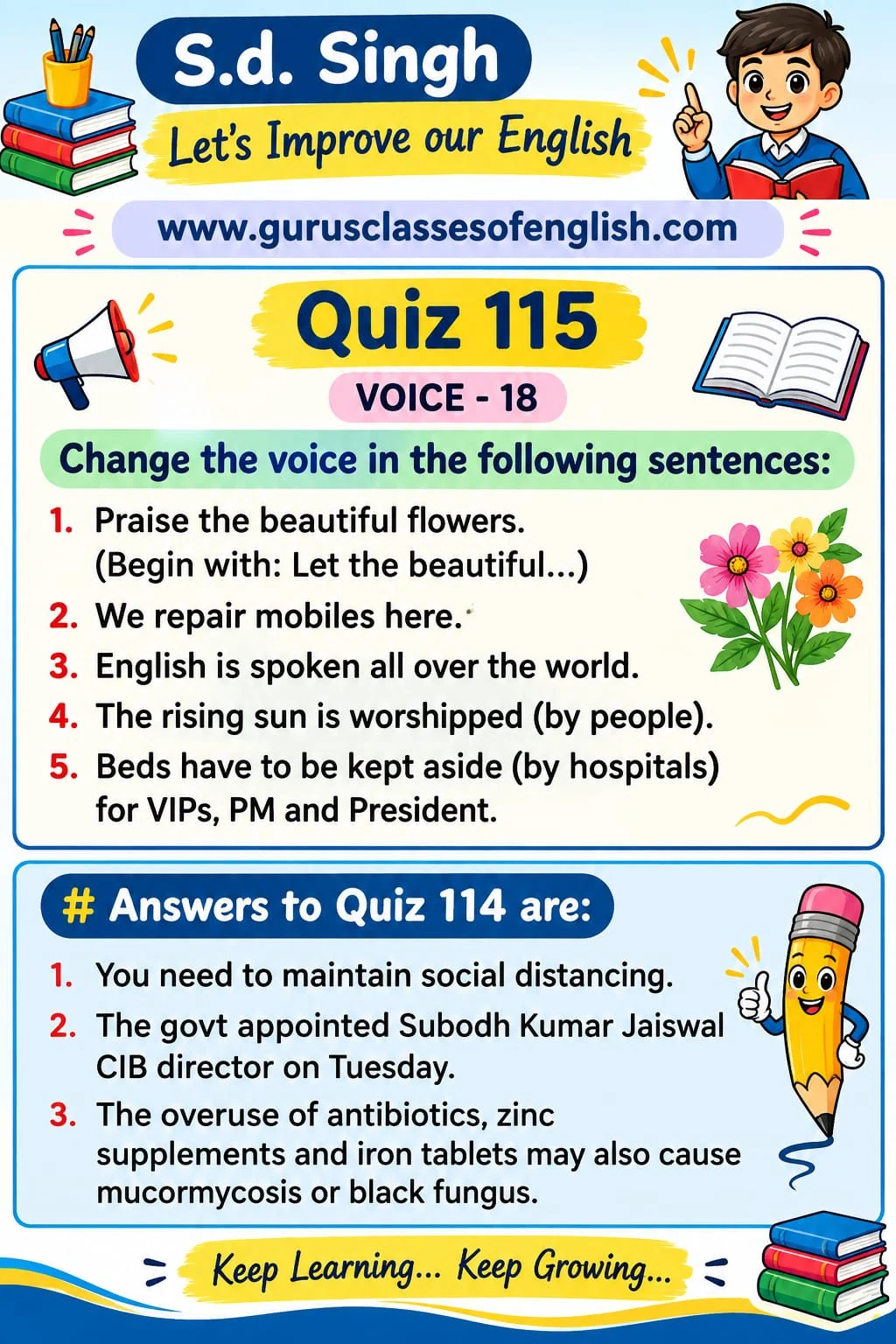
Change statements and an instruction into the passive voice.
Read lesson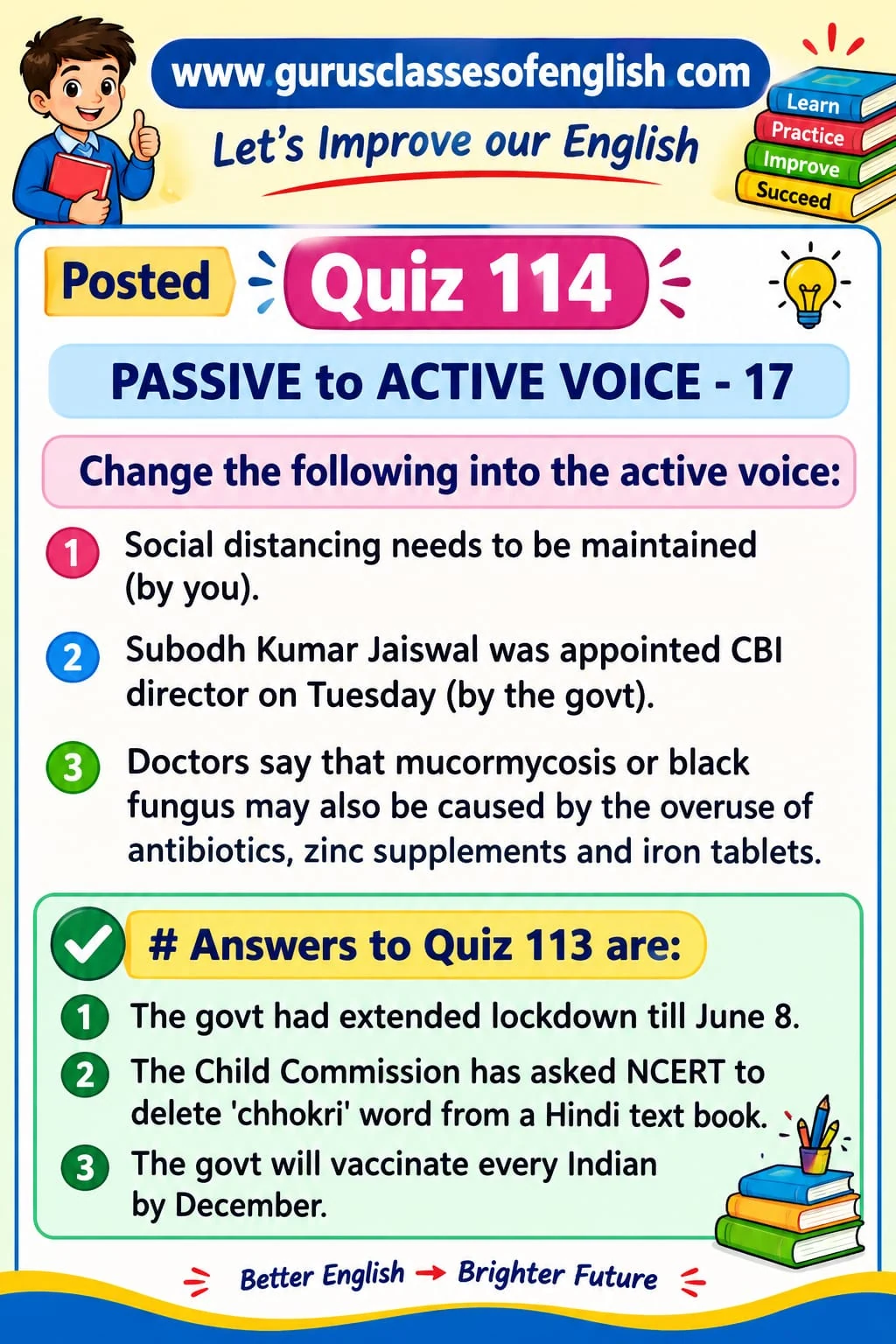
Put the agent back into the subject position in active voice.
Read lesson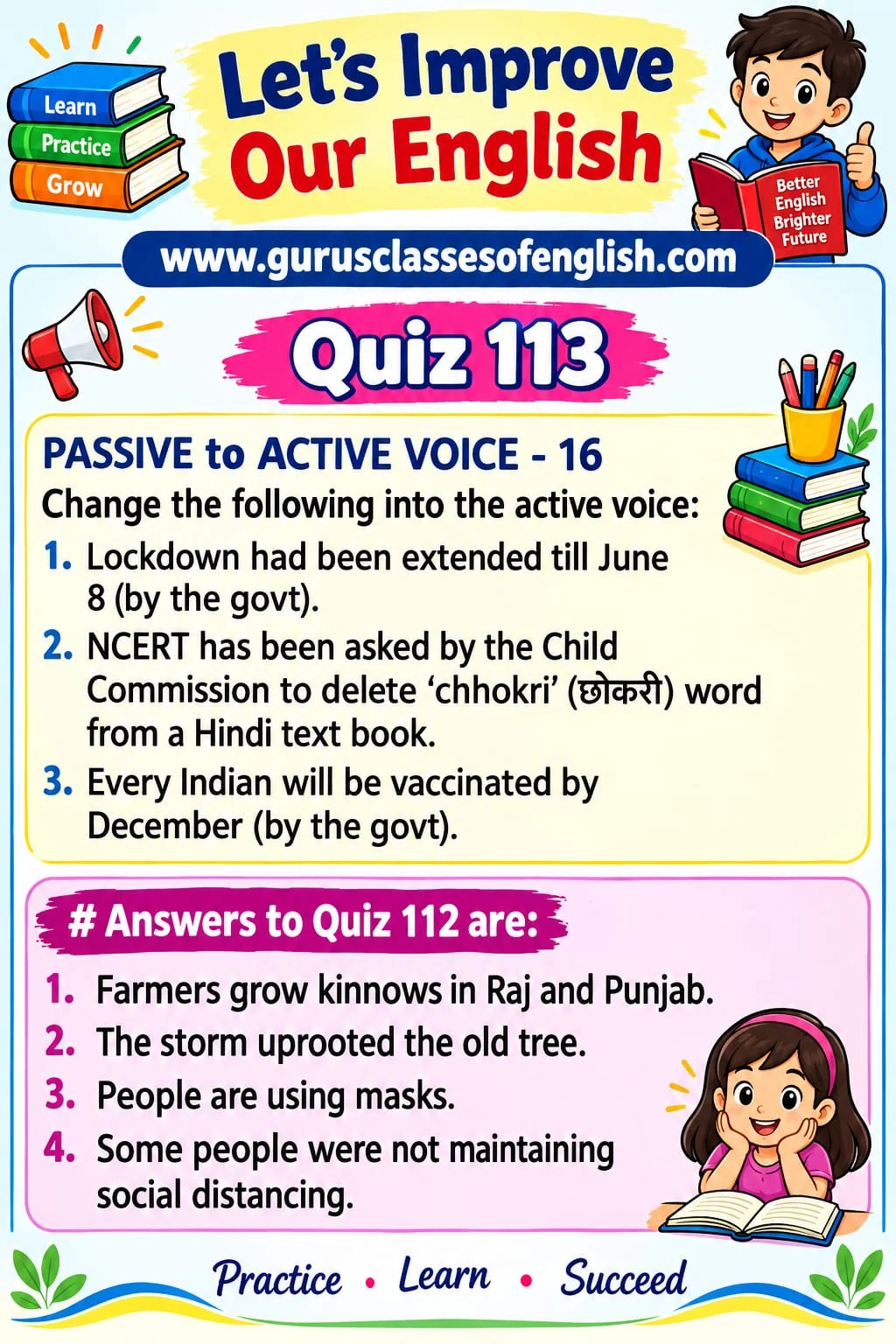
Convert passive sentences by identifying the person doing the action.
Read lesson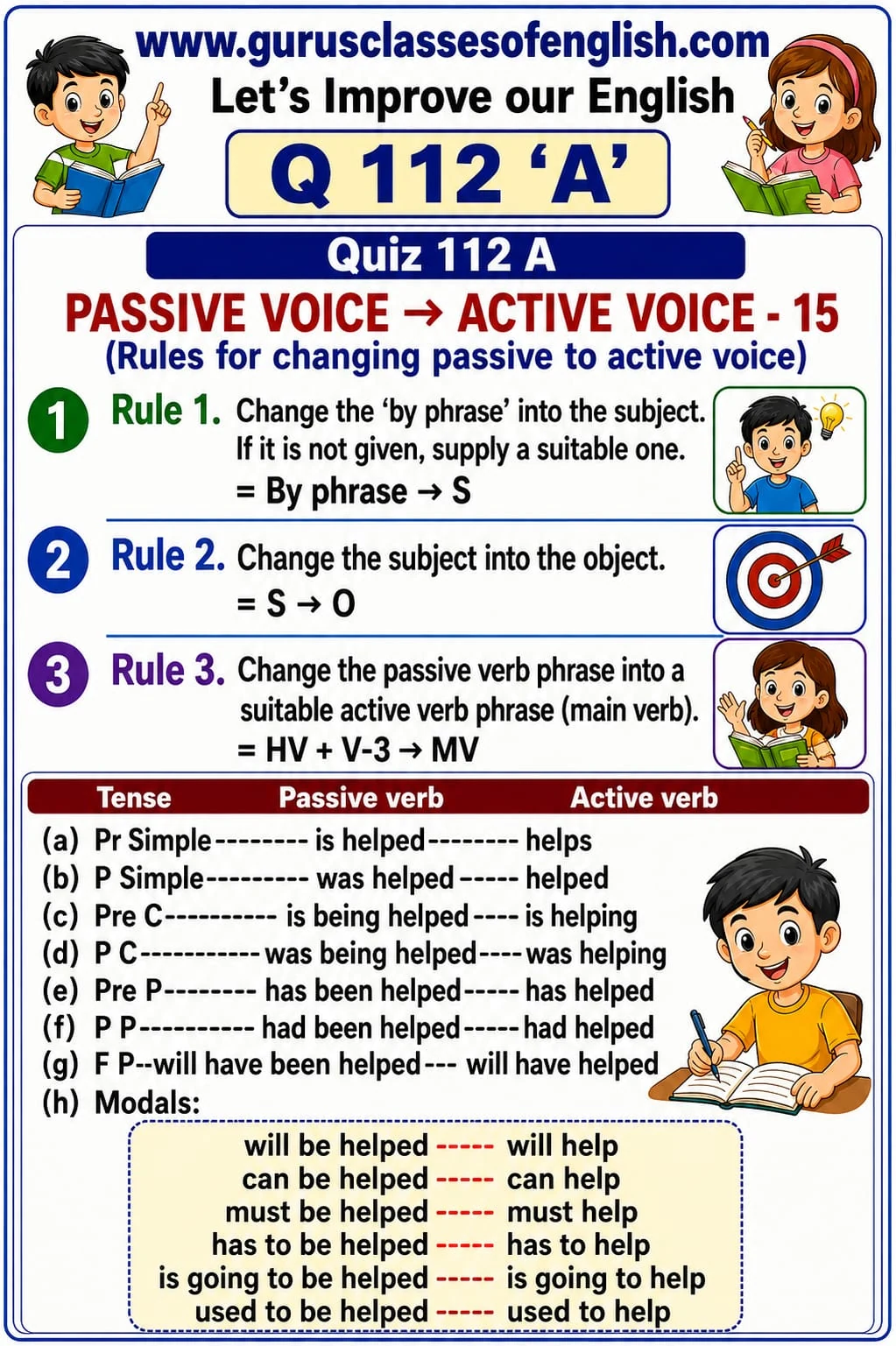
Review subjects, objects and verb forms when changing passive voice into active voice.
Read lesson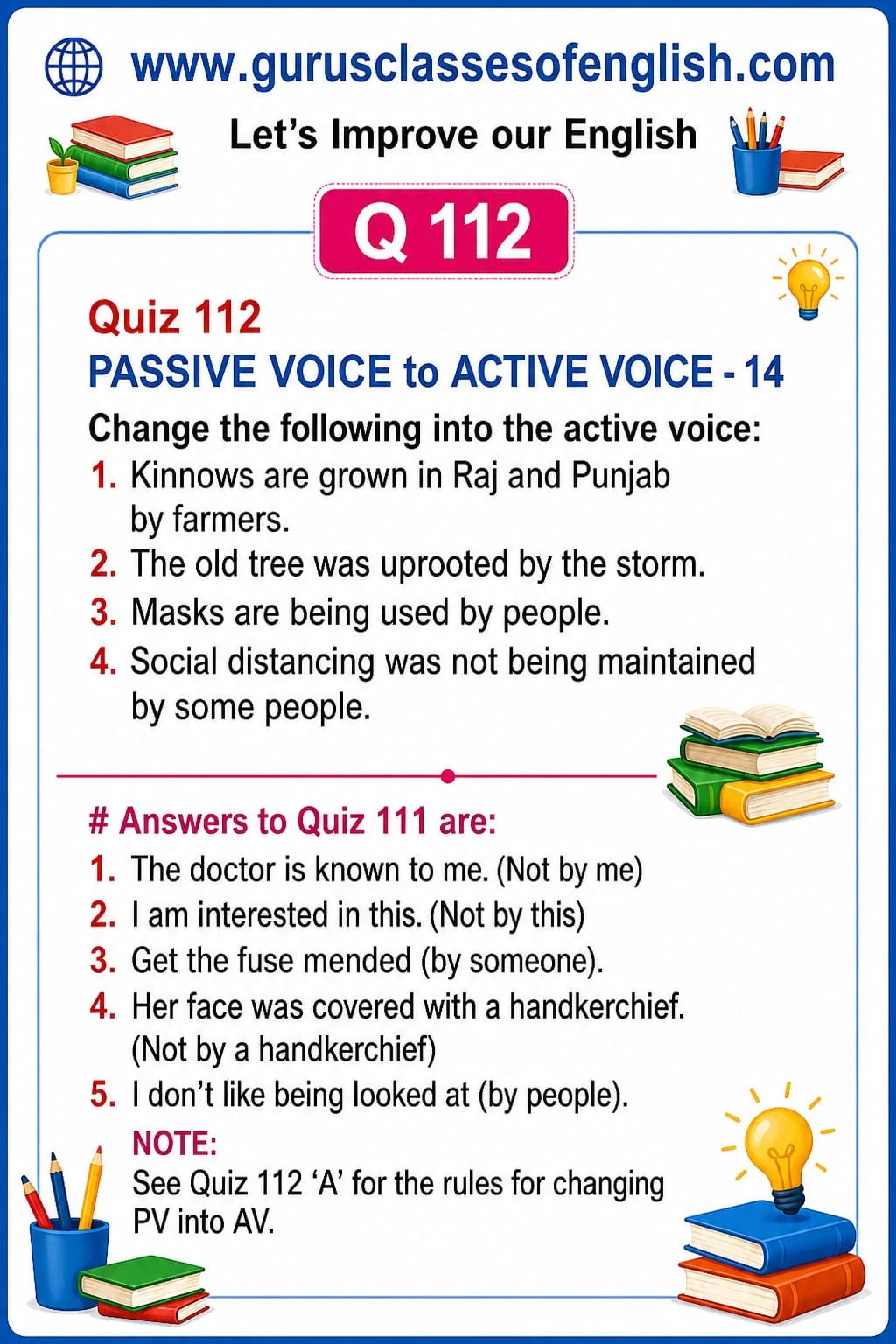
Identify the agent and change each sentence into active voice.
Read lesson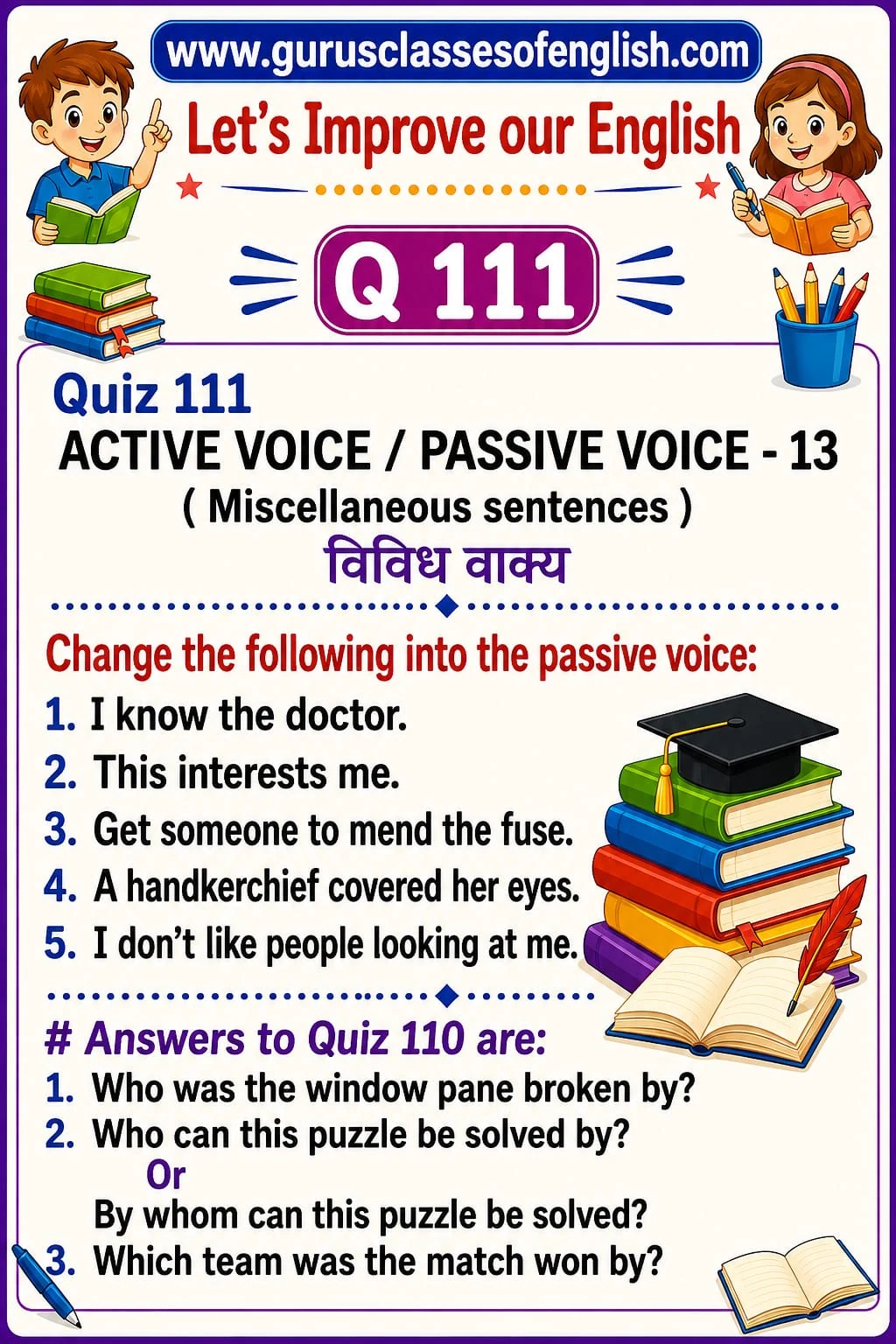
Practise passive forms with different kinds of verbs.
Read lesson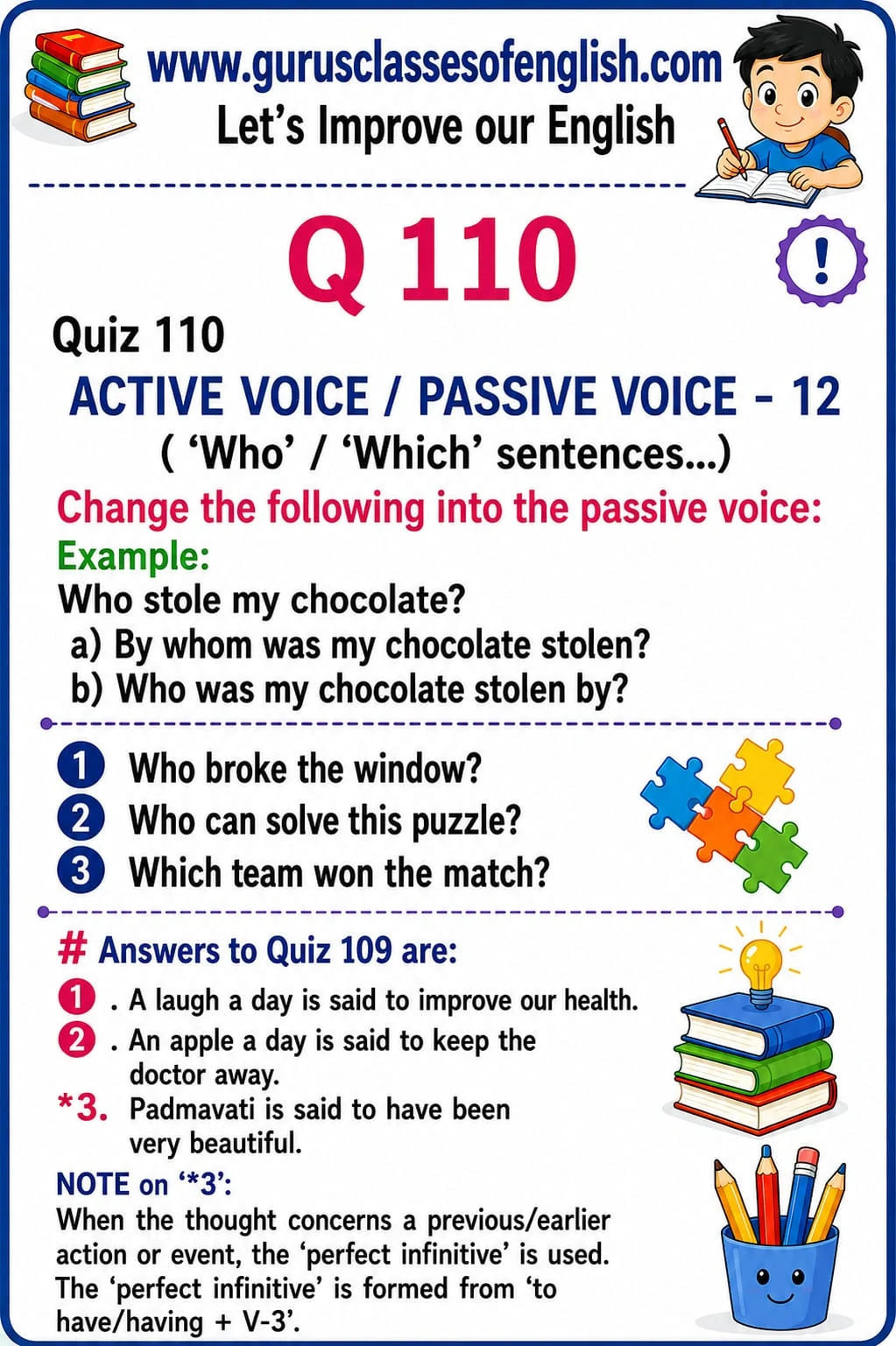
Change questions with who and which into the passive voice.
Read lesson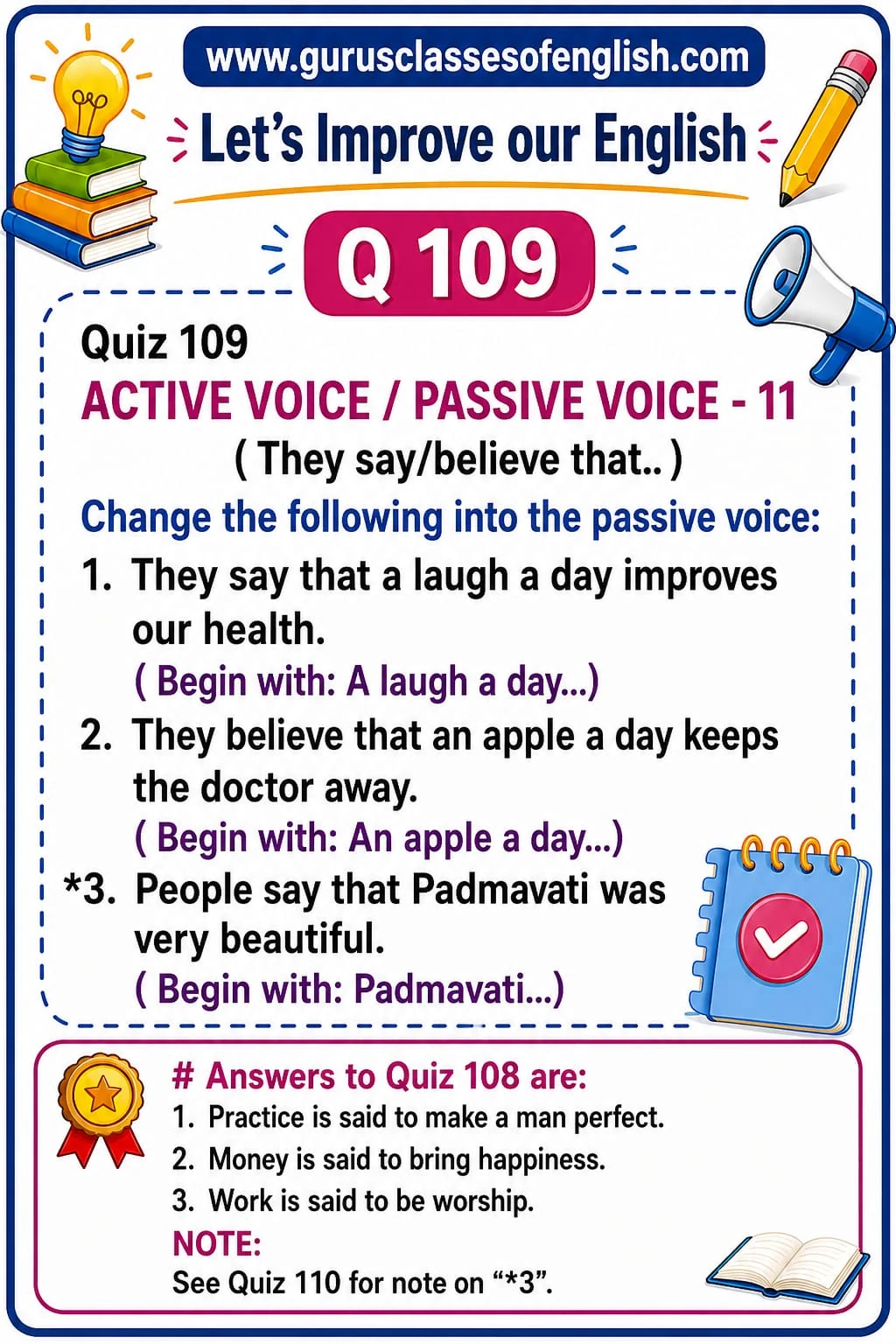
Practise reporting a general belief using passive constructions.
Read lesson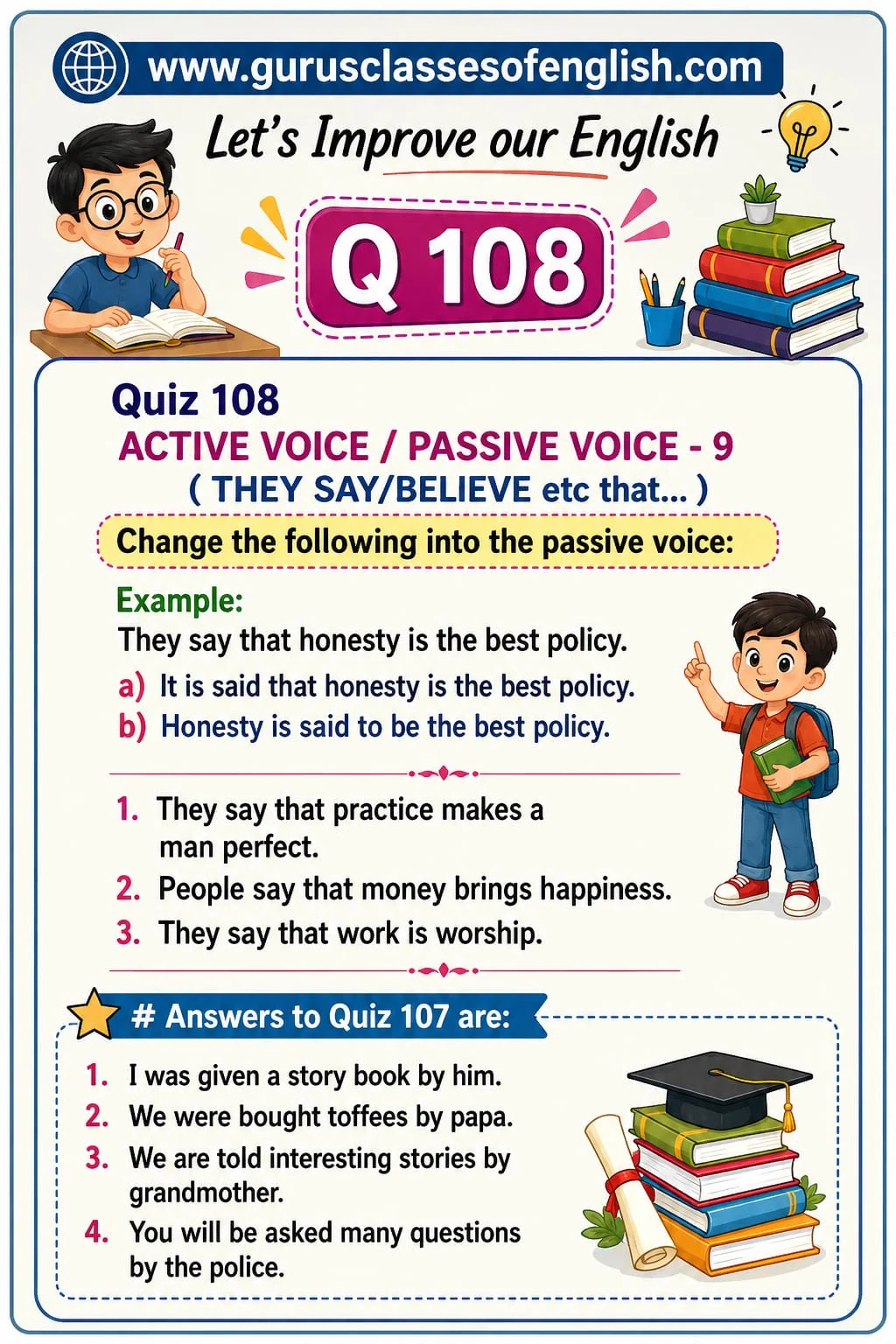
Learn two passive ways to report what people say or believe.
Read lesson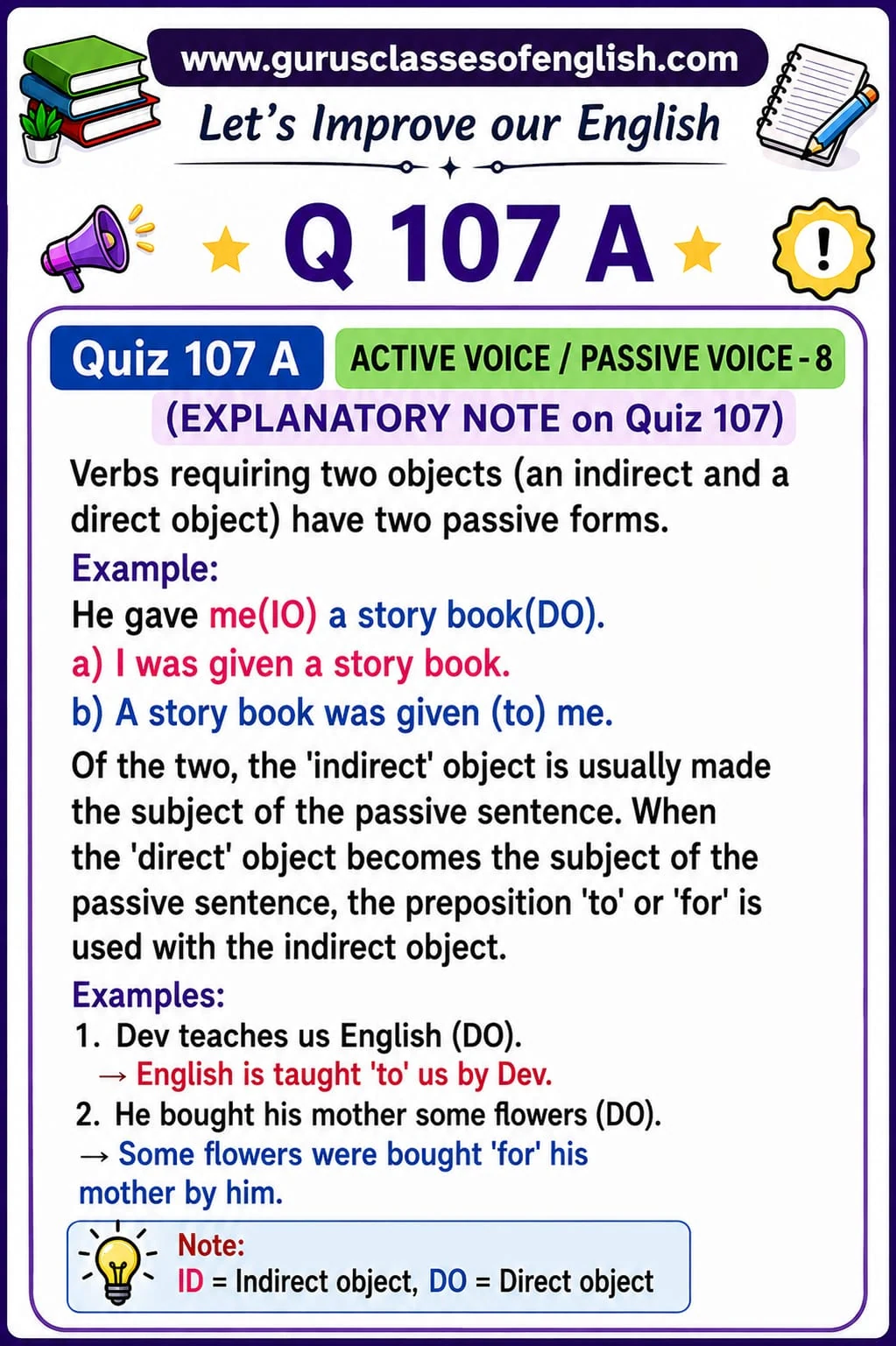
Compare two passive constructions with a direct and an indirect object.
Read lesson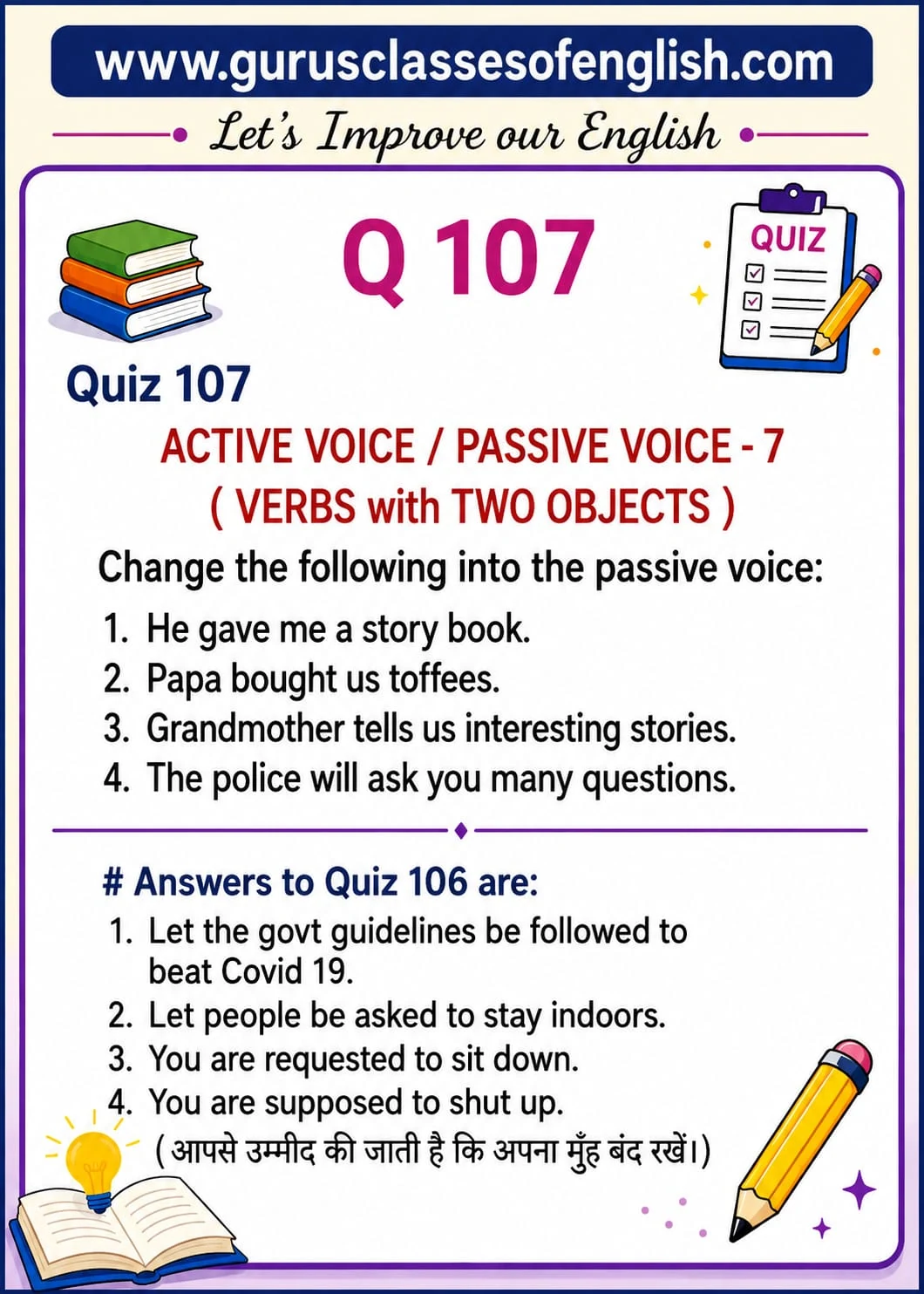
Make passive sentences with verbs that take two objects.
Read lesson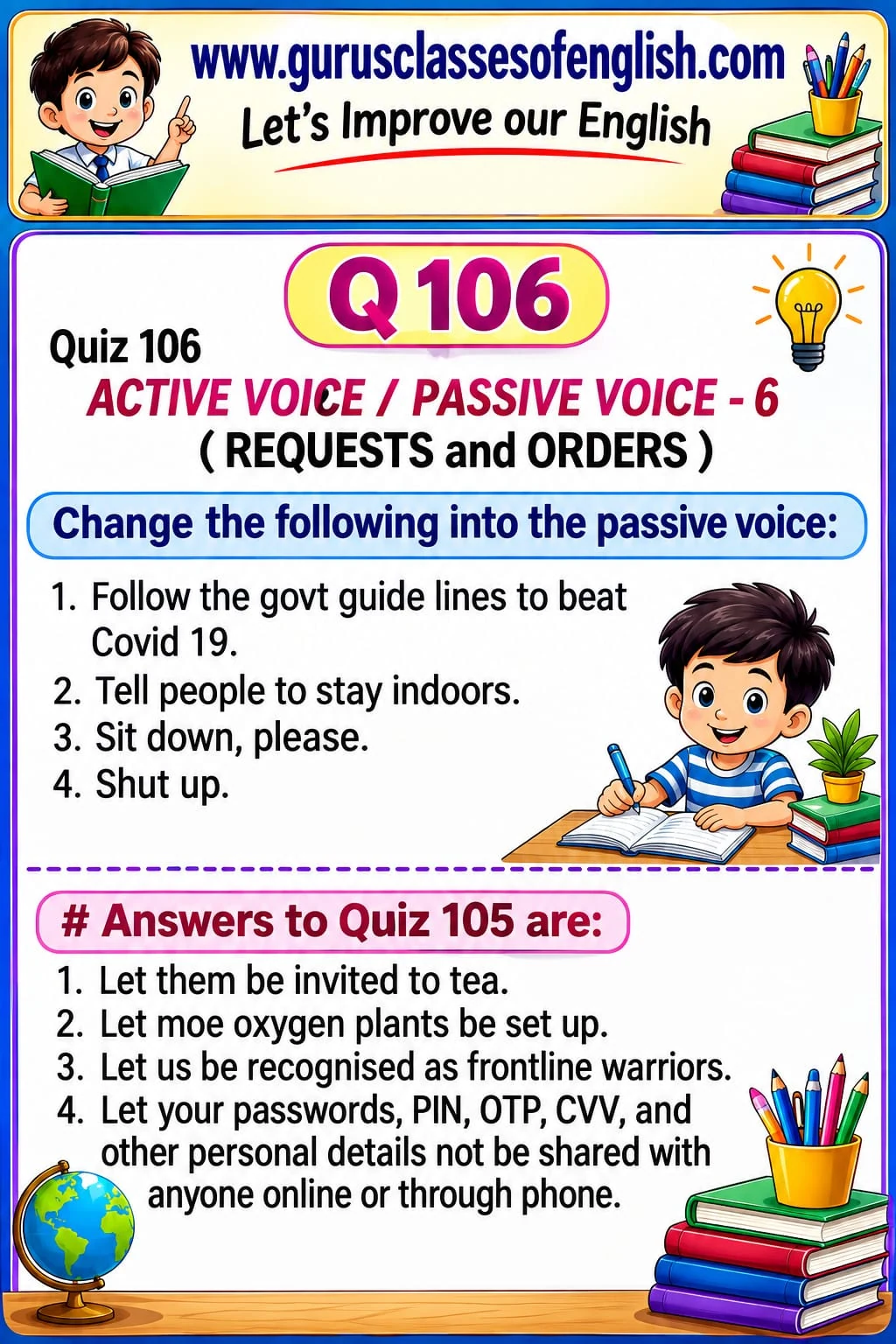
Change the following instructions into passive voice.
Read lesson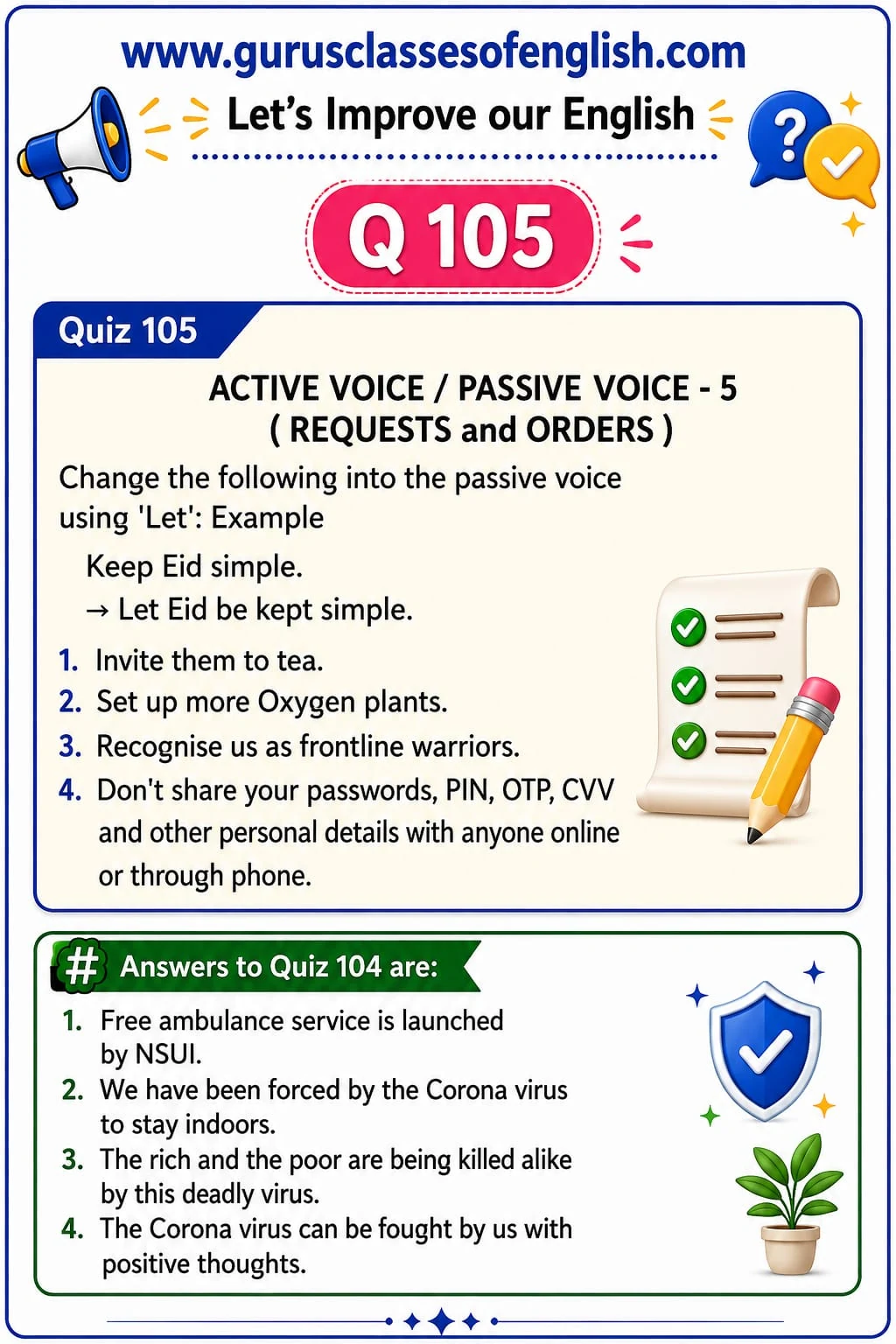
Use let with an object and passive infinitive to report instructions.
Read lesson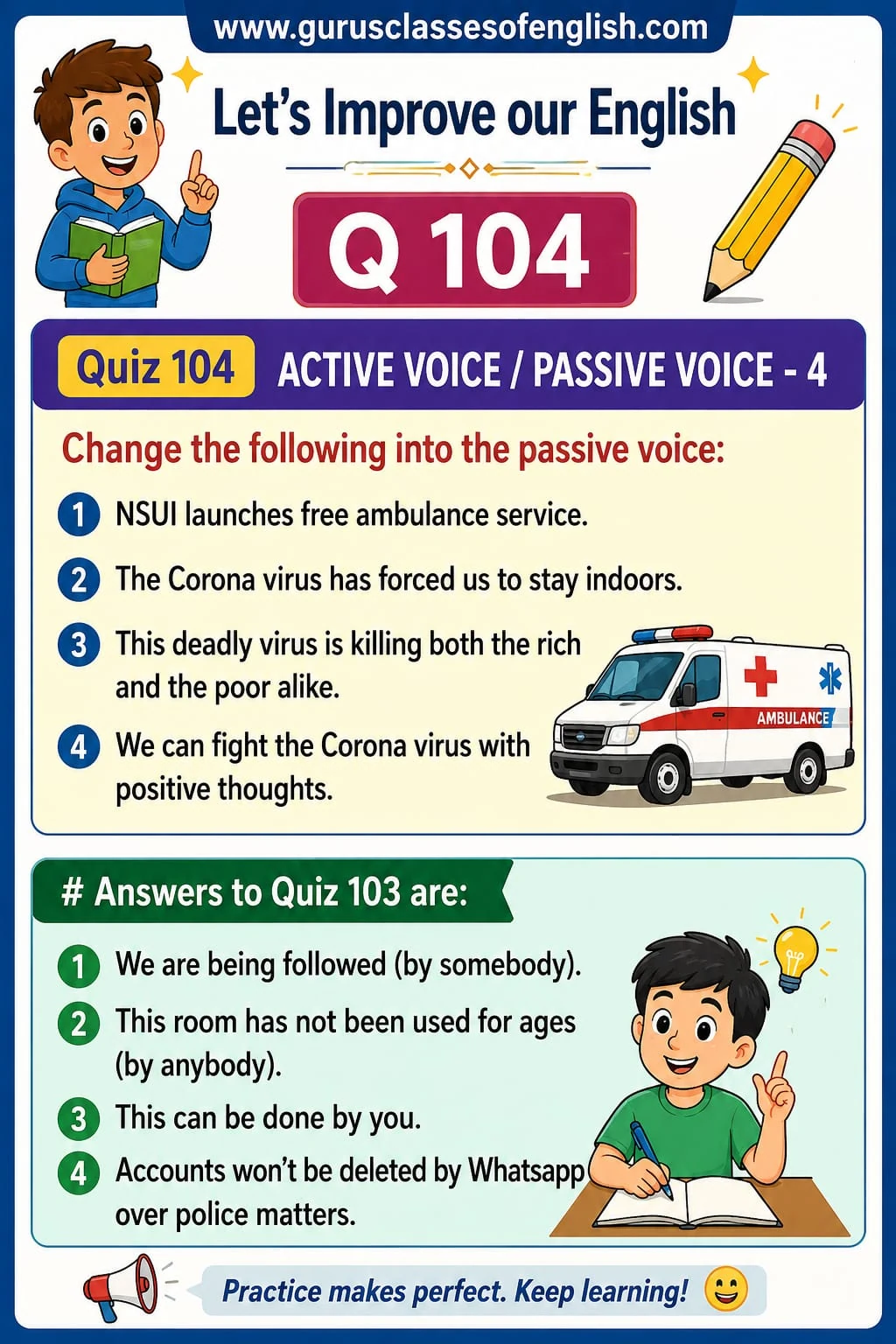
Identify the object and the correct passive verb form.
Read lesson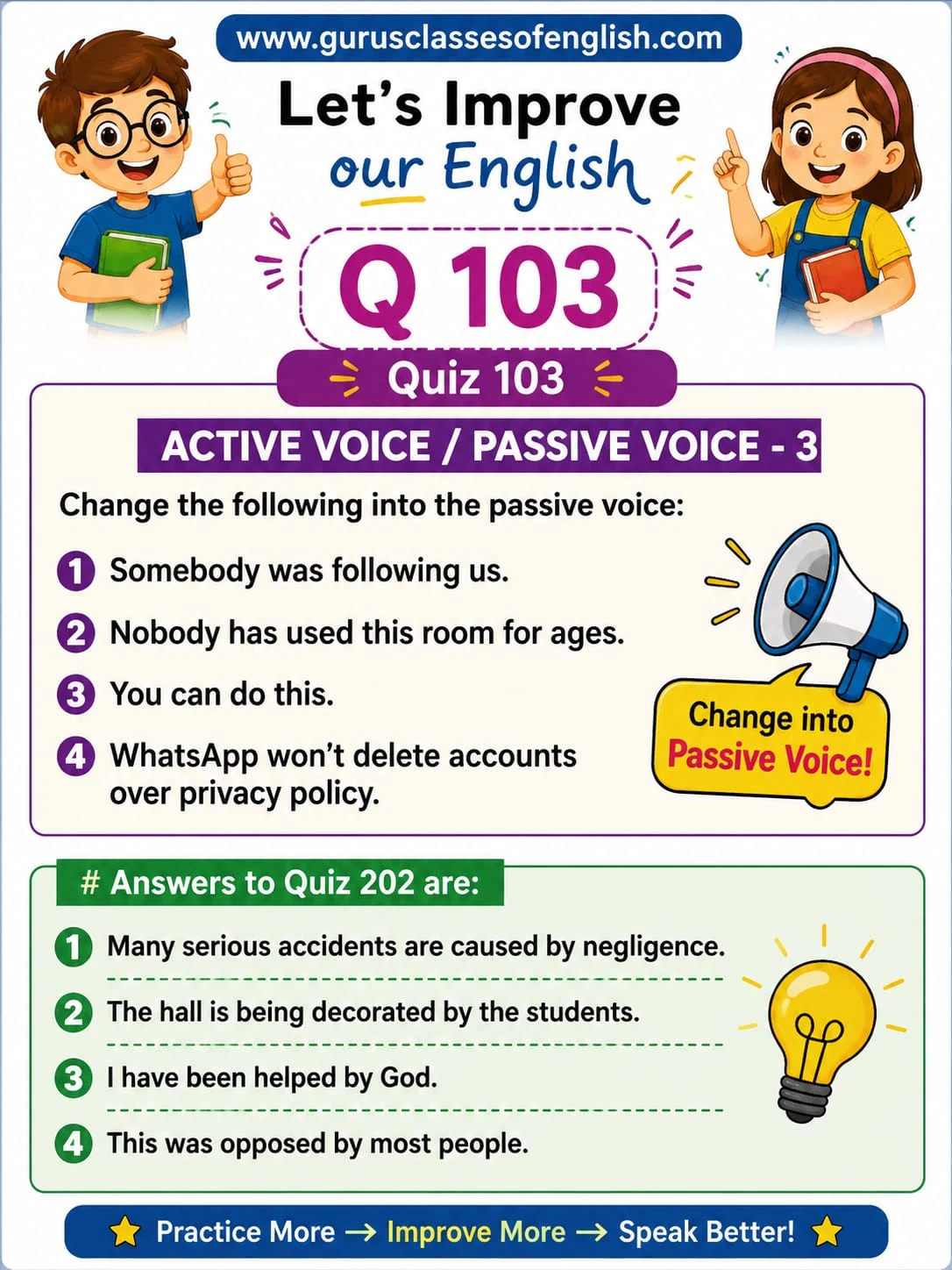
Practise passive constructions in present, past and modal sentences.
Read lesson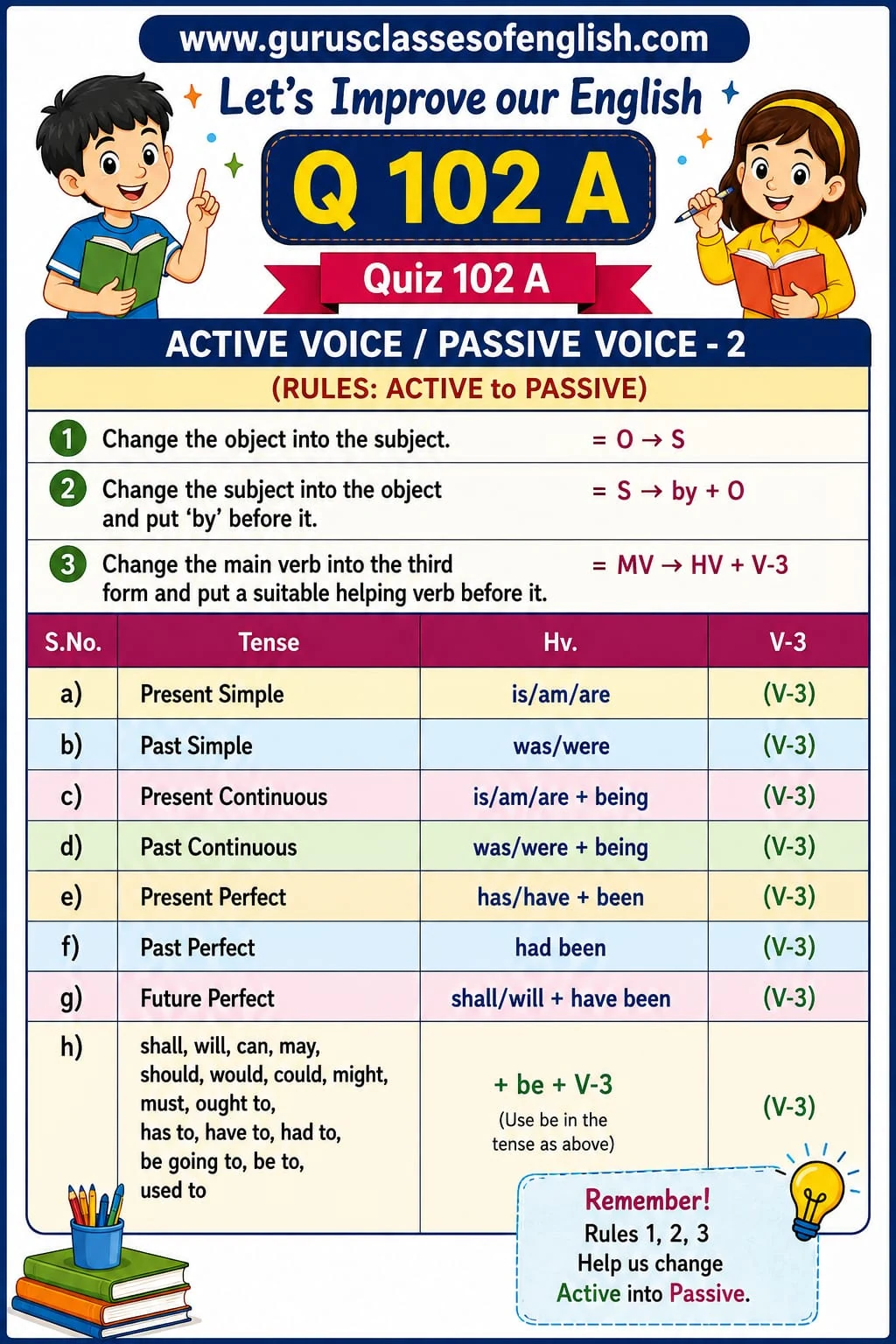
Review subject-object changes and passive verb forms across tenses.
Read lesson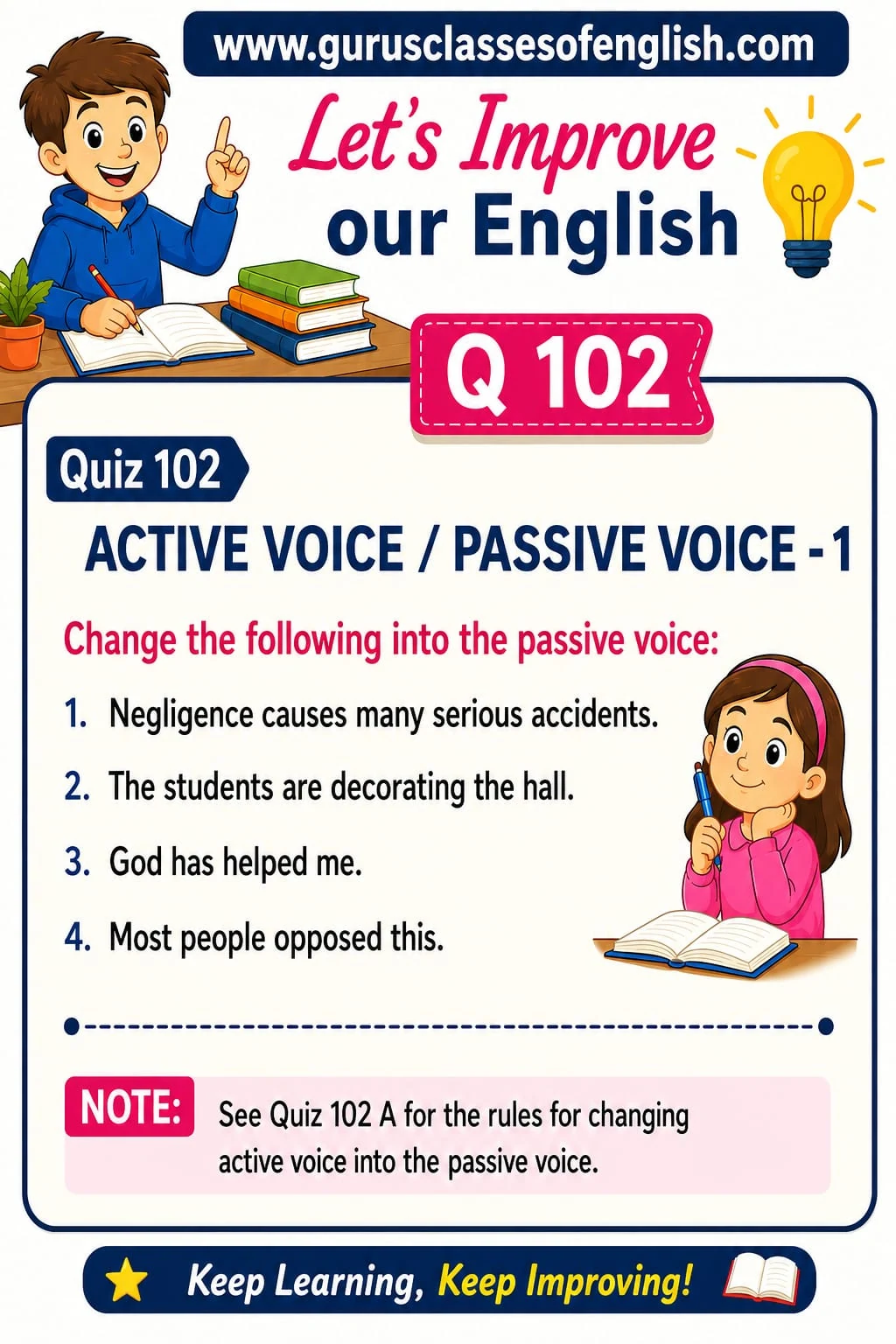
Change three statements into passive voice.
Read lesson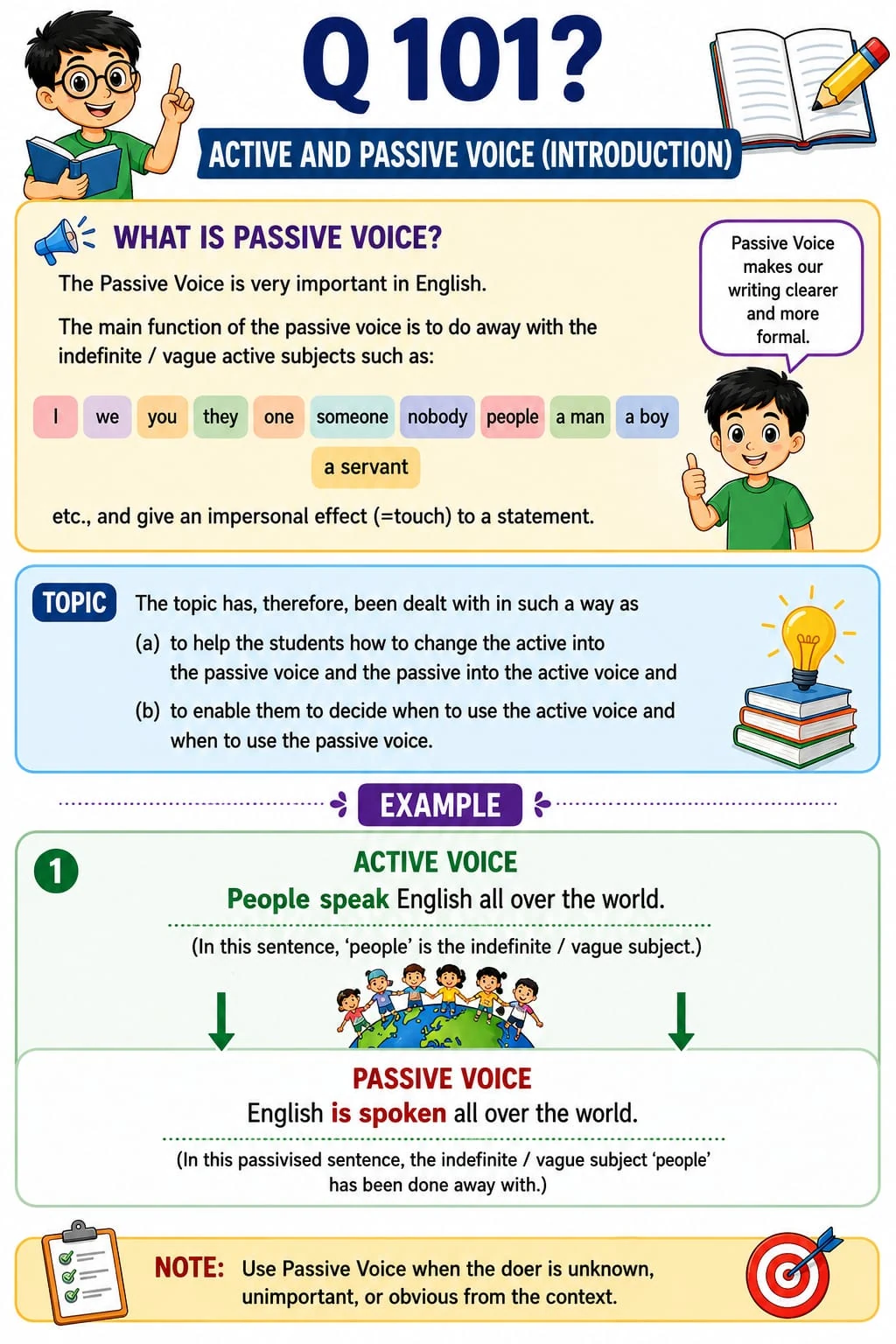
Learn how active and passive voice change the focus of a sentence.
Read lesson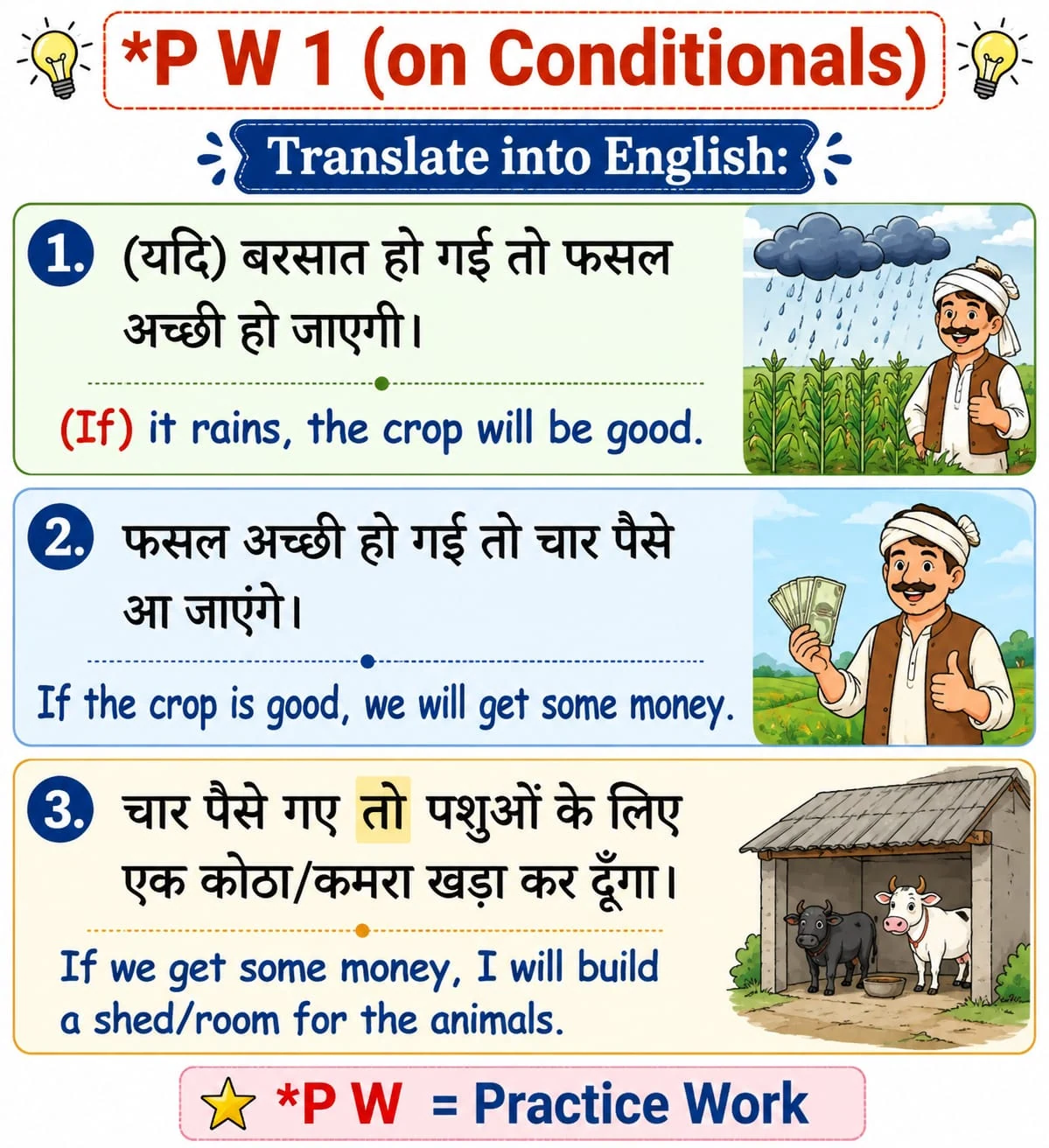
Use conditional sentences to translate a connected set of ideas from Hindi into English.
Read lesson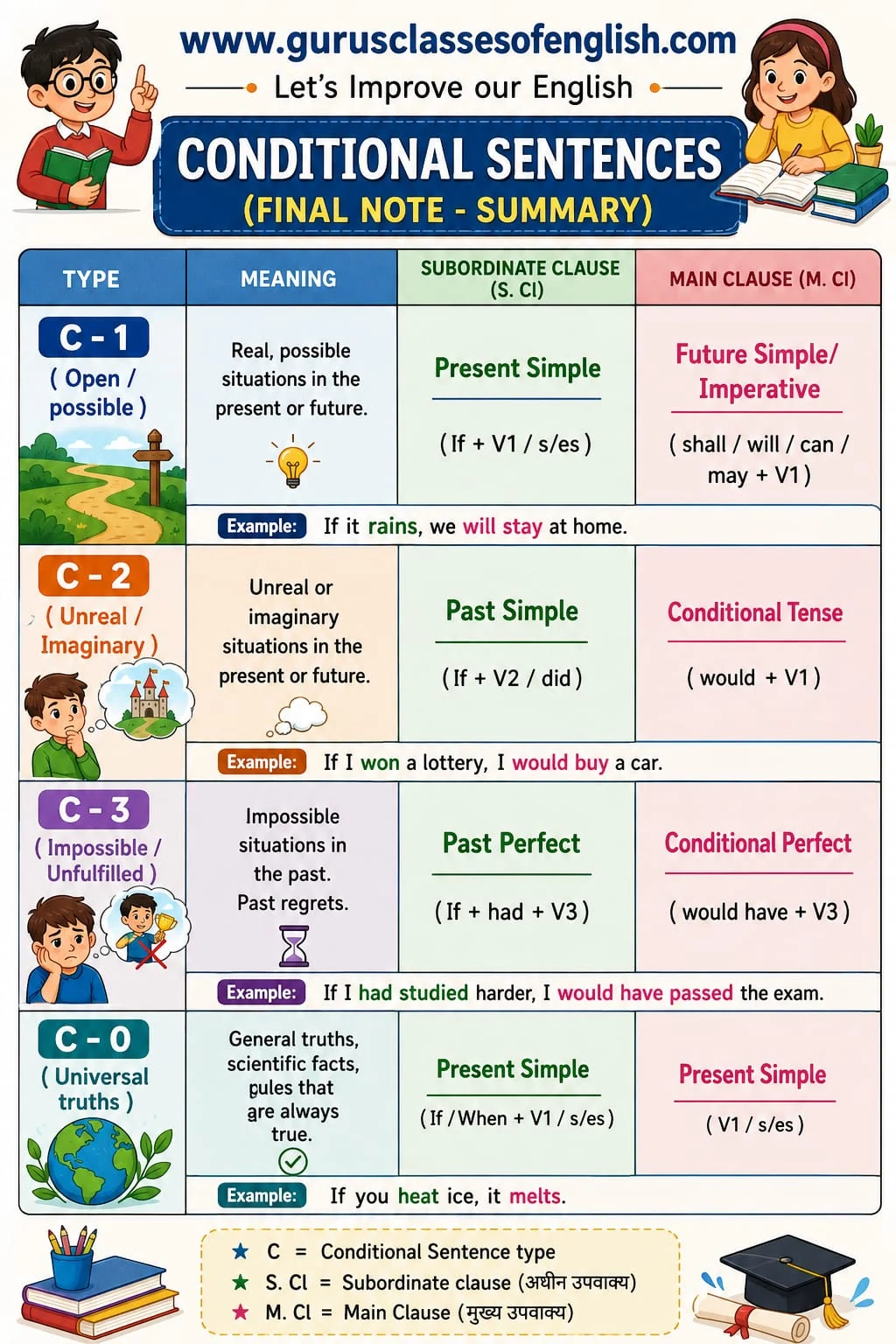
Review the forms and meanings of zero, first, second, third and mixed conditionals.
Read lesson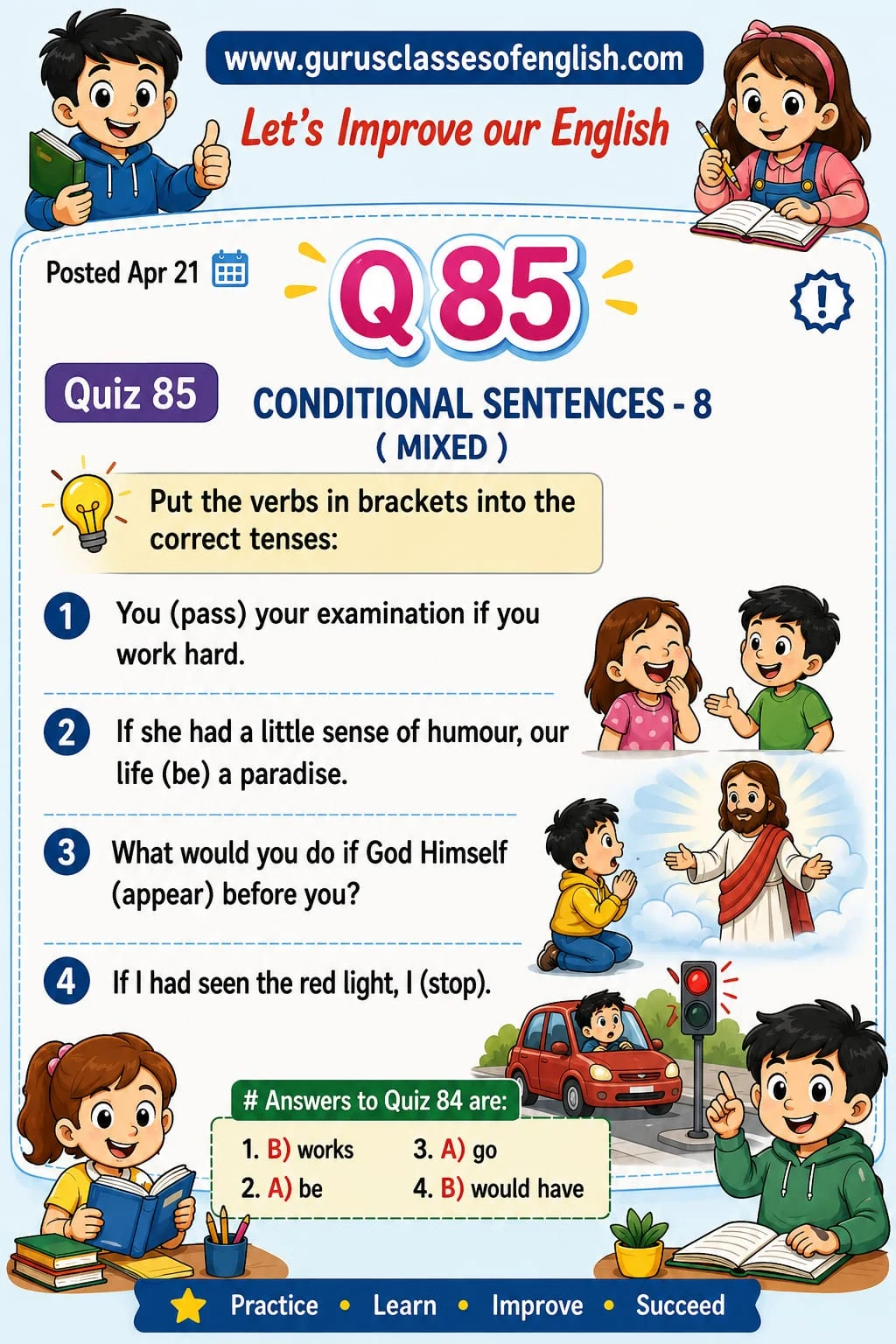
Put the verbs into the correct conditional forms.
Read lesson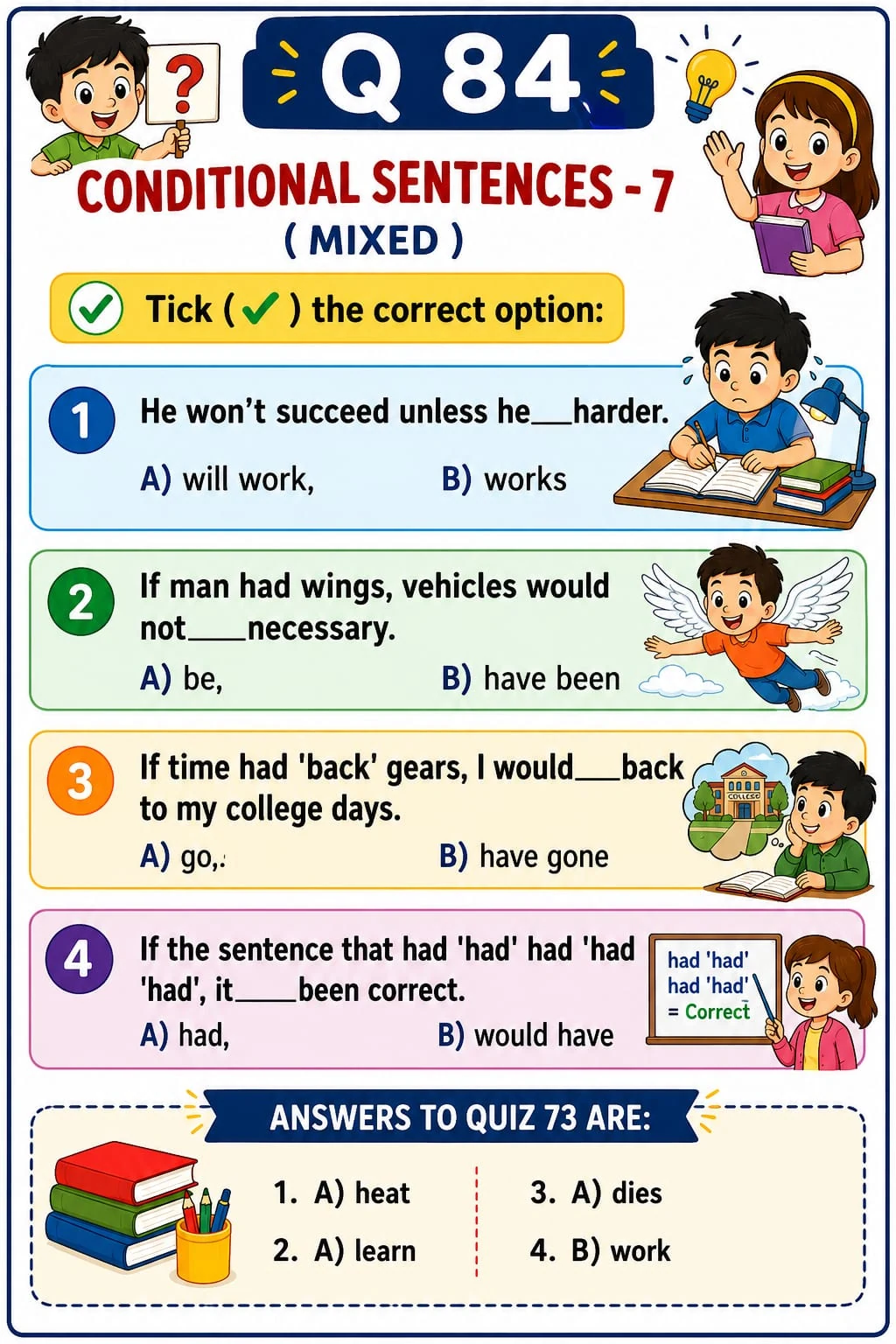
Choose the verb forms that match each conditional sentence.
Read lesson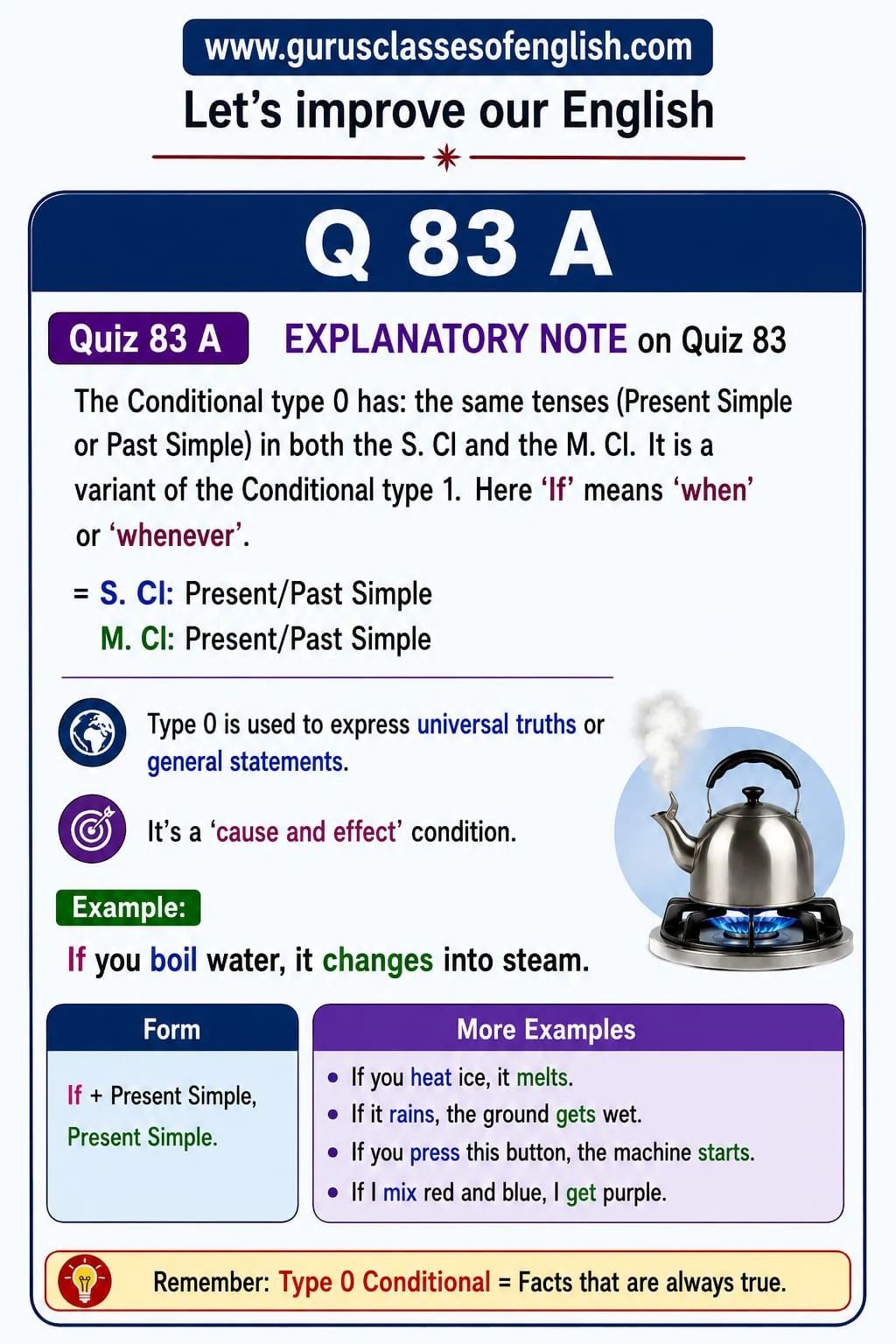
Learn how the zero conditional describes a general truth or cause and effect.
Read lesson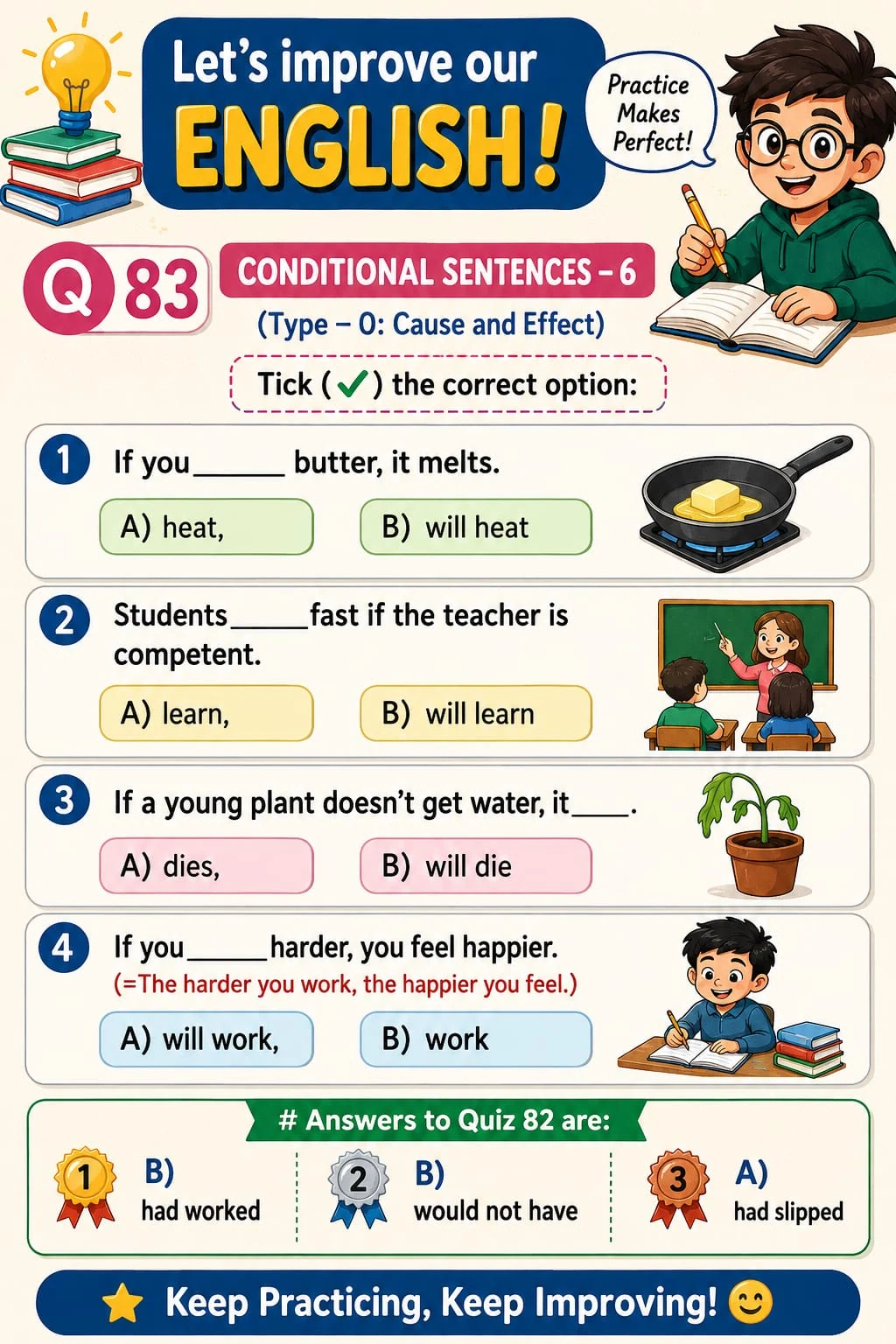
Choose verb forms for facts and general truths.
Read lesson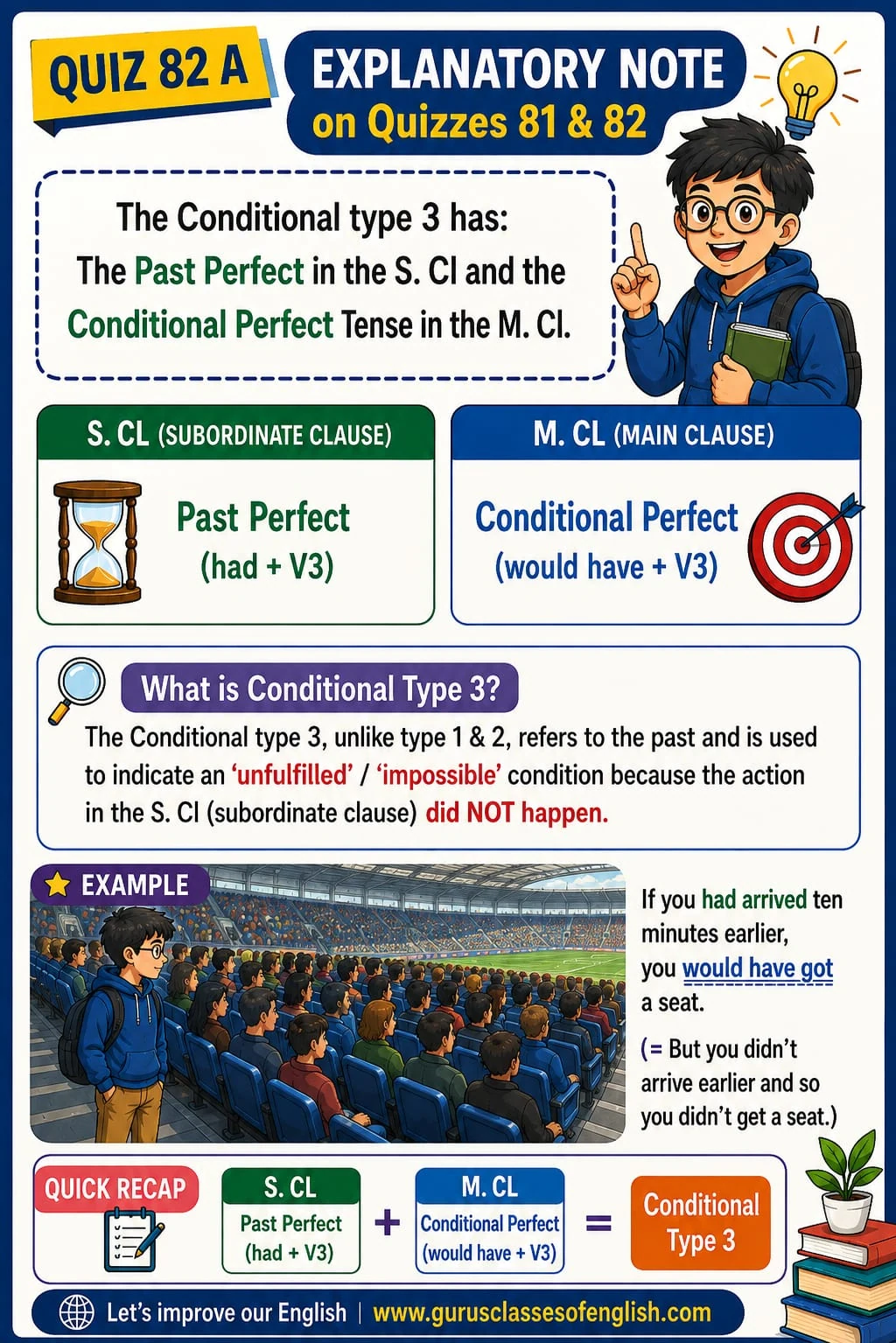
Use the past perfect in the if clause and would have with the past participle in the main clause.
Read lesson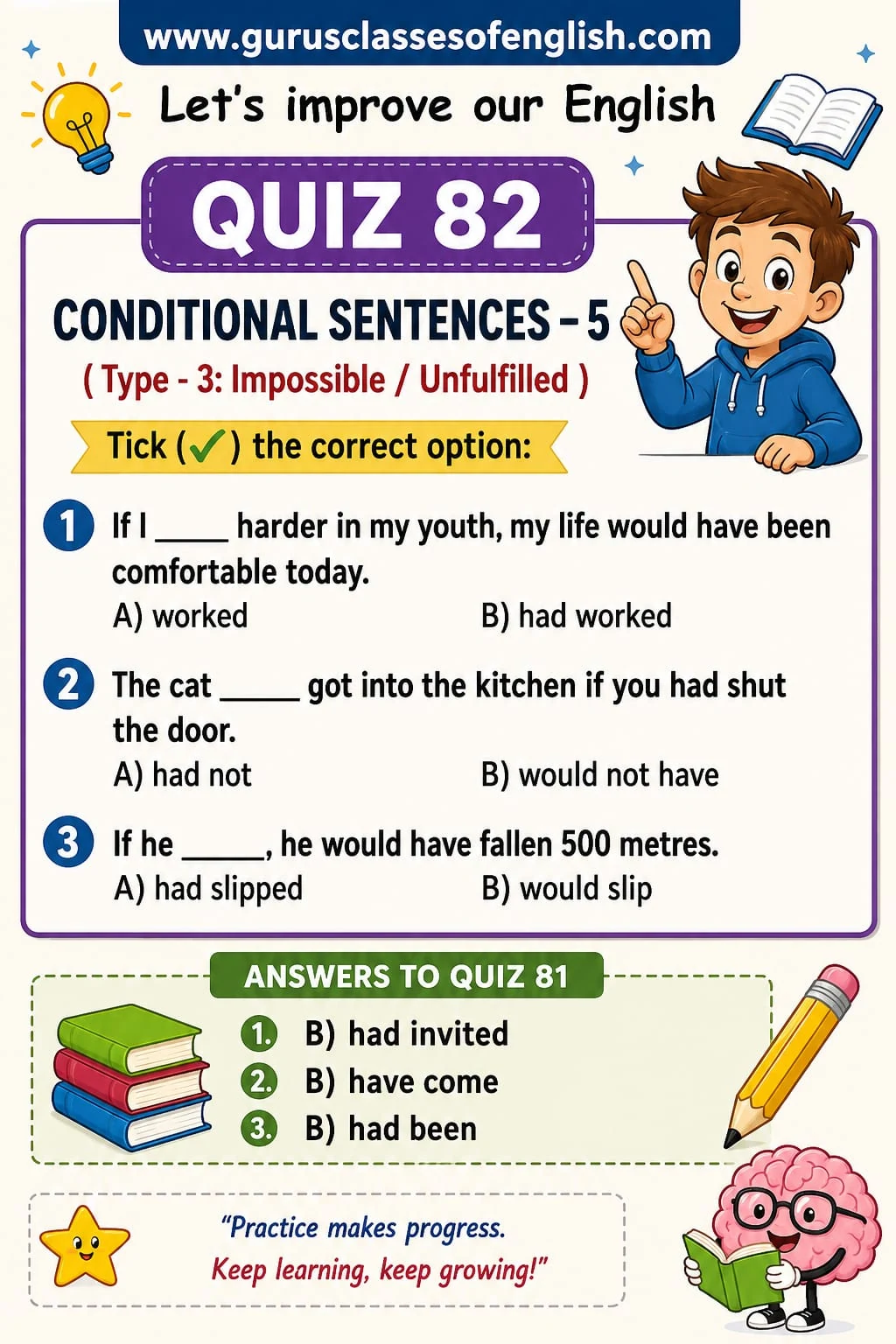
Practise unreal past situations with past perfect and conditional perfect.
Read lesson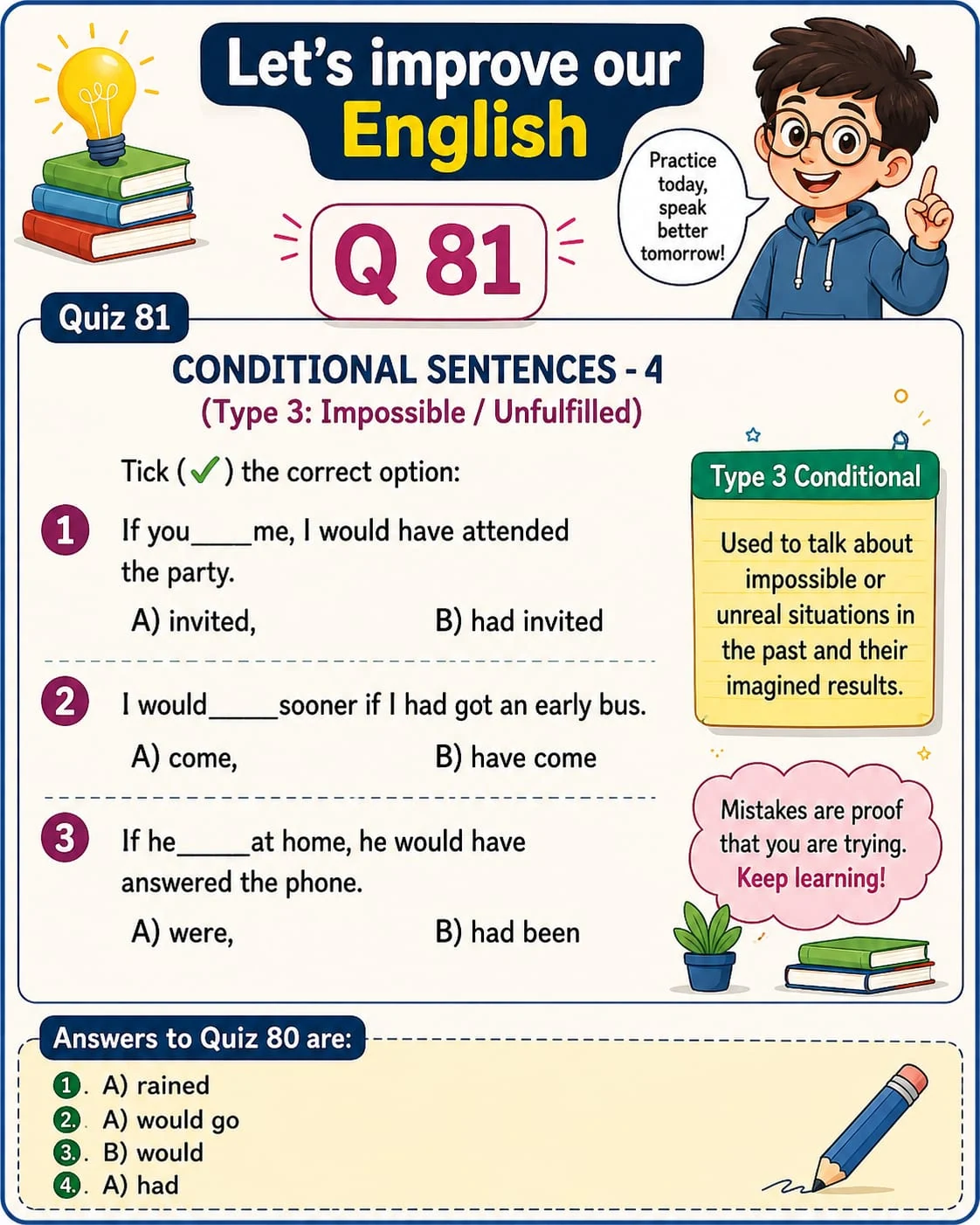
Practise talking about an unreal past situation and its imagined result.
Read lesson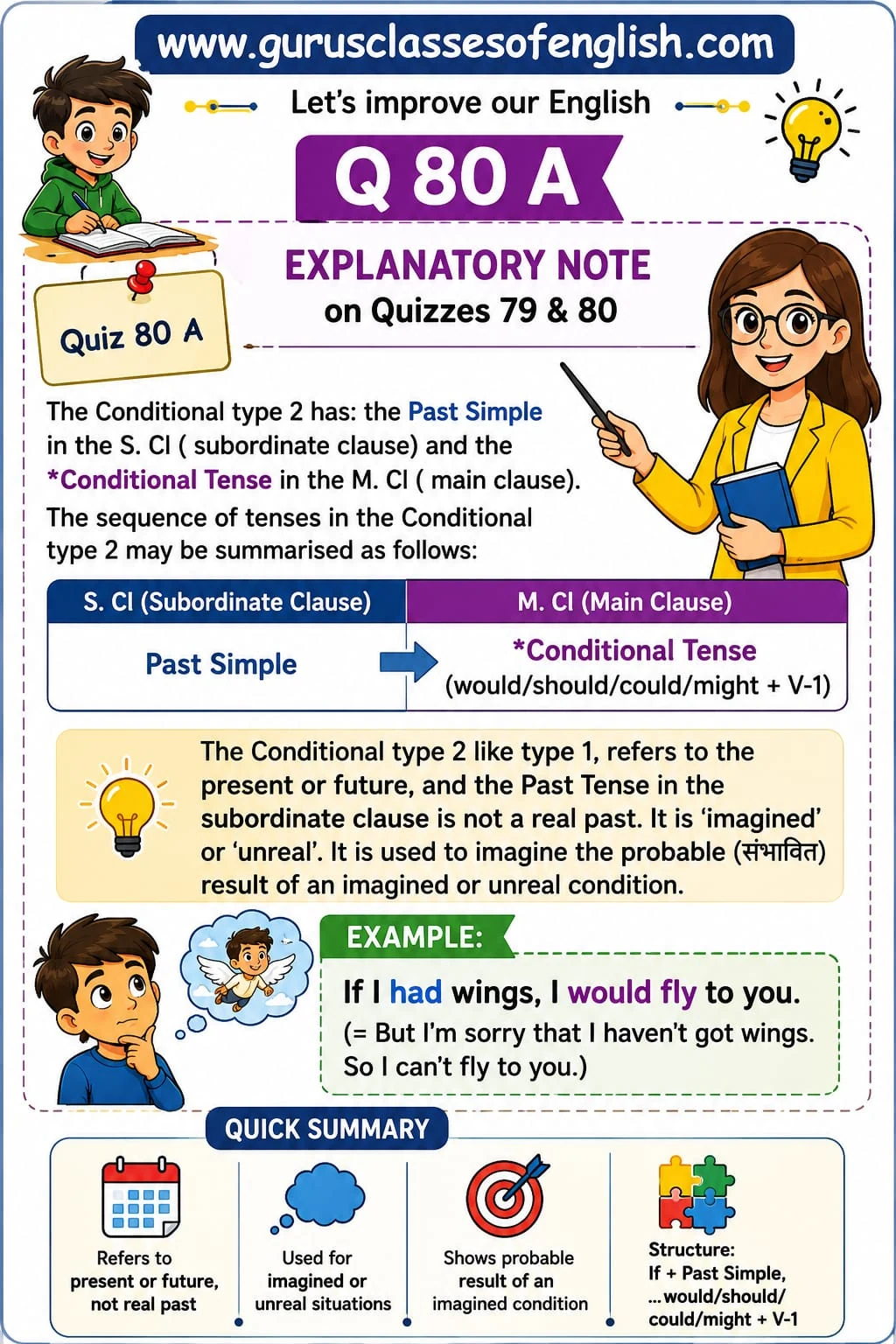
Learn to use the past simple with would and an infinitive for an unreal present or future situation.
Read lesson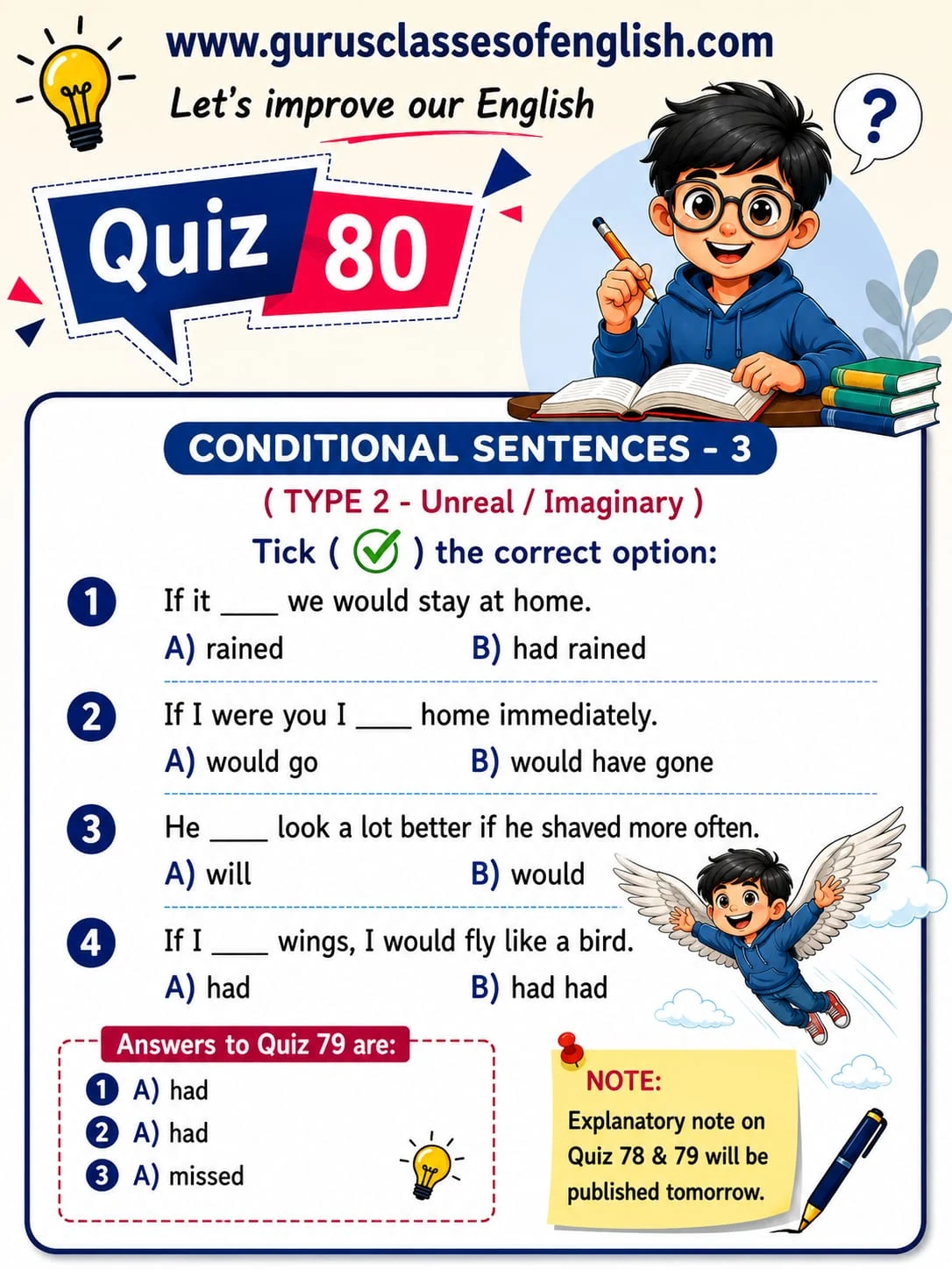
Choose past simple and would for imaginary situations.
Read lesson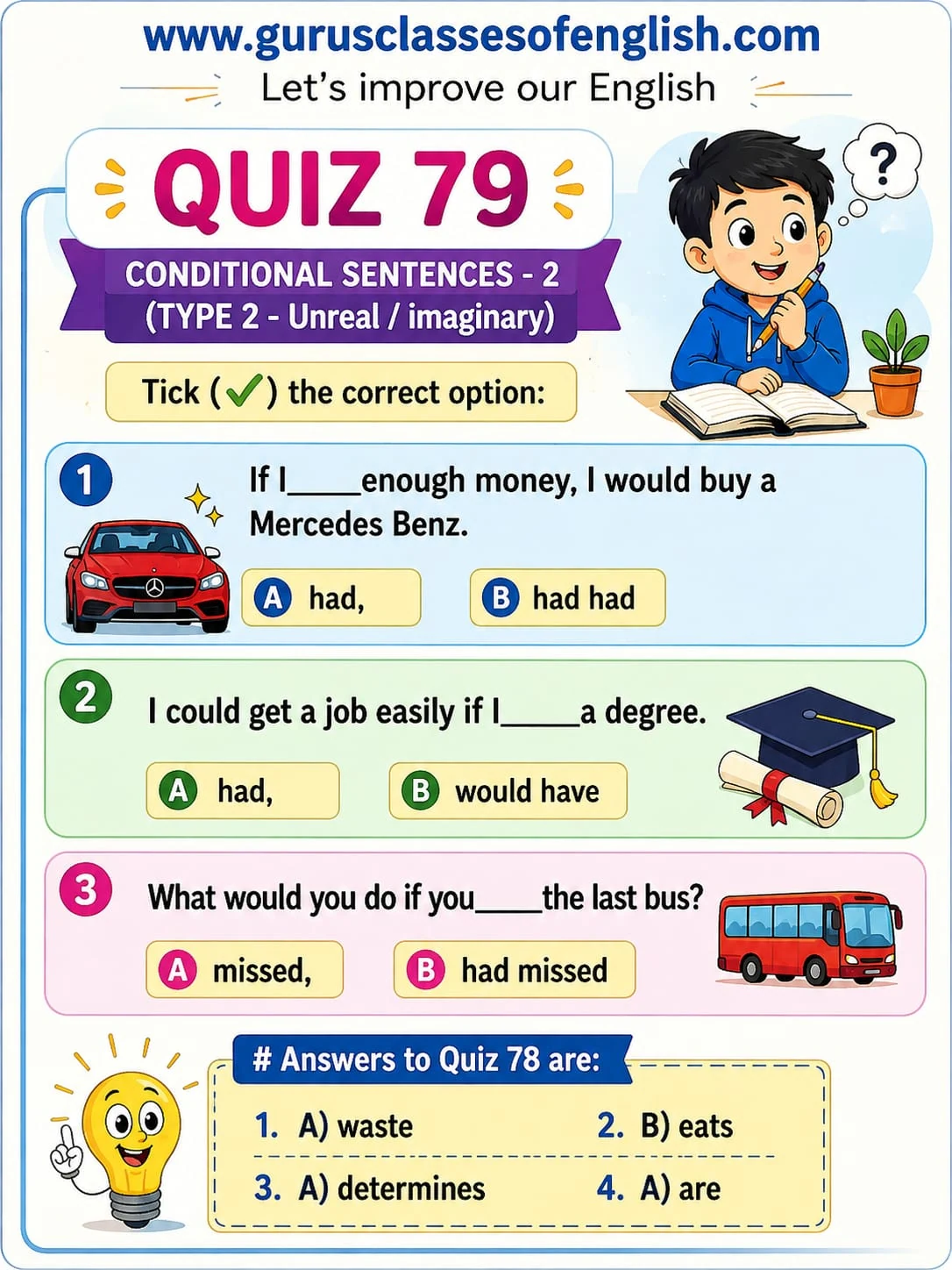
Choose past simple forms for imaginary conditions.
Read lesson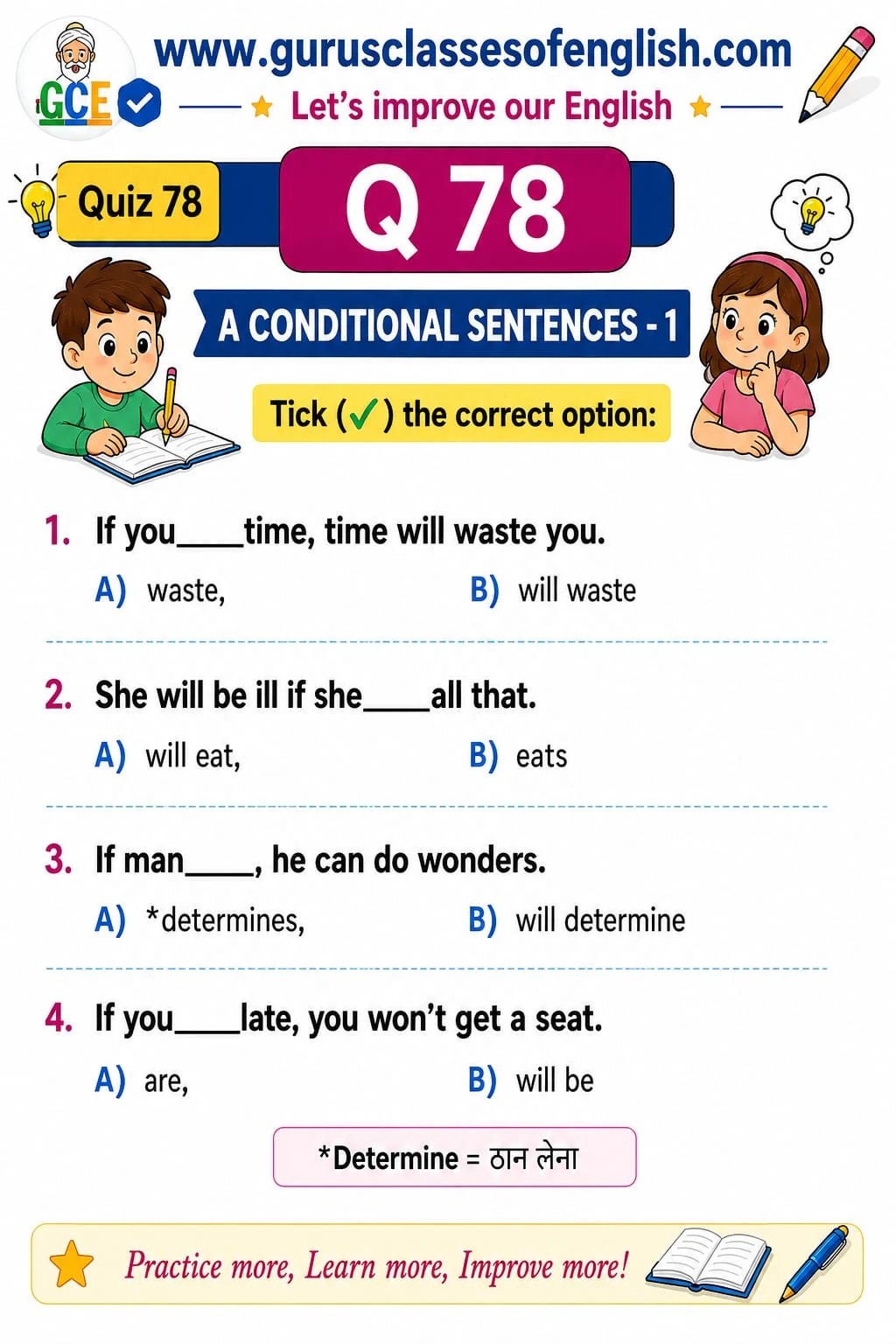
Choose the correct verb forms in conditional sentences.
Read lesson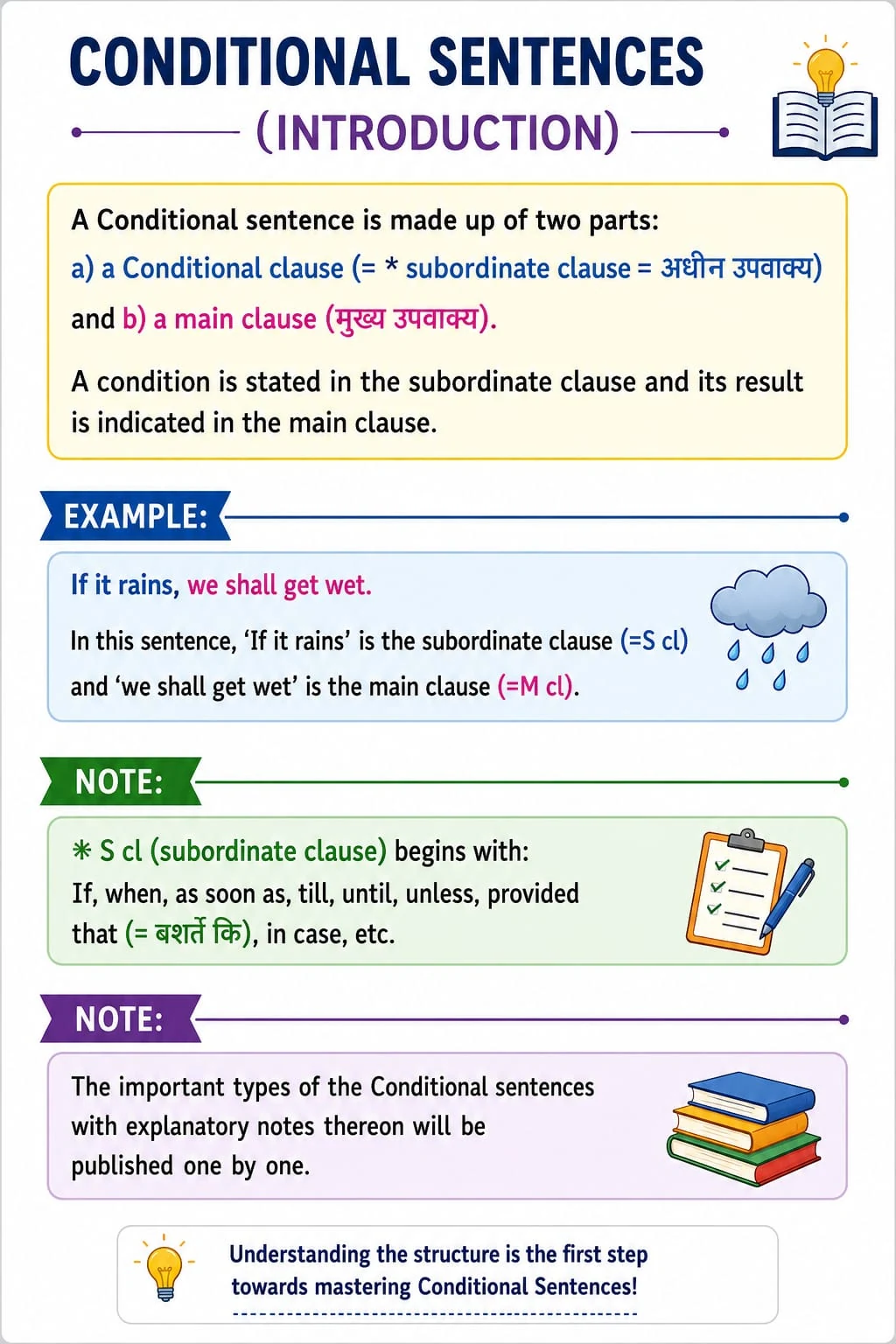
Understand the conditional clause and the main clause.
Read lesson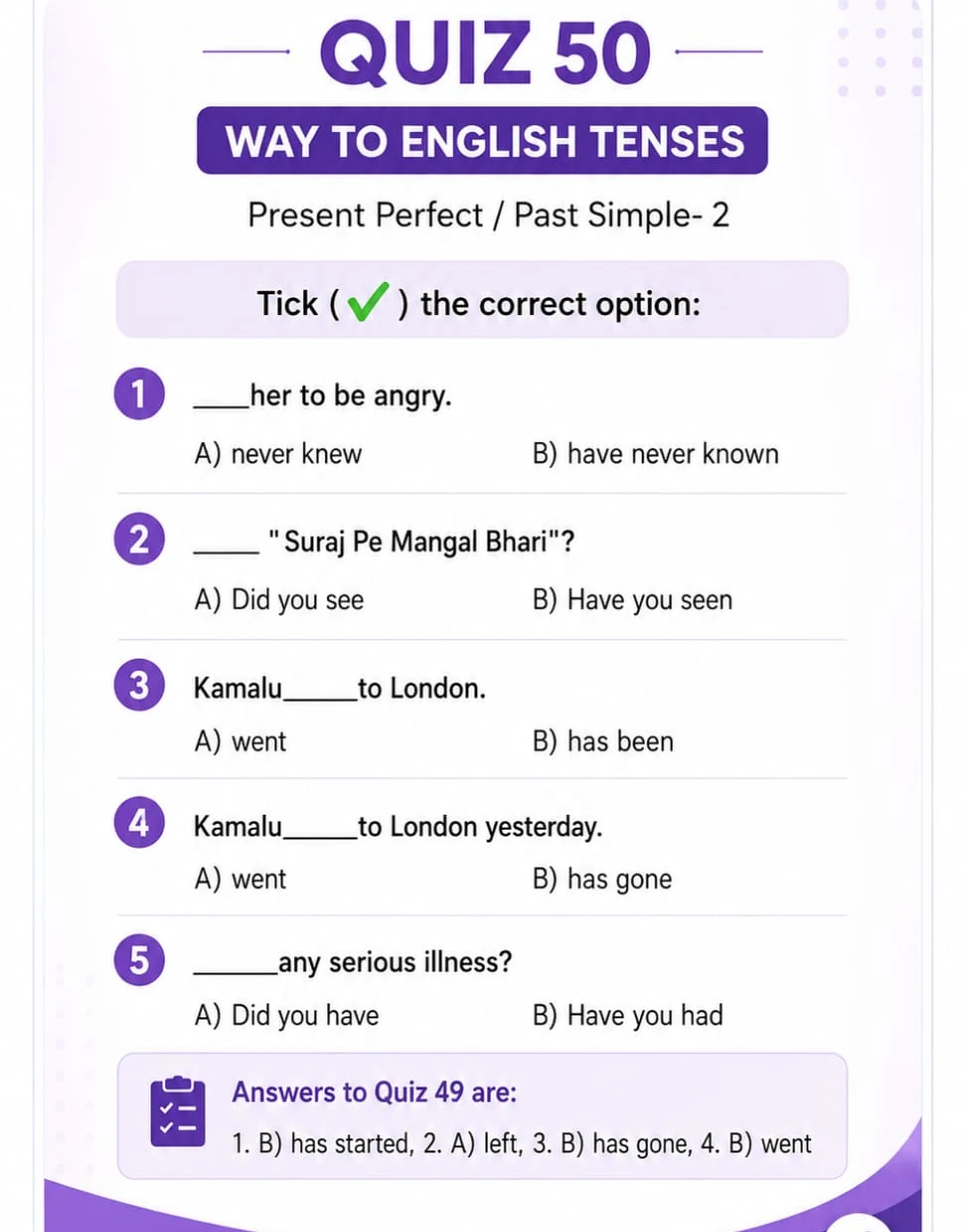
Choose the tense that suits the time and meaning of each sentence.
Read lesson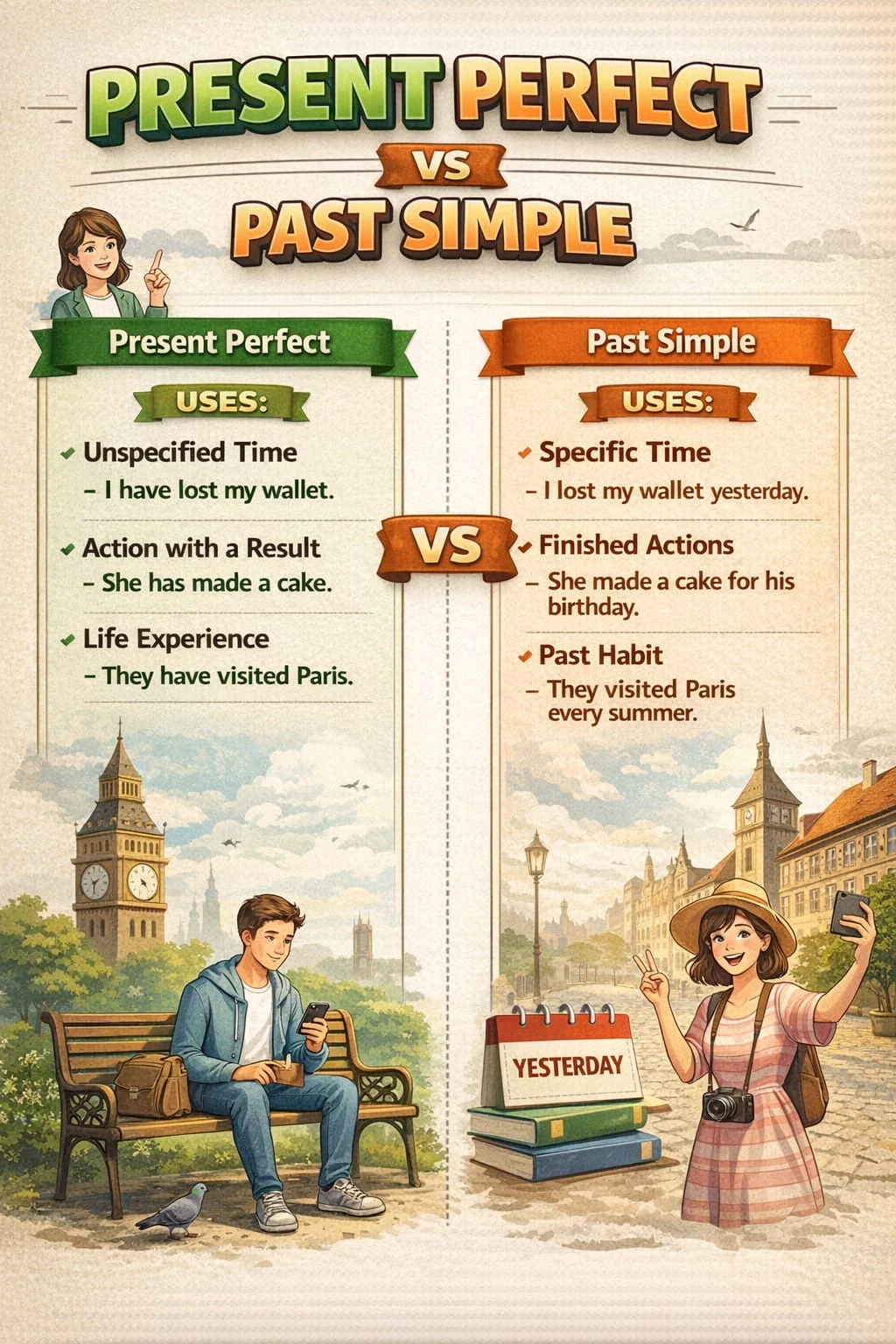
Compare unspecified time and life experience with finished actions at a specific past time.
Read lesson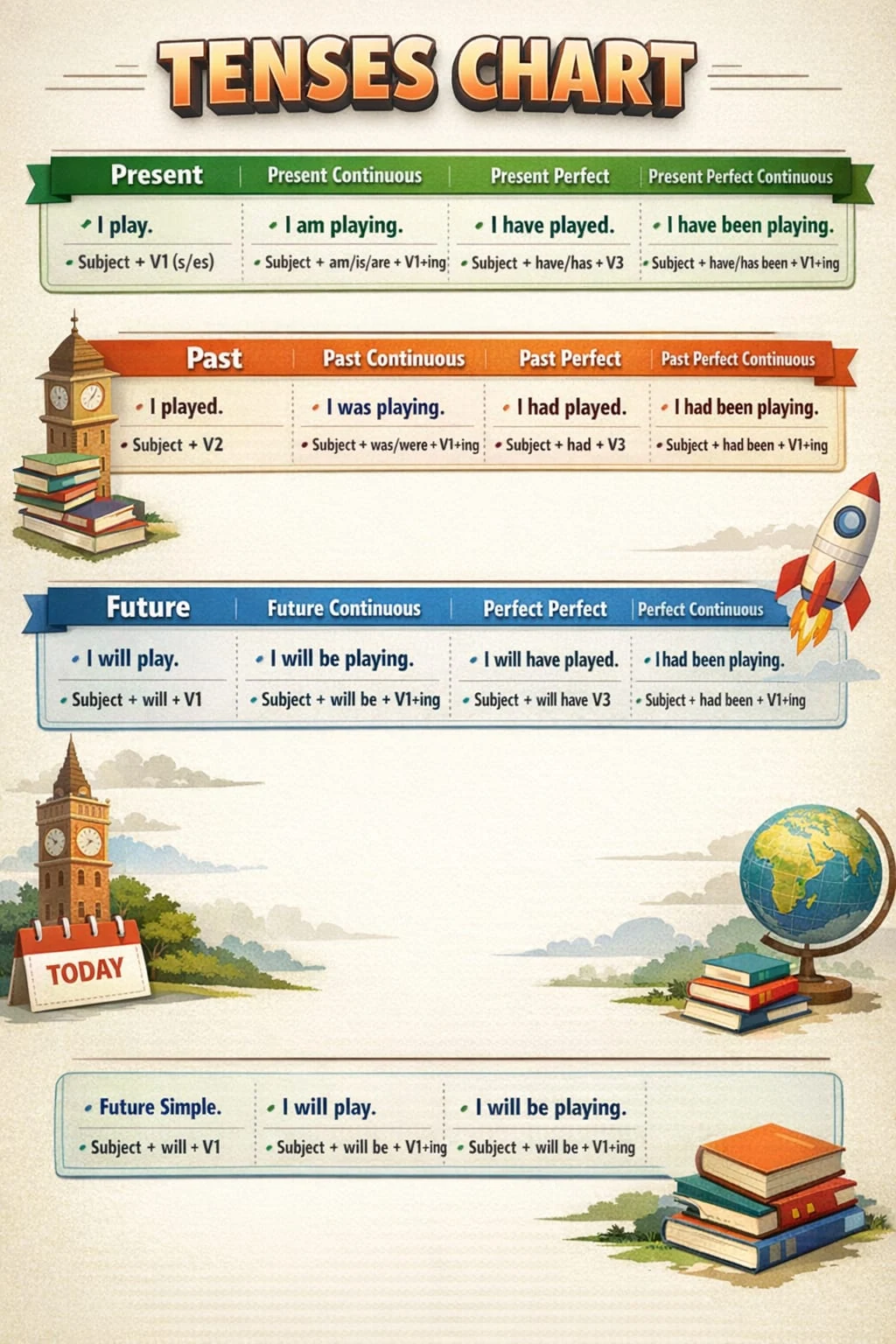
Review the simple, continuous, perfect and perfect continuous forms in present, past and future tenses.
Read lesson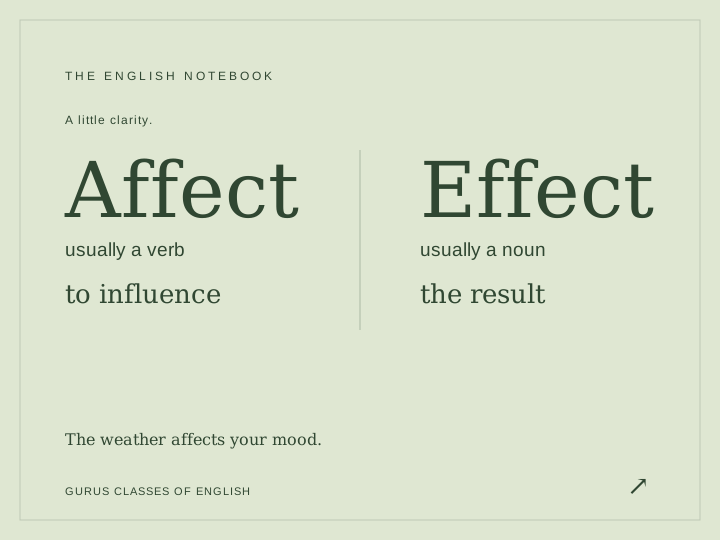
A simple way to remember two words that often get mixed up. Learn the difference, then try it in a sentence.
Read lesson
A chance discovery. An unexpected delight. Meet a word for the good things you weren't looking for.
Read lesson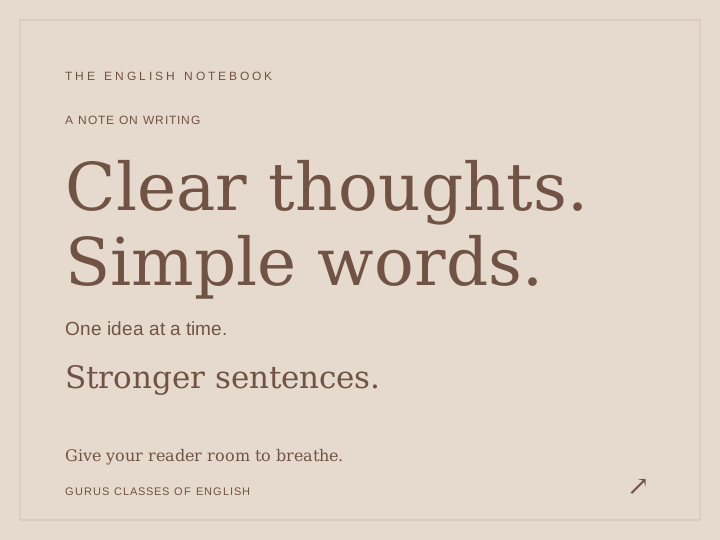
Choose familiar words. Keep one idea in each sentence. Give your reader a little room to breathe.
Read lessonDiscover practical and easy-to-follow tips that will help you speak English more confidently and fluently in everyday situations.
Read lessonLearn about the most common grammatical errors that English learners make and how to correct them for better communication.
Read lessonMaster the art of job interviews in English with these proven strategies, common questions, and professional communication tips.
Read lessonDiscover how regular reading can dramatically enhance your vocabulary, grammar, and overall English proficiency.
Read lessonOvercome fear and build unshakeable confidence in your English speaking abilities with these practical strategies.
Read lesson