Modal Auxiliary Verbs: Introduction (Quiz 208)
 By S.D. Singh Ratan1 min read
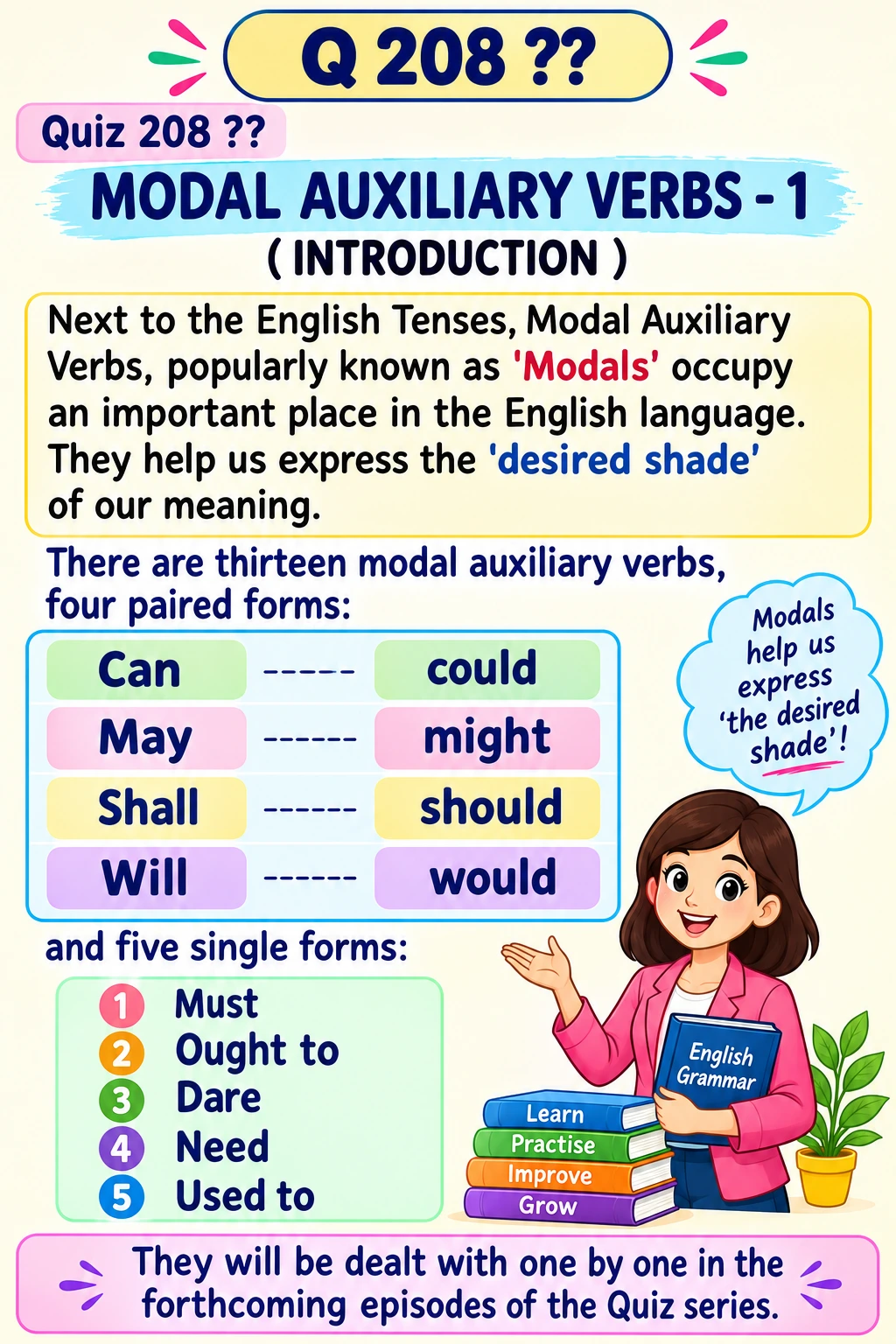
Modal Auxiliary Verbs – 1: Introduction
What are modal auxiliary verbs?
Next to the English tenses, modal auxiliary verbs, popularly known as “modals,” occupy an important place in the English language. They help us express the “desired shade” of our meaning.
The modal auxiliary verbs
There are thirteen modal auxiliary verbs, four paired forms:
- Can — Could
- May — Might
- Shall — Should
- Will — Would
And five single forms:
- Must
- Ought to
- Dare
- Need
- Used to
These modal auxiliary verbs will be dealt with one by one in the forthcoming episodes of the Quiz series.
Note for teacher review: The image states that there are thirteen modal auxiliary verbs, but the listed forms contain eight paired items and five single forms, giving thirteen forms in total. The image does not provide Hindi meanings or translations.
A LITTLE PRACTICE