
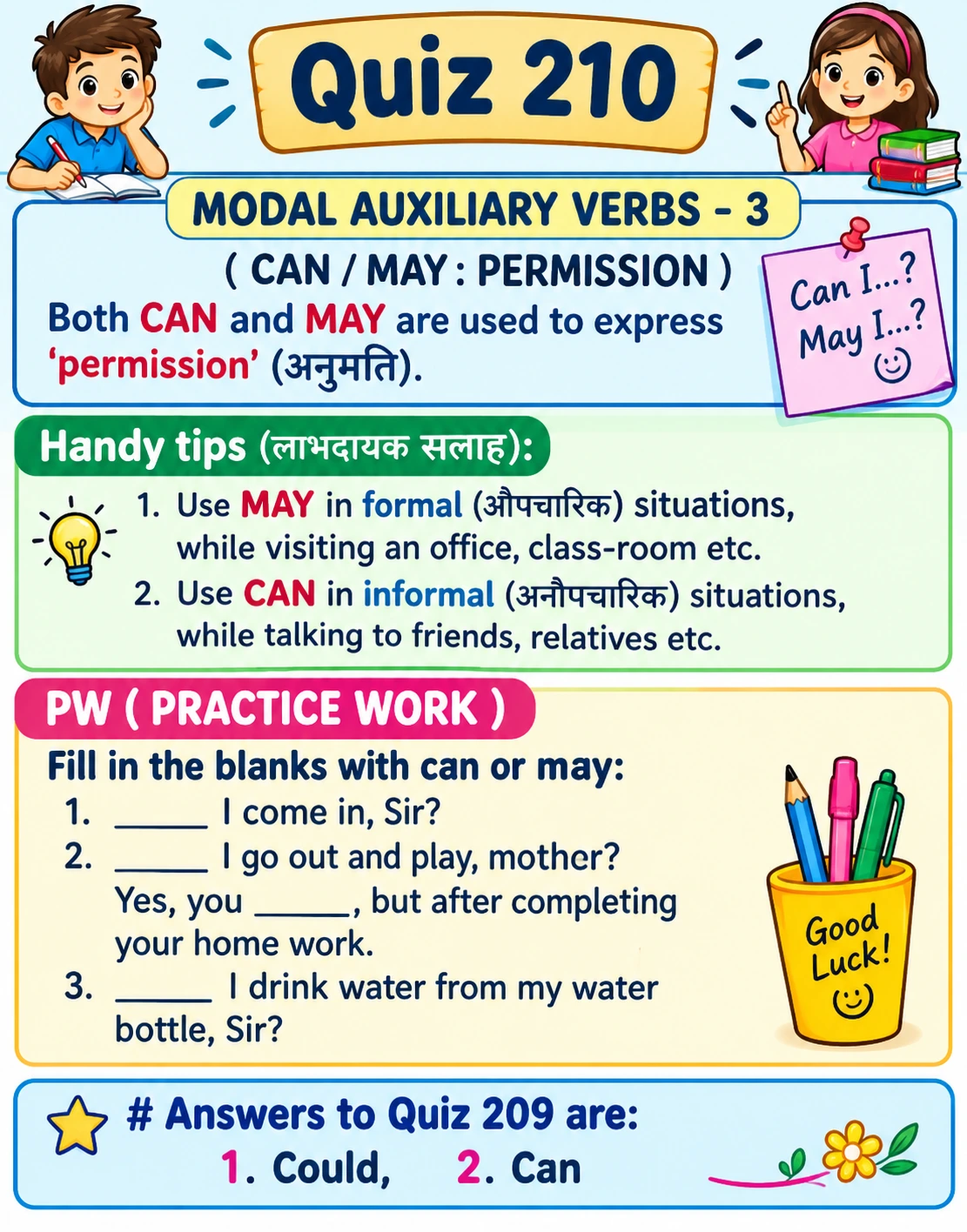
Can and May for Permission: Modal Auxiliary Verbs
Learn how “can” and “may” are used to express permission, including the image’s guidance on formal and informal situations and practice questions.
Read & give it a tryA little English, for every age.
A new word, a clearer sentence, a lovely little discovery. Join S.D. Singh Ratan and make English a happy part of your day.
No rush. No big words needed. Just a little curiosity.

PICK UP A LITTLE SOMETHING TODAY
Learn how “can” and “may” are used to express permission, including the image’s guidance on formal and informal situations and practice questions.
Read & give it a trySMALL STEPS ARE GOOD STEPS
Choose a lesson that catches your eye.
Recall a meaning or write a sentence of your own.
Come back for a reminder. Share a little learning.
KEEP LEARNING
Small lessons you can return to, whenever you need them.
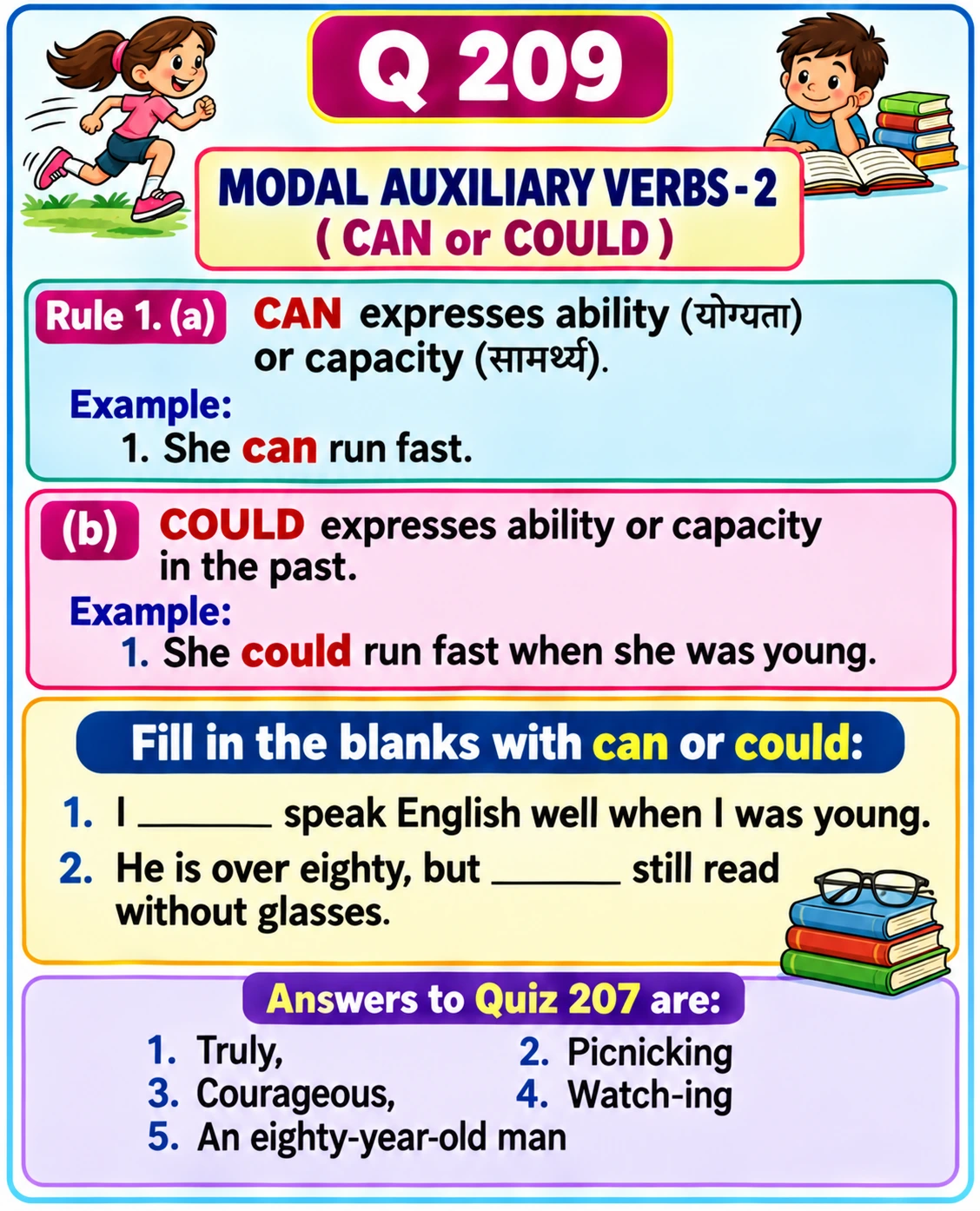
Learn how “can” expresses present ability or capacity and “could” expresses ability or capacity in the past, with examples and a fill-in-the-blank exercise.
Read lesson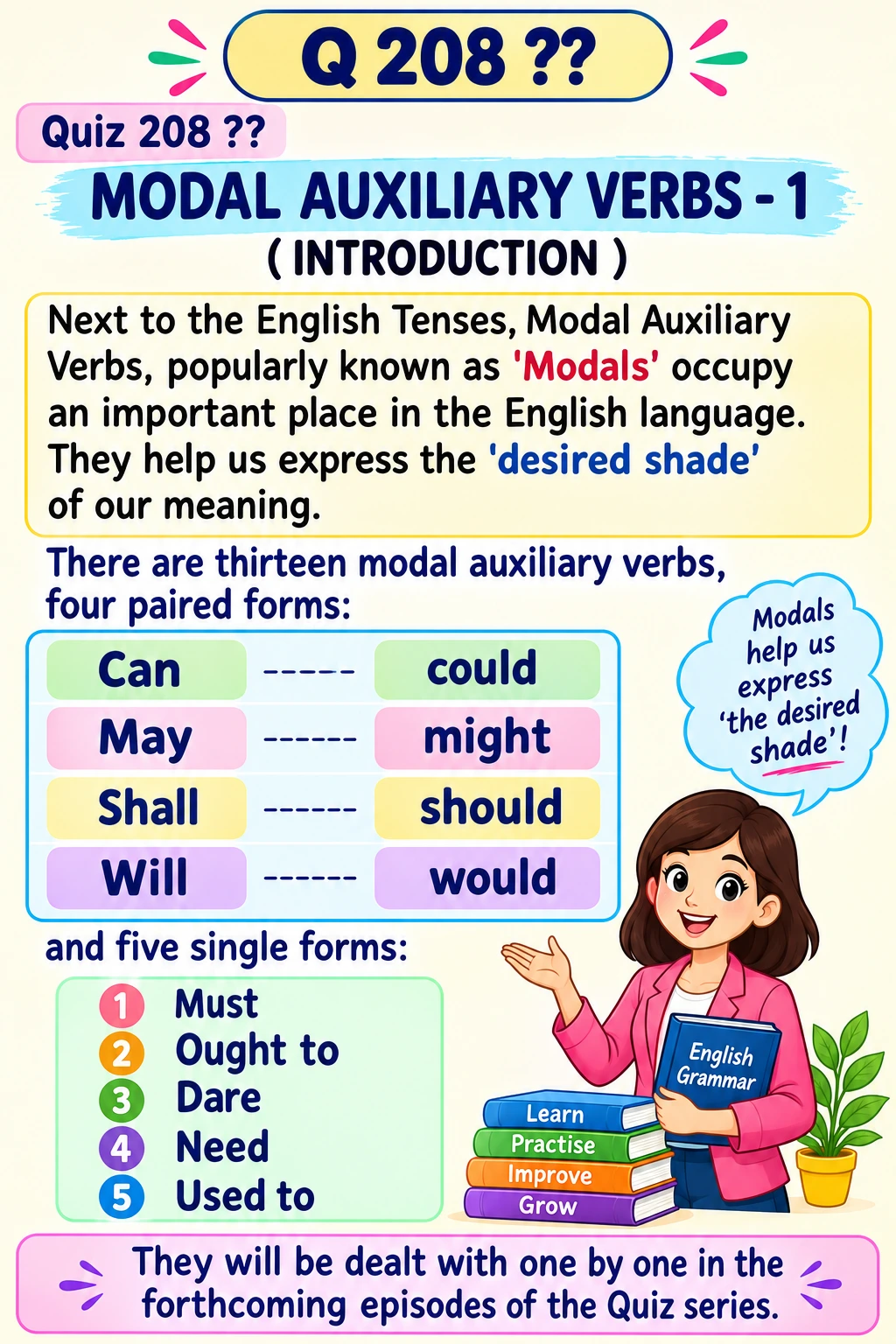
An introduction to modal auxiliary verbs, including the paired forms can/could, may/might, shall/should, and will/would, plus five single forms.
Read lesson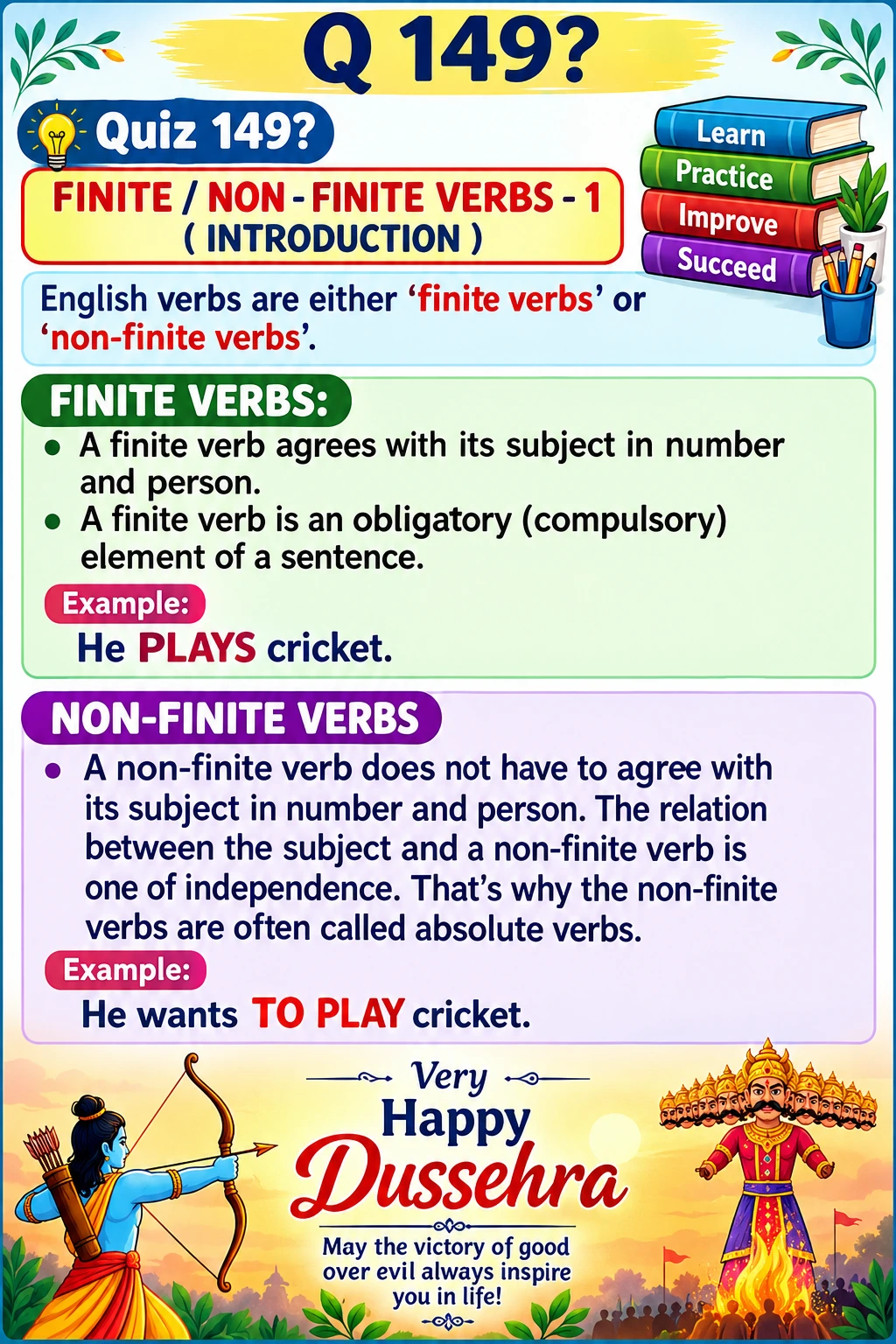
An introduction to finite and non-finite verbs, including their relationship with the subject and examples such as “He plays cricket” and “He wants to play cricket.”
Read lessonA LITTLE HELP GOES A LONG WAY
You’re welcome to ask. Call 9829112945 or say hello.